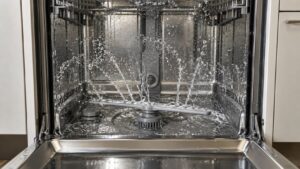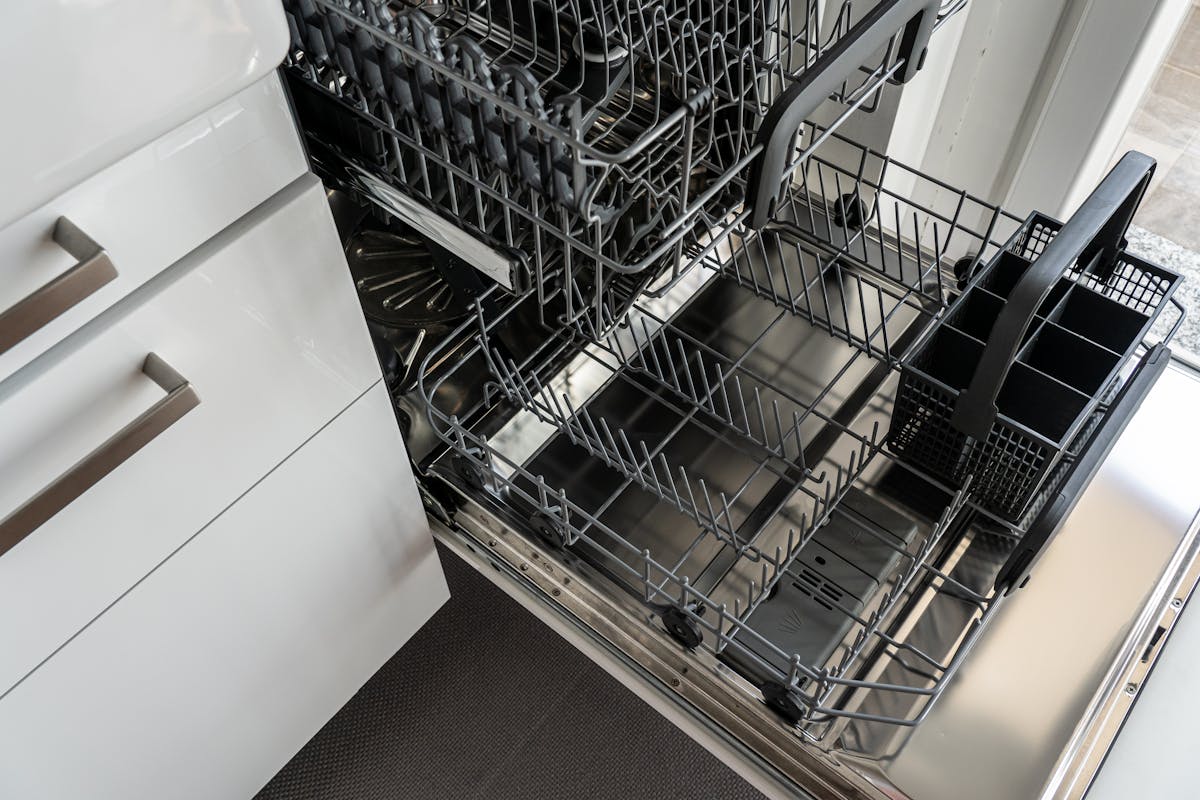
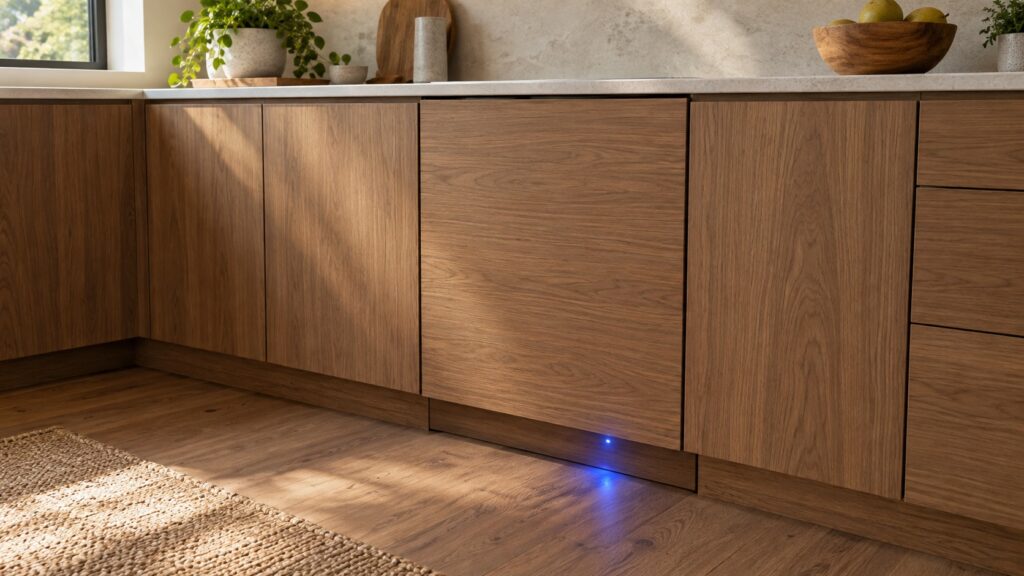
The Thermador DWHD650WFP is the Emerald 24-inch panel-ready dishwasher: CrystalDry zeolite drying, an adjustable FlexRack third rack, AquaStop Plus and Home Connect, in a commercial-grade stainless tub behind a door panel you supply yourself. If you are standing in front of a quote and wondering what separates it from the number one tier up or one tier down, the differences are small in the brochure and large in the kitchen.
Here is the family this model sits in, using the collection names Thermador itself assigns to each number.
What does the Thermador DWHD650WFP model number tell you?
Read it in blocks. DWHD is the dishwasher family. The three digits are the position in the lineup, and they matter more than anything else on the sticker: 5 is Sapphire, 6 is Emerald, 7 is Star Sapphire, 8 is Professional. The digit after that separates variants within the same collection — 650 and 651 are the same machine with a different door treatment. The letters on the end describe the front and the control layout, which is why a panel-ready unit and a stainless one differ by a single character.
This is worth doing deliberately before you buy, because the collection decides the drying system and the drying system is the single biggest experience difference in this lineup. A fuller walkthrough of the numbering across every appliance is in our Thermador model number guide.
What does CrystalDry change day to day?
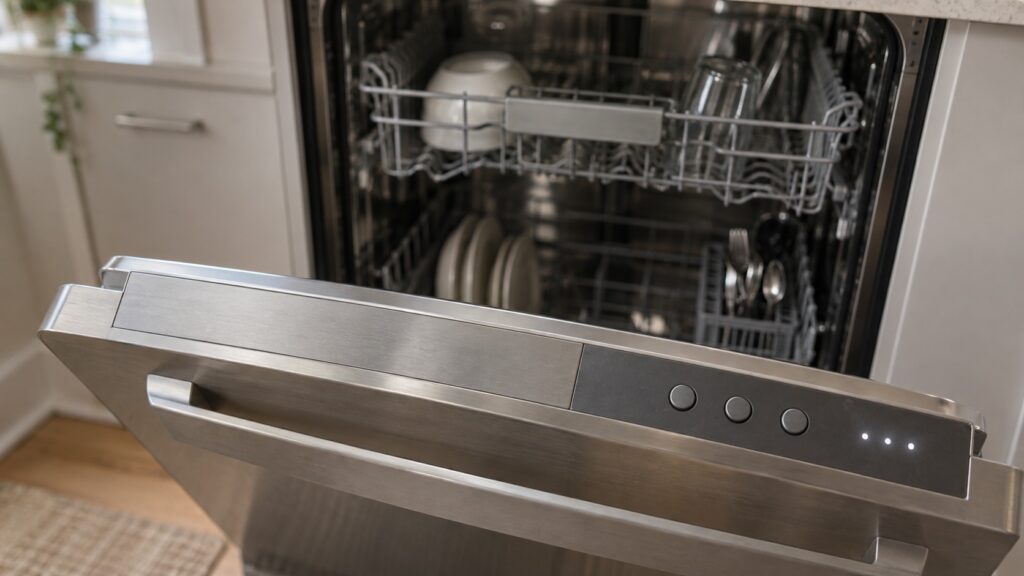
Everything about unloading. The Sapphire tier dries by condensation: the tub is cooled at the end of the cycle and moisture runs down the stainless walls. It works well on glass and steel and poorly on plastic, because plastic holds no heat and never reaches the temperature at which water leaves it. The Emerald tier and above add a zeolite chamber, a mineral bed that releases heat when it absorbs water vapor, and that extra heat is what finally dries a plastic container lid.
If your household runs storage containers and sport bottles through the dishwasher, the step from Sapphire to the DWHD650WFP is the one people notice within a week. If you wash mostly glass, china and flatware, the honest answer is that condensation drying already handles it. Our explainer on how CrystalDry works covers the mechanism.
Is the step from the 650 to the 770 or 870 worth it?
It depends entirely on which of two things you want. The Star Sapphire DWHD770WFP is the same drying technology with the StarSpeed 20-minute cycle added — a short wash for a light load that is genuinely useful in a household that runs the dishwasher twice a day, and irrelevant in one that runs it overnight. The Professional DWHD870WFP moves to a larger wash system and a higher capacity third rack, which is a capacity argument rather than a features argument.
Inside the Emerald collection there is a quieter choice too. The DWHD660WFP is rated at 42 dBA against 44 for the Sapphire units, and in an open-plan kitchen where the dishwasher runs while people are in the room, two decibels is more noticeable than the number suggests. The broader comparison across tiers is in our Thermador dishwasher buying guide.
Panel-ready or stainless front: does it change the repair?
It changes access, and that is worth knowing before a technician ever comes. A panel-ready DWHD650WFP carries a custom door panel mounted on brackets, and reaching the door harness or the lock means removing that panel and its fasteners without marking the finish. A stainless DWHD651WFP has none of that.
It also changes installation. A panel-ready door is sized and weighted to the cabinetry, so a panel that is heavier than the springs were adjusted for produces a door that drops, and a door that drops eventually stops sealing. If the door on a panel-ready unit has started falling open rather than staying where you leave it, that is the hinge springs, and it is an adjustment rather than a part.
Which faults show up on this series?
The Emerald and Star Sapphire machines share a platform, so they share a fault list. Four codes come up more than the rest on these models, and each one names a specific part rather than a general problem.
- E18 — water softener regeneration problem. The built-in softener that this platform uses needs salt and a working regeneration cycle; hard water is what brings this on.
- E24 and E25 — a blocked drain and a blocked drain pump impeller. Usually a filter that has not been cleaned, and the one repair on this list that starts in your own kitchen.
- E15 — water in the base pan, the AquaStop anti-flood sensor tripping. Never something to reset and ignore.
- E22 — turbidity sensor failure, the AquaSensor that judges how dirty the water is and sets the cycle length from it.
Everything else is listed at Thermador dishwasher error codes, and the routine cleaning that prevents most of the drain codes is in the dishwasher maintenance guide.
Is a DWHD650WFP worth repairing?
Usually yes, for one structural reason: a panel-ready dishwasher is integrated into the cabinetry. Replacing it means matching the opening, transferring or rebuilding the door panel, and matching the hinge geometry to the panel weight. That work exists whether or not the replacement machine is any better, and it makes the arithmetic on a repair look different than it does for a freestanding appliance.
The exceptions are the ones you would expect. A machine that has flooded its base pan repeatedly, or one where the tub itself has been damaged, is a different conversation. Repair versus replace for a Thermador dishwasher walks through it properly.
We are an independent repair company, not a factory service arm. Pricing starts from a diagnostic visit and we confirm the estimate before any work begins. Thermador dishwasher repair covers pumps, softeners, sensors and control boards on this series, and you can schedule a visit online.