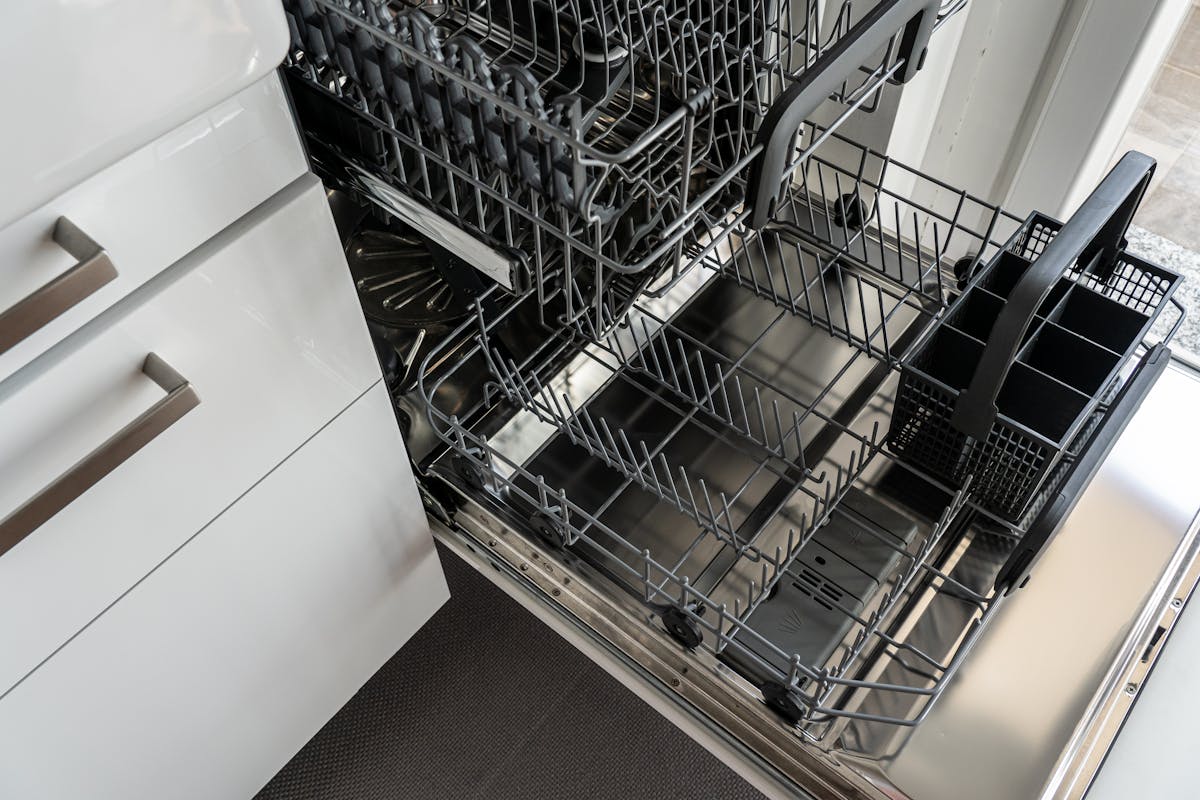
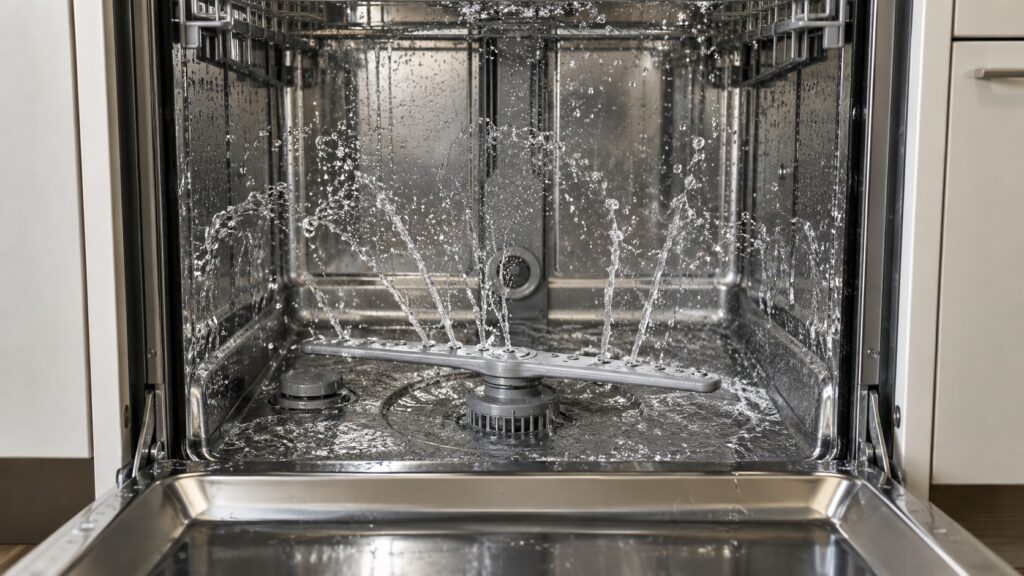
Thermador AquaSensor is the turbidity sensor built into the wash system of Thermador dishwashers that reads how dirty the wash water is and adjusts the cycle around what it finds. It is the reason two loads that look identical from the outside — same rack layout, same detergent, same cycle selected — can finish in noticeably different amounts of time. The sensor is doing its job correctly in both cases; it is simply reading two different amounts of soil.
What does Thermador AquaSensor actually measure?
Thermador AquaSensor measures turbidity — a physical property of how much light scatters or gets absorbed as it passes through the wash water, rather than a direct measurement of grease, starch or a specific type of food residue. Clean water lets light through with almost no scattering. Water carrying suspended food particles scatters more of it. The sensor reads that scattering during the wash and reports a soil level to the control board, which is genuinely a proxy for cleanliness rather than cleanliness itself, but it is a proxy that tracks real-world soil closely enough to be useful across almost every kind of load.
This is the same underlying principle behind turbidity sensing in municipal water treatment and in aquarium filtration, applied at dishwasher scale: light in, light out, and the difference tells you something about what is suspended in between.
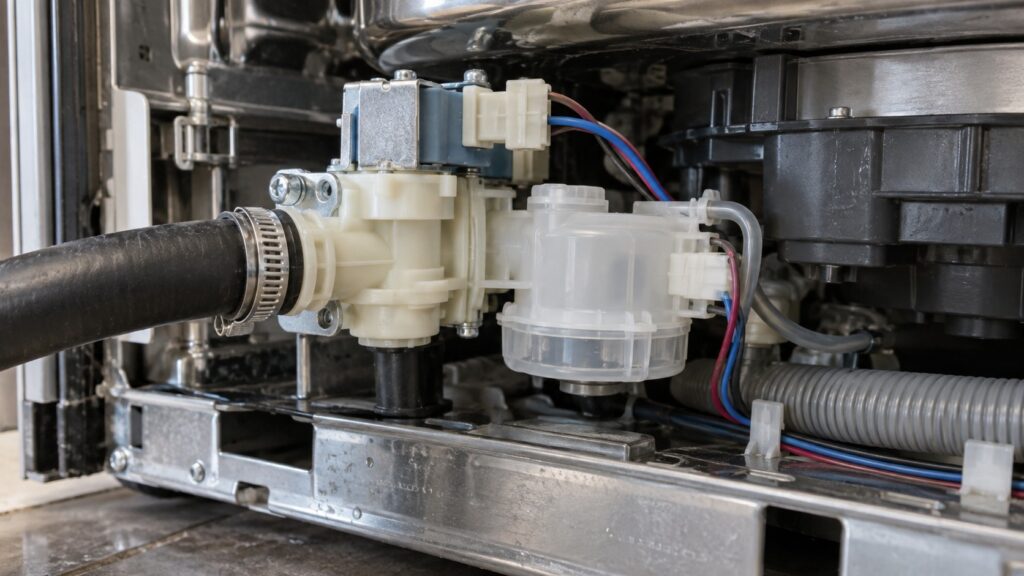
Why do two identical-looking loads take different amounts of time?
Because AquaSensor is reading the water, not the dishes on the racks. A load of dinner plates rinsed under the tap before loading will read cleaner to the sensor than a load of the same plates loaded straight from the table with sauce and grease still on them, even though both loads look similarly full from outside the door. The sensor responds by shortening the wash on the pre-rinsed load and running additional wash phases and water changes on the soiled one, which is exactly the behavior that produces two different completion times for what looks like the same job.
The same logic explains why a load run right after a big dinner often runs noticeably longer than the same cycle run on a lighter day. The dishwasher is not guessing; it is measuring, cycle by cycle, and adjusting for what it actually finds in the water rather than for what the cycle dial says on average.
Does AquaSensor mean you can skip pre-rinsing?
To a real degree, yes — that is the point of the sensor. A machine with AquaSensor is designed to handle a range of soil levels and adjust the wash accordingly, so scraping plates into the trash and loading them is normally enough; the sensor and the automatic cycle do the rest. What AquaSensor cannot compensate for is large solid debris, which belongs in the trash rather than the dishwasher regardless of the sensor, or dried-on residue that has hardened over hours, which needs more than water flow to loosen no matter how many wash phases the sensor triggers.
If you consistently run an automatic cycle and still see spots or residue, the sensor is very likely doing exactly what it is supposed to and the water itself needs attention — hardness, detergent dose, or a filter overdue for cleaning. Our Thermador dishwasher maintenance guide covers filter and spray-arm care that keeps the sensor reading accurately.
Can a dirty AquaSensor cause its own problems?
Yes, and it is a commonly overlooked cause of cycles that seem to run unusually long across every load, not just heavily soiled ones. If the sensor itself picks up a coating of hard-water film or grease residue over time, it can read every load as dirtier than it actually is, and the machine responds the only way it knows how — by running longer washes and more water changes than the load in front of it actually needs. This does not usually raise an error code, because nothing has technically failed; the sensor is reporting an inflated but plausible reading.
A run of Thermador’s own cleaning cycle, or a manufacturer-approved dishwasher cleaner used periodically, addresses this the same way it addresses residue anywhere else in the wash system. Persistent long cycles that do not improve after a cleaning pass are worth a service look rather than more cleaning cycles.
How does AquaSensor compare to a plain timed cycle?
A timed cycle runs for a fixed length regardless of soil level, which means it is either running longer than a lightly soiled load needs — wasting water and energy — or shorter than a heavily soiled load needs, leaving residue behind. AquaSensor exists to remove that guesswork, matching the wash to the load rather than to an average assumption about what a “normal” load looks like. That is also why the automatic or sensor cycle option, where available, is usually the more efficient default choice rather than a novelty setting.
When is inconsistent cycle length actually a problem worth calling about?
Cycle length that varies by soil level is the system working as designed. It becomes worth a service call when cycles run unusually long on every load regardless of how clean the dishes go in, when a cycle never seems to finish and the display shows an error rather than just extra time, or when dishes come out visibly dirty despite an extended cycle — a sign the sensor may be reading correctly but something downstream, like the spray arms or the wash pump, is not delivering on what the sensor is asking for.
We are an independent repair company, not a factory service arm. Pricing starts from a diagnostic visit and we confirm the estimate before any work begins. See our Thermador dishwasher buying guide for which current models include AquaSensor, and Thermador dishwasher repair if a cycle problem has gone beyond what cleaning and maintenance can fix. You can schedule a visit online.