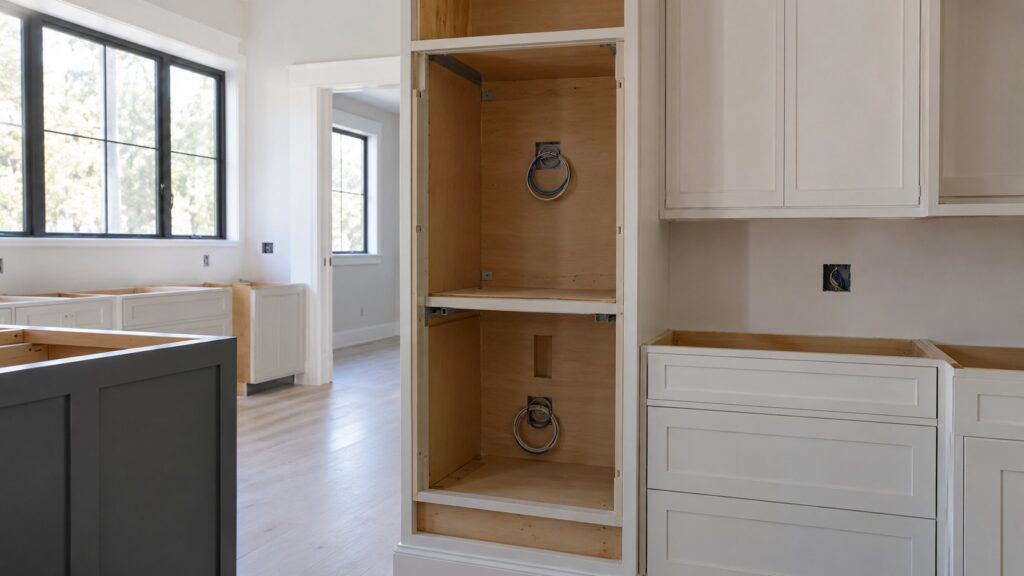
Thermador double oven installation is decided before the oven arrives. The cabinet cutout has to match the template for your exact model, the oven needs its own electrical supply installed by an electrician, the vent at the bottom has to stay clear, and a double oven is heavy enough that the cabinet and the lifting plan both need thought. The installation instructions for your model are the authority on every dimension and rating. This guide covers what to plan and what to ask, and where to hand the job to a professional.
What makes a double oven different from a single?
A double wall oven stacks two cavities in one cabinet. Our model pages list Thermador double ovens in both collections: the Masterpiece MED301WS, a 30-inch double wall oven with True Convection in both cavities, and the Professional POD302LW, a 30-inch double with left-swing SoftClose doors. Both are listed as panel-ready or built-in compatible with Home Connect.
The difference for installation is size and weight. Two ovens means a taller cutout, more weight on the cabinet and a bigger load on the electrical supply. Our wall oven installation guide covers the general requirements for single, double and triple ovens. It is a good place to start, but the document that counts is the installation manual for your model.
How do you get the cabinet cutout right?
Use the cutout template and dimensions from the installation manual of your model. Our wall oven guide is clear that the dimensions are specific to each model and configuration, and that you should not use the dimensions from a different model or brand, even if the cavity looks similar. A double oven cutout also has to be square and plumb, because an angled or racked cutout causes door alignment problems and uneven gaps.
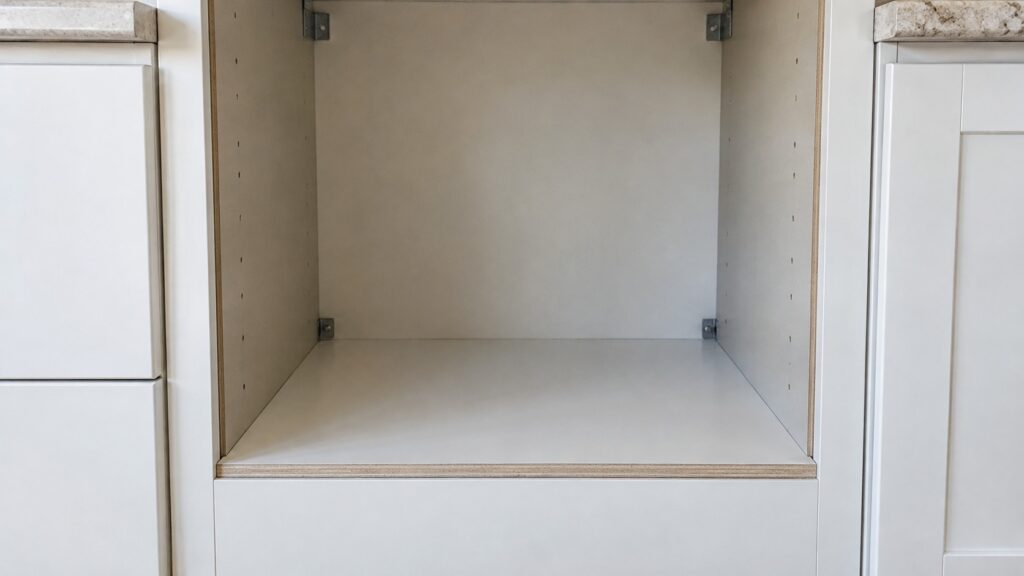
Check the cabinet before the oven is in the room. Is the base solid and level? Is the niche free of screws, shelf pins and debris that could scratch the oven? Is there room for the doors to open fully and for the oven to be slid in? Look at the surrounding cabinetry too: a trim or a handle that sits too close can prevent a door from opening. Measure twice, then compare with the manual.
What electrical supply does a double oven need?
A dedicated circuit, installed by an electrician. Our wall oven guide says Thermador wall ovens are hardwired, with no plug and outlet, and that double ovens need a larger circuit than singles, with the figure to be taken from the model’s specification. We do not give the rating here because it differs by model. The installation manual and the data plate state it, and the electrician has to follow local code.
Our wall oven guide says the junction box is reached through the cutout before the oven is slid in, so that is when the electrician makes the connection. Do not attempt to wire an oven yourself, and do not run an oven on a circuit that was not sized for it.
How heavy is a double oven, and who should lift it?
Heavy enough that this is not a one-person job. Our pages do not list the weight of each double oven, so check the specification sheet for yours, and plan the lift with enough people and a method that protects the oven and the cabinet. The base of the niche has to carry the weight, so check that it is solid, level and secured. Do not lift the oven by the door, the handle or the control panel, and ask the installer how your manual says to prepare the oven for lifting.
Keep the oven in its packaging until the niche is ready, and look it over for damage before the installer leaves. A dent or a bent door found after the oven is installed is much harder to deal with.
What about ventilation and clearances?
Ovens give off a great deal of heat, and a double oven gives off more. Our wall oven guide says wall ovens exhaust heat through a vent at the bottom of the unit or behind the control panel, depending on the model, and that you must not block it with cabinetry, drawers or stored items. A cooling fan moves that heat out, and the clearances in the manual protect the surrounding cabinets. Our oven maintenance guide covers keeping the oven in good condition after installation.
Do not store anything in a drawer directly under the oven if the manual says not to. Keep the clearances the manual lists above and at the sides too.
How do you check the installation on the first run?
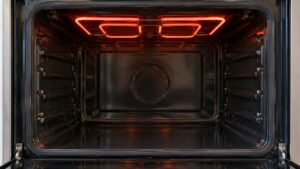
Before you cook, with the oven empty and the racks in place, check that both doors open and close smoothly and that the gaps around them look even. Turn the oven on, set the clock and look at the display for any code. Run each cavity empty, as the manual describes, and listen for the cooling fan. Some new ovens smell when first heated, and your manual explains what to expect.
If a door sits crooked, the oven rocks or a code appears, stop and call the installer. If you see sparks, smell burning that does not fade or notice a hot cabinet, switch off the breaker for the oven at the panel while standing on a dry floor. Do not pull the oven out or open any panel. Our Thermador wall oven not heating guide covers what to check if it does not come up to temperature.
When should you call a professional?
For the electrical connection, the cutout work, the lift and any problem that appears after the oven is in. We are an independent repair company, not the manufacturer, and we do not do new installations. When an oven that was installed correctly develops a fault, Thermador oven repair starts with a diagnostic visit, and you can book a visit online.