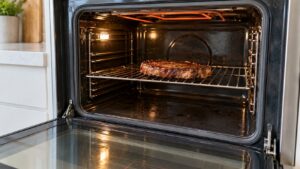
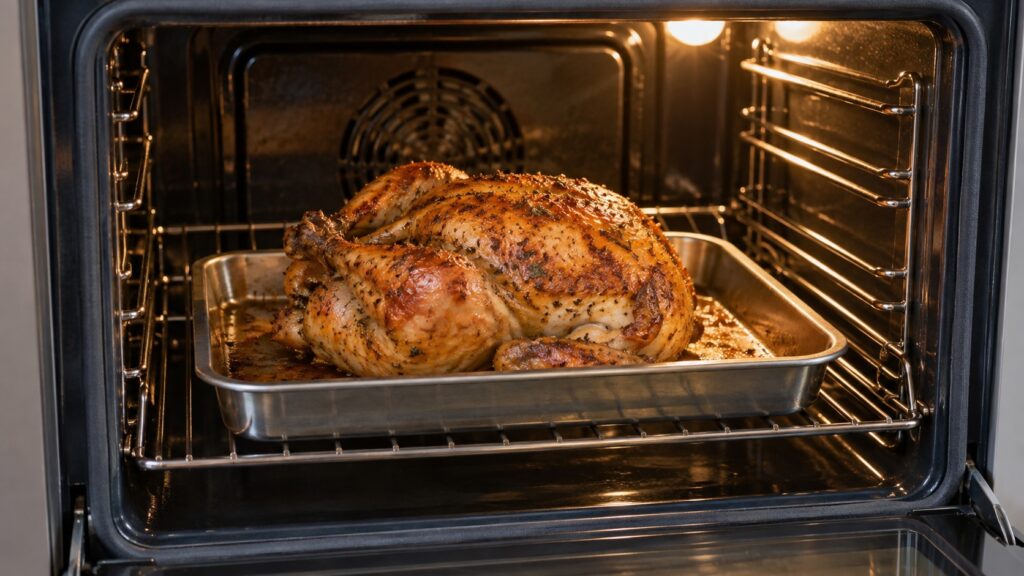
Thermador convection roasting works best when the air can move. A fan circulates hot air around the food, and a True Convection oven adds a dedicated ring element behind the fan, according to our guide to how Thermador True Convection works. That moving air browns food faster and more evenly, so the tips come down to a few habits: use a low-sided pan, leave space around the food, pat it dry, check for doneness before the recipe says and judge doneness with a thermometer, not with the clock.
How does convection change roasting?
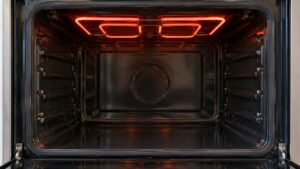
In a regular bake, still air around the food is a poor conductor of heat, and a layer of cooler air clings to the surface. With a fan, that layer is blown away, so the surface heats faster. The outside browns, and the skin and edges crisp. Our True Convection explainer says the ring element heats the air right at the fan, and the fan pushes it back into the cavity in a consistent pattern, which is why the heat is more even from rack to rack.
The result is that convection roasts usually finish sooner and brown better than the same dish in a regular bake. Our guide says Thermador ovens handle the adjustment automatically in some modes, and that you may prefer to adjust it by hand for more control. Which of your oven’s modes adjust the temperature and how is in your owner’s manual, so do not double up by lowering the temperature yourself without checking.
Which pan should you use for convection roasting?
A pan with low sides, such as a shallow roasting pan or a sheet pan with a rack, lets the moving air reach the food. A deep pan, or a pan with a tall lid, shields the food from the airflow and gives you roasting that behaves much like a regular oven. Our oven rack guide makes the same point for multi-rack cooking: use pans with low sides, and avoid flat baking sheets that block airflow between racks.
A rack inside the pan lifts the food above the juices, so the underside crisps and the pan does not steam it. If you roast vegetables with a chicken, add them around the bird, not under it, so the juices do not make them soft. Use a pan sized to the food. A very large pan with a small roast leaves bare areas where juices burn.
How should you arrange the food?
Leave space. Pieces that touch trap steam between them and brown unevenly. Cut vegetables to a similar size so they finish together, spread them in a single layer and give them room. Pat meat and poultry dry before roasting, because surface moisture has to evaporate before browning begins. With convection, a dry surface is what gives you crisp skin.
Do not cover the pan unless the recipe says so. A lid or foil over the whole pan traps steam and stops the airflow doing its job. Where you do want to slow the browning, tent a small piece of foil over just the part that is getting dark. Our oven rack positions guide explains which rack suits which food, and the same page covers cooking on more than one rack.
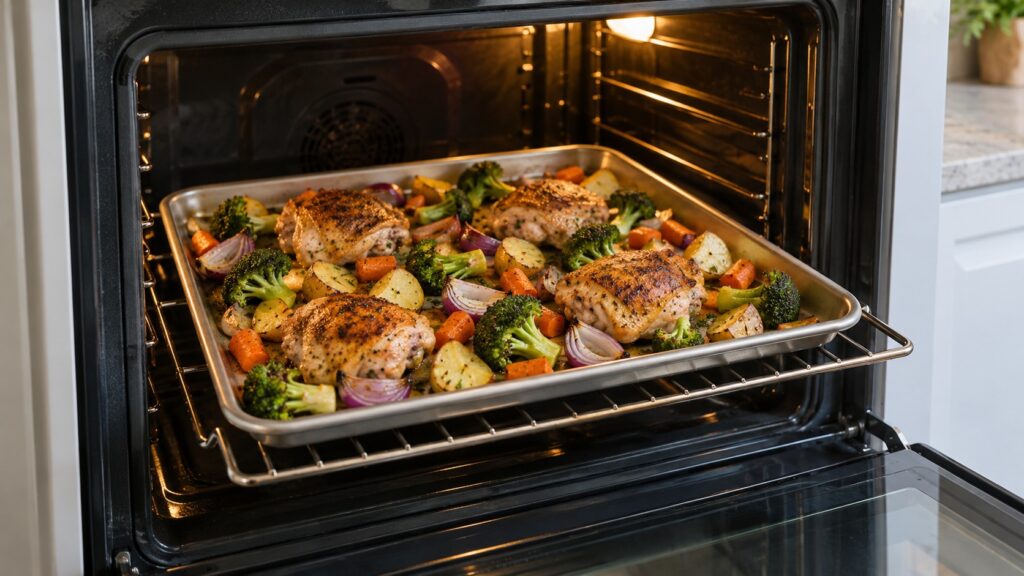
How do you avoid over-browning or dry meat?
Check earlier than the recipe says. Convection cooks faster, so a roast that was timed for a regular oven can be done before you expect it. Look through the window and use the oven light rather than opening the door more than you have to, because each opening lets heat out. If the outside is browning faster than the inside is cooking, lower the temperature or tent the food with foil.
Use a food thermometer to judge doneness, placed in the thickest part of the food and away from bone. Cook to the safe internal temperature for that kind of food as given by food-safety guidance, not by color or by the clock, because convection can brown the outside well before the inside is done. Rest the meat on a board before you carve, so the juices settle.
Are there foods that do not suit convection?
Yes. Delicate batters that need to rise gently, such as soufflés and custards, can be disturbed by moving air. Our True Convection guide notes that for delicate baking, a standard bake mode without convection may give better results. Roasting, on the other hand, is where convection shines, and a pan of vegetables, a chicken or a tray of potatoes usually benefits.
If you are cooking for a crowd, our Thermador oven holiday tips cover multi-rack strategy and timing, and the page on how True Convection works explains the principle in more depth.
What should you keep clean for good results?
Keep the oven clean. Grease on the floor of the cavity smokes at roasting temperatures, and a fan that is coated with splatter works less well. Wipe spills once the oven is cool, and follow your manual for self-cleaning. Our oven maintenance guide lists the routine. Do not remove the fan cover or reach behind it.
If the oven browns unevenly, runs hotter or cooler than the display, or the fan stops, our Thermador oven not heating guide helps you decide what to check. A fan or element fault is a technician’s job. If you see flames in the oven, keep the door closed, turn the oven off and, if it does not die down, switch off the breaker at the panel while standing on a dry floor. We are an independent repair company, not the manufacturer. Our Thermador oven repair page explains how a visit works, and you can book a visit online.