Normal vent hood sounds
Steady airflow hum: The blower motor creates a consistent hum at each speed setting. Higher speeds are louder — a Professional series hood at 1,000 CFM is significantly louder than the same hood at 300 CFM. This is physics, not a malfunction.
Filter rattle on startup: Baffle filters may briefly vibrate when the blower first engages, especially at higher speeds. If the rattle stops after a few seconds, the filters are seating against the airflow. Persistent rattle means a filter isn’t fully seated in its track.
Damper click: The backdraft damper opens when the hood starts and closes when it stops. A single click or clunk at each transition is normal.
Abnormal sounds — investigate
Grinding or squealing: Blower motor bearing wear. This worsens over time and eventually leads to motor failure. Schedule service before the motor fails completely — a seized motor can damage the speed control board.
Continuous rattling: Loose housing screw, unsecured duct connection, or baffle filter not properly seated. Check all visible screws and ensure filters click into their retention clips.
Whistling: Duct restriction — too many bends, undersized duct (use the diameter specified by Thermador), or a partially closed damper. Ductwork issues won’t damage the hood but reduce extraction performance.
Downdraft-specific sounds
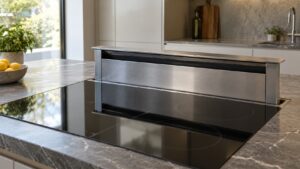
The motorized lift produces a mechanical whir when raising and lowering — this is normal. Grinding during lift operation means the track needs cleaning and lubrication. A stuck lift (no sound at all) indicates a motor or limit switch failure.
When to call a technician
Motor grinding/squealing, any burning smell, or a completely silent blower (should hum). Schedule service before a failing motor causes secondary damage.
Related Thermador resources
- Thermador Vent Hood repair service — certified technicians in all 50 states
- Thermador error code database — search all Vent Hood error codes
- Thermador model database — specifications and repair info by model number
- Thermador official site — official specifications, manuals, and product information
Important notes for Thermador vent hood owners
- Always use genuine OEM parts — aftermarket components may fit but can compromise performance, safety, and warranty coverage on Thermador appliances
- Never ignore error codes — Thermador codes are diagnostic aids designed to prevent small issues from becoming major failures. Address them promptly
- Keep your owners manual accessible — it contains model-specific maintenance schedules and troubleshooting trees. Digital versions are available on the Thermador official site
- Document issues before calling — note error codes, symptoms, when they started, and patterns. This helps the technician diagnose faster
- Use surge protectors — power fluctuations damage electronic control boards. A quality surge protector protects your investment
When DIY troubleshooting is not enough
Some Thermador vent hood issues can be resolved with the steps in this guide. However, call a certified technician immediately if you encounter:
- Gas smell (gas models) — turn off the appliance, open windows, leave the house, call from outside
- Burning smell or smoke — disconnect power immediately. Do not use until inspected
- Electrical sparking — turn off at the circuit breaker. Wiring or component failure
- Water leaking inside walls — shut off supply and call to prevent water damage
- Error codes that return after power reset — persistent codes indicate real component failure
- Sealed system issues — compressor, refrigerant work requires EPA-certified technicians
Schedule service online — our certified Thermador technicians carry genuine OEM parts and serve all 50 states with a 30-day labor warranty.