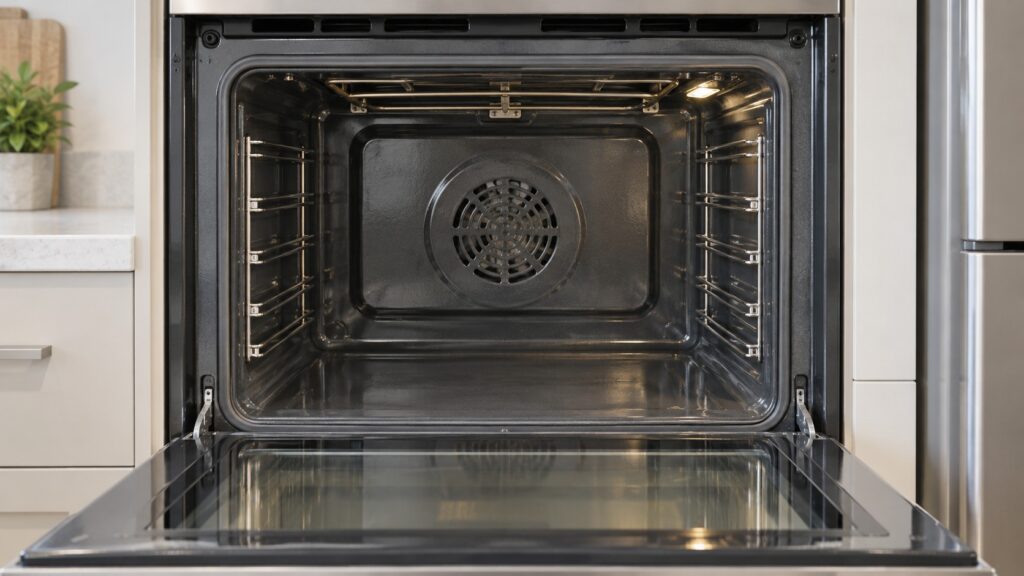
The Thermador self-clean cycle cleans the oven by locking the door and heating the cavity far hotter than any cooking setting, so baked-on food burns away to a fine ash. You wipe that ash out when the oven has cooled and the door lock has released. It uses no chemicals, but it does produce heat, smoke and fumes, so the preparation and the ventilation matter as much as the cycle itself.
How does the Thermador self-clean cycle work?
When you start the cycle, the control locks the door so it cannot be opened while the cavity is dangerously hot. The oven then raises the temperature well above the highest baking setting and holds it there for a set period, long enough for sugars, grease and fats to break down into carbon. Once the hold time is over, the heat is switched off and the oven cools gradually. The door lock stays engaged until the temperature has dropped to a safe level, at which point it releases and the display clears.
This is different from the steam or water-assisted cleaning that some ovens offer for light soil. The high-heat method is for heavy build-up, baked-on drips and the kind of residue a sponge cannot lift. The oven does the work while you are elsewhere, and the only manual part is the final wipe. Because the heat is extreme, the cavity, the insulation and the door seals are designed to cope with it, but that same design is why you must prepare the oven carefully.
What should you do before starting a self-clean?
Take out the racks, pans, thermometers and anything else in the cavity, unless your manual says that a particular rack may stay. Metal racks can discolor and lose their glide in the extreme heat. Wipe up loose spills and heavy puddles first, especially sugary or fatty ones, since they produce the most smoke. Do not wipe the gasket around the door with a cleaner, as it is delicate, and leave it alone.
Ventilate the kitchen. Turn on the hood, open a window and keep pets, particularly birds, out of the room, because the fumes from a hot cleaning cycle can bother them. If the oven sits under a cooktop, clear the cooktop of pans and towels. Our Thermador oven holiday tips suggest running a cleaning cycle a few days before big cooking days, so any problem has time to be fixed.
How long does the cycle take, and what is happening?
The full cycle commonly lasts several hours, with the exact time depending on the model and on any options you select for lighter or heavier soil. The first part is the climb to cleaning temperature, which takes a while because the oven has a lot of mass to heat. The middle part is the hold, when most of the burning happens, and you may see a little smoke or notice a smell. The last part is the cool-down, which can be as long as the heating phase because the door stays locked until the cavity is safe.
Do not try to interrupt the cycle by forcing the door. The lock is a safety feature. If you need to stop, use the control to cancel the cycle and wait for the cavity to cool. The display often shows a lock indicator until it is safe to open. Plan for the oven to be out of use for most of a day, and avoid starting a cycle when you need to cook within the next few hours.
What should you do after the cycle?
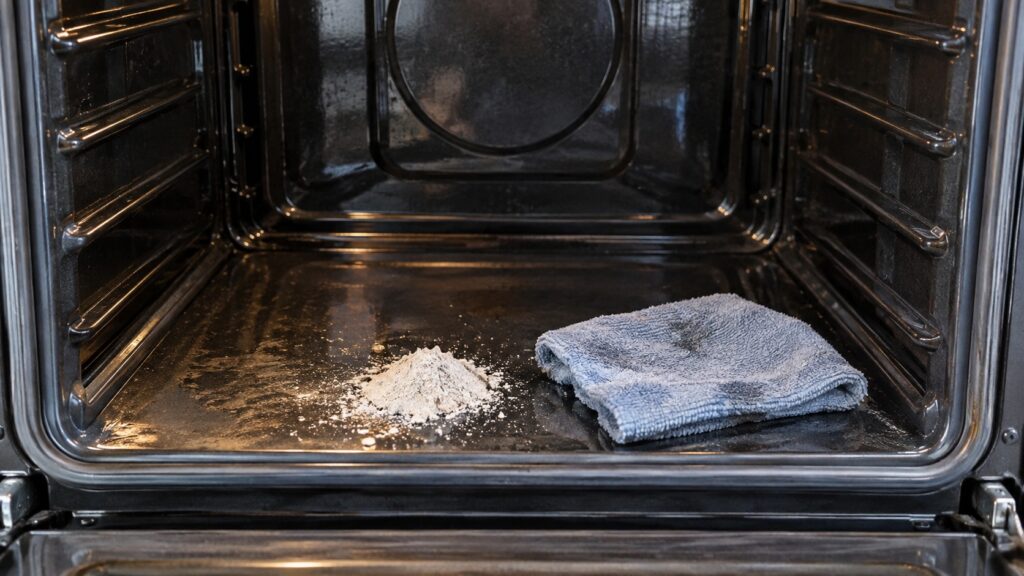
Wait until the door unlocks and the cavity is cool to the touch, then wipe out the ash with a damp cloth or sponge. Corners and the bottom collect the most. Work gently around the door gasket and the fan cover, and do not use abrasive pads on enamel. If any spot is still dirty, a second short cycle is rarely needed; a damp cloth and a little mild soap usually finish the job.
Replace the racks and check that they slide easily. If they feel stiff, wipe them and apply a small amount of oil-free rack lubricant approved for ovens, as your manual allows. For routine care between cleans, our Thermador oven maintenance guide explains how to keep the cavity from needing the heaviest cycle so often.
What problems can occur with self-clean?
Most issues are predictable. Heavy smoke usually means too much soil was left in the oven. A door that stays locked after the cycle is normally still cooling, but if it remains locked long after the oven is cold, the lock mechanism may be at fault, and our guide to the Thermador oven door lock code covers that case. An oven that will not start the cycle may have a door that is not detected as closed, or a control issue.
Occasionally, the extreme heat reveals a worn part, such as a weak sensor or a failing relay, because the oven is working at its limit. If an oven stops working during or after a clean, see our Thermador oven troubleshooting guide. Never use an oven cleaner spray in a self-cleaning cavity, since the chemicals can damage the enamel and create harmful fumes when heated.