An old Thermador oven is usually worth repairing when it has one clear fault, the oven is still the right size and the cutout and the rest of the unit are in good shape, even at fifteen years old or more. It is time to replace it when several parts are failing at once, the control board or touch panel is the problem on a much older unit, or you want features and a fit that the old oven cannot give. The oven’s age matters less than how many things are wrong at the same time.
How old is your Thermador oven, and does it matter?
Find the rating plate, which is usually on the edge of the oven frame or inside the door, and note the model number and the serial number. The model number tells you the type, width and series, and the serial number carries the production date in a form the manufacturer can decode. Our Thermador model number guide explains how to read the model number, and a technician can date the serial number for you. Age gives you the range of what is likely to go wrong, but it does not decide the question by itself. A well-kept fifteen-year-old oven with a worn element is a better repair than a neglected eight-year-old oven with several faults.
What usually fails on an older Thermador oven?
The same handful of parts account for most older oven repairs:
- The bake or broil element or the convection fan, which wear with use and usually cause an oven that heats poorly or not at all.
- The temperature sensor, which can drift or fail and trigger sensor codes. See the Thermador oven sensor codes.
- The door lock or latch, which sticks after a self-clean cycle. Our guide to the E005 door lock code explains it.
- The relays and the control board, which age with heat and with thousands of switching cycles.
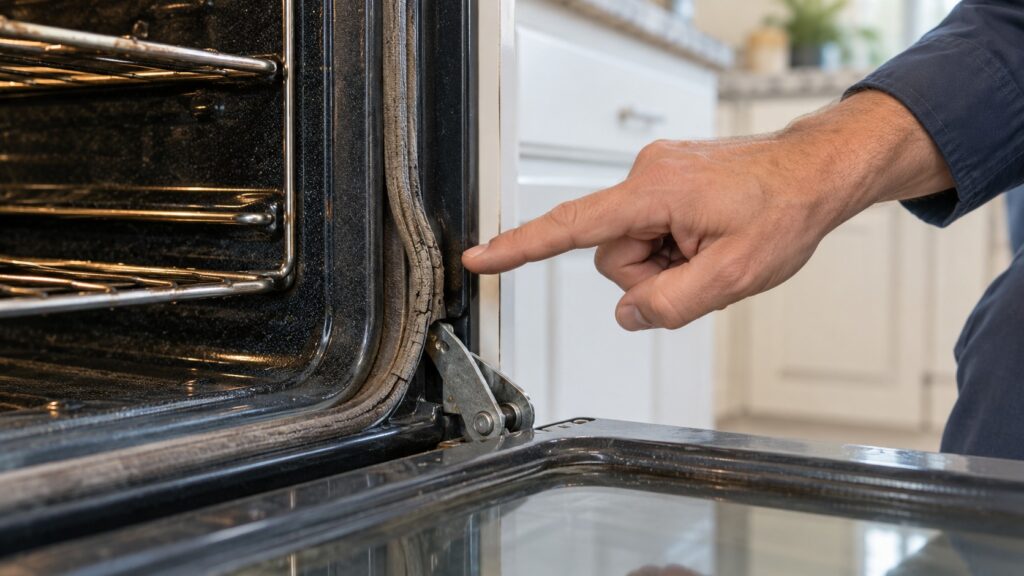
- The door gasket and hinges, which harden and sag, letting heat leak out.
Most of these are repairs with a defined cost and result. The control board and the touch panel are the parts that most often tip the decision, which is why we cover them separately in our control board repair or replace guide.
When is repairing an old Thermador oven the better choice?
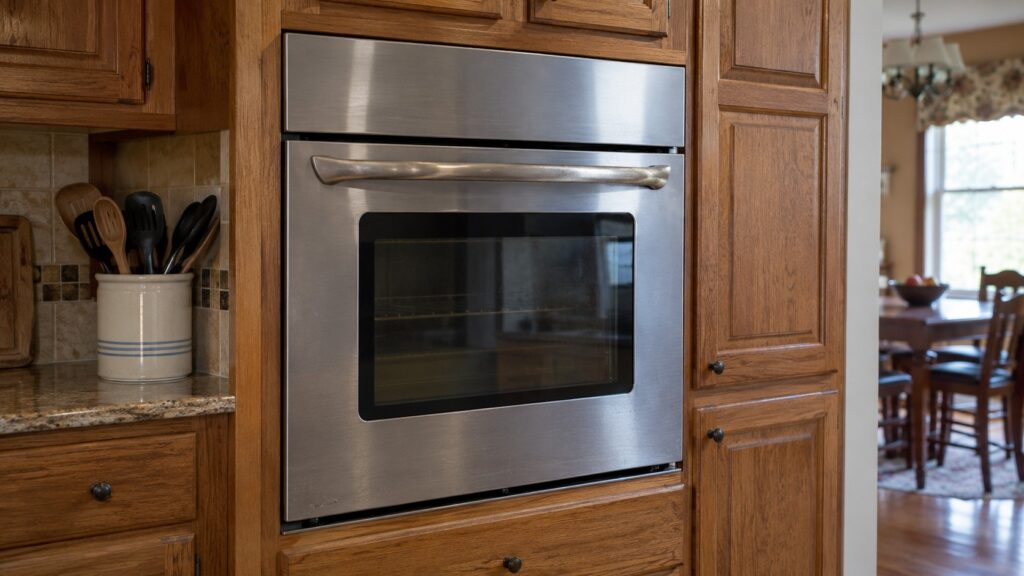
Repair makes sense when the problem is a single wear item, the oven bakes evenly, the door closes tightly and the cavity is free of rust and cracks. It also makes sense when the oven fits a custom cabinet opening that would be expensive or impossible to change, which is common in kitchens built around a specific Thermador oven. A repair that restores the oven to normal use for several more years is almost always cheaper than a replacement plus the cabinet and electrical work that often comes with it.
Think too about whether the oven has the features you actually use. If it is a True Convection model that bakes well and you are happy with it, the best upgrade may be no upgrade at all. Our Thermador oven repair vs replace guide sets out the general rules for newer units.
When should you replace an old Thermador oven instead?
Replace it when more than one major part has failed or is likely to, when the cavity is rusted through or the door glass is cracked, when the control board has failed on an oven old enough that the rest of it is wearing out and when the oven is too small or too basic for the way you now cook. The best reason to replace is a better fit for your life, not simply the age. A replacement is also the right call if the fault is a safety one, such as a gas valve problem or a damaged supply cable, and the repair would be more involved than the unit is worth.
What does a new built-in oven need that an old one did not?
Do not assume a new oven drops into the old opening. Measure the cutout width, height and depth, and compare them with the installation dimensions of the new model; Thermador wall oven sizes have changed over the years. Check the electrical supply and the circuit size required, the ventilation and clearance around the cabinet and the way the oven is supported. Our Thermador wall oven installation guide lists the checks. If you will change the oven, a quick look at our oven buying guide helps you pick a model that fits what you have.
What questions should you ask before approving a repair?
- What is the exact fault, and has it been confirmed by testing and not guessed from the symptom?
- Is the part available for this model number, and how long will it take to arrive?
- Are there other worn parts that are likely to fail soon, such as the gasket, hinges or relays?
- Does the repair come with a labor warranty?