A Thermador dishwasher dBA rating is the sound level printed in the specification, measured in A-weighted decibels, and a lower number means a quieter dishwasher. On our model pages the Sapphire DWHD550WFP, DWHD560WFP and DWHD560CFP are listed at 44 dBA, and the Emerald DWHD660WFP and DWHD660CFP at 42 dBA. This glossary explains what dBA means, how to read a rating, what the figures on our site say, and why the sound in your own kitchen also depends on the installation. It does not diagnose noises; for a dishwasher that has become loud, use the troubleshooting guide linked below.
What does dBA mean on a Thermador dishwasher?
The letters stand for decibels with an A-weighting, a way of measuring sound that gives more weight to the frequencies the human ear hears best. A dishwasher with a lower dBA number produces less sound under the test conditions that the maker used. The number on a specification sheet is a laboratory figure measured in a controlled setting, not a guarantee of what you will hear at home. We do not state the test cycle or conditions, because our pages do not give them; the owner’s manual or the specification sheet for your model may.
As a rule of thumb, the decibel scale is logarithmic, so a difference of a few decibels is audible but not dramatic. That is why the gap between 44 and 42 dBA is a small step, and why a rating alone is a poor reason to choose between two close models.
What dBA ratings are listed for Thermador dishwashers?
Our model pages list the following. The DWHD550WFP is described as a Sapphire dishwasher with precision wash, condensation drying and 44 dBA. The DWHD560WFP and the DWHD560CFP custom panel version are also listed at 44 dBA. The Emerald DWHD660WFP is described with CrystalDry, a flexible third rack and 42 dBA, and the DWHD660CFP custom panel version is also listed at 42 dBA. The other models on our list, including the Star Sapphire and Professional units, do not state a figure in their own description.
Our dishwasher noise guide says Star Sapphire models are rated at 39 dBA. We repeat that as a statement from our guide, not from the model pages, so check the specification sheet for the exact model before you rely on it. For how the tier names relate to features, see the collections glossary.
Why does the sound in your kitchen differ from the rating?
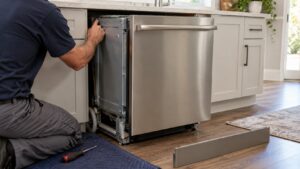
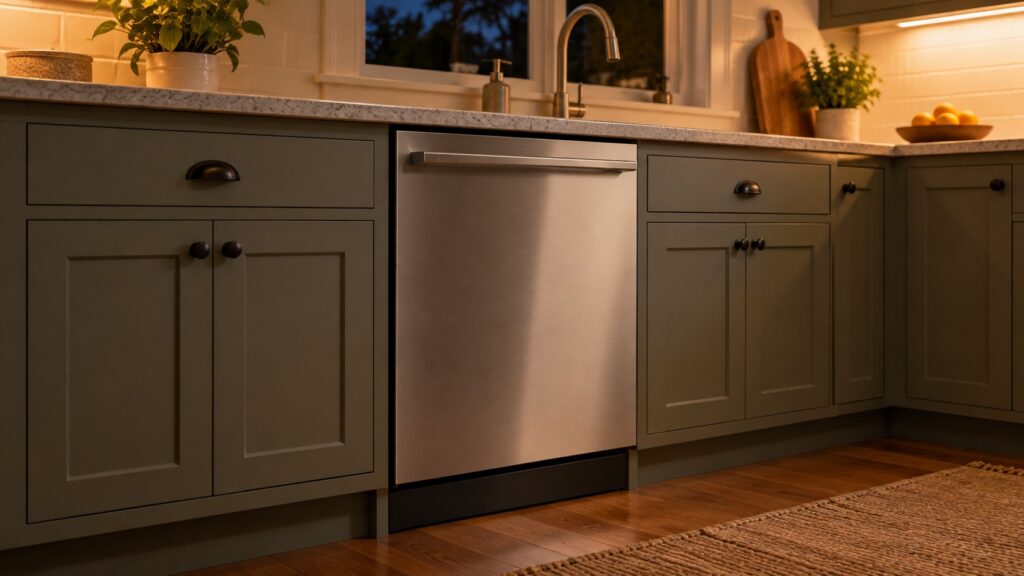
A dishwasher sits inside cabinetry, on a floor, next to walls and countertops, and all of those change how its sound travels. A hollow floor or an open-plan room carries sound farther than a closed kitchen. A dishwasher that is not level or not secured can rattle against the cabinets and sound louder than its rating. Securing the unit to the countertop or cabinet, as the installation sheet describes, matters here. The load matters too: a glass touching the tub wall or a loose utensil will clink whatever the rating says.
The cycle also changes the sound. Water spraying, the drain pump and the wash pump each have a character, and the sound is louder at some moments than others. The ratings give a single figure and cannot describe all of that.
Which sounds are normal, and which are not?
Our noise guide describes normal sounds such as a gentle hum from the wash pump, water spraying against the tub, a click from the detergent dispenser and a short whirring from the drain pump. It describes grinding, hammering and similar sounds as ones to investigate. If your dishwasher has become noticeably louder than it was, read the guide and check the filter and the load first; our filter cleaning guide covers the first step. A change in sound is more informative than a number on a sheet.
Do not remove the lower panel or open the door to look for the source of a noise. The pumps and wiring behind them are a technician’s job.
How should you use a dBA rating when you choose a dishwasher?
Treat it as one input. If your kitchen is open to the living space, look for the lowest rating you can find, and plan for a good installation. If the kitchen is closed, a two-decibel difference will rarely matter, and the drying system, the racks and the cycles may be better reasons to choose. Our dishwasher buying guide compares the tiers from the buyer’s side. Ask the dealer for the specification sheet for the exact model and read the sound rating together with any note about how it was measured.
When should you call a technician?
Call when a dishwasher becomes louder than before, makes grinding or hammering sounds that continue after the load and filter are checked, vibrates strongly or shows a code. If you smell burning or see water near the electrical connection, switch the breaker off at the panel while standing on a dry floor and stop using the dishwasher. We are an independent repair company, not the manufacturer. Our Thermador dishwasher repair page explains how a visit works, and you can schedule a visit online.