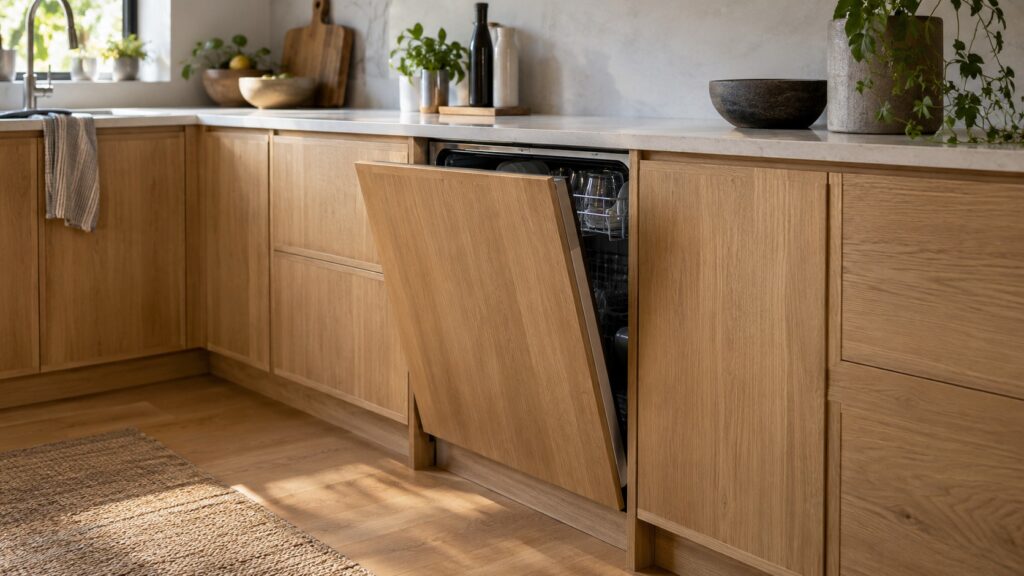
A Thermador custom panel dishwasher installs like any built-in dishwasher, with one extra job: the door has to carry your cabinet panel, so the door springs must be adjusted to the panel’s weight and the panel must match the template in the instructions. The custom panel models on our list, the Sapphire DWHD560CFP, the Emerald DWHD660CFP and the Star Sapphire DWHD770CFP, ship without a finished front, and getting the panel and the spring tension right is what makes the door open smoothly and close without slamming.
What is different about installing a custom panel dishwasher?
The plumbing, the drain and the electrical connection are the same as for a stainless steel front dishwasher. The difference is at the front. A custom panel model has no finished door skin, so the cabinet maker or installer fits a panel that matches the surrounding cabinets, and that panel adds weight to the door. A door that is not adjusted for that extra weight will either drop open and hang or spring shut, which wears the hinges and the seal and can slap fingers.
That is why the panel and the dishwasher should be planned together. Order or cut the panel to the dimensions in the installation instructions, not to the opening, because the panel has to clear the toe kick and the adjacent doors by the margins the instructions specify. Our general Thermador dishwasher installation guide covers the connections that do not change.
What do you need ready before installation day?
- The finished panel, cut to the template and weighed, with the mounting hardware the instructions call for.
- A cabinet opening of the width, height and depth in the instructions, with a level floor and a firm countertop underside to anchor to.
- A hot water supply with a shutoff valve within reach, a drain connection and an electrical supply of the type listed.
- A drain routed high under the counter, in a loop or through an air gap as local code requires, so wastewater cannot flow back.
- A flat clear path from the door to the kitchen, because the dishwasher is heavy and the cabinet edge is easy to chip.
How do you install a Thermador custom panel dishwasher step by step?
- Switch off the power and the water at the breaker and at the shutoff valve before anything else.
- Prepare the connections. Run the supply line and the drain hose, and make sure the electrical supply is ready at the position in the instructions.
- Slide the dishwasher into the opening, feeding the hoses and cable so they are not pinched or kinked.
- Level the dishwasher with the adjustable feet, front to back and side to side, then secure it to the underside of the countertop with the brackets provided.
- Make the connections. Attach the water, drain and electrical supply as the instructions direct, and tighten the supply fitting by hand then a small turn with a wrench.
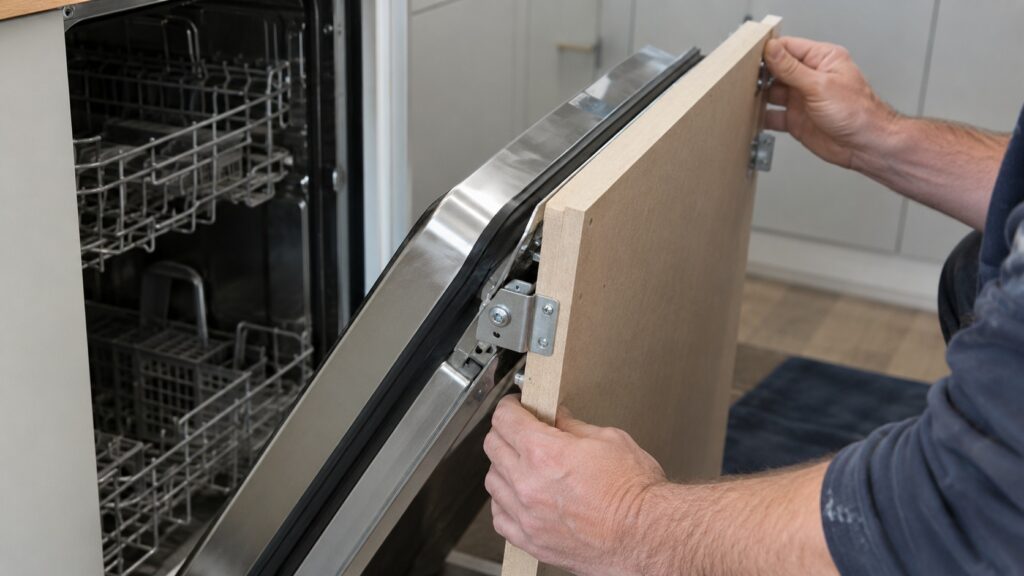
- Mount the panel on the door using the supplied brackets, and set the gaps to the margins in the instructions.
- Adjust the door springs until the door stays where you leave it when it is halfway open, neither dropping nor springing up.
- Test for leaks. Turn on the water, run a short cycle and check the supply, the drain and the door seal with the toe kick off.
If your panel is heavier than the instructions allow, do not force it. A panel that is too heavy overloads the door springs and hinges, and the fix is a lighter panel rather than a tighter spring.
How should you plan the panel itself?
Give the cabinet maker the dimension sheet from the installation instructions and weigh a sample before the final cut, because veneer, solid wood and stone-look composites differ a great deal in weight. Seal the back and the edges of a wood panel so it does not warp in the steam that leaves the door seal, and keep the finish off the edges that touch the brackets. Plan a reveal gap of the size the instructions allow, so the panel never rubs the neighboring doors or the toe kick when the dishwasher opens.
Why does the door drop open or slam shut after installation?
That is almost always spring tension that does not match the panel weight. Too loose and the door falls open when you release it; too tight and it springs back up or closes hard. Adjust the springs in small, equal steps on both sides and test the door at several angles. If the door is also crooked, check that the dishwasher is level and that the panel brackets are tightened evenly. A door that stays out of line may need the panel remounted.
What should you check on the first run?
Run a short cycle with the toe kick off and a flashlight in hand. Look at every connection for drips, at the floor under the machine for moisture and at the door edges for water spraying through the seal. Listen for an unusual noise from the pump, which can mean a hose touches the tub. Then fit the toe kick and run a full cycle. For the routine care that keeps a new dishwasher trouble-free, see our Thermador dishwasher maintenance guide, and for the tier differences see the dishwasher buying guide.