Thermador FlexRack is the adjustable, removable shelving system built into many Thermador wine coolers, letting you reconfigure shelf spacing to fit magnums, standard 750ml bottles, or a mix of both without losing overall capacity. The feature is genuinely useful for organizing a collection, but it also has to be cleaned and maintained correctly, and the shelves that make FlexRack flexible are also the part most likely to be damaged by careless removal or an overloaded rail.
What does Thermador FlexRack actually let you do?
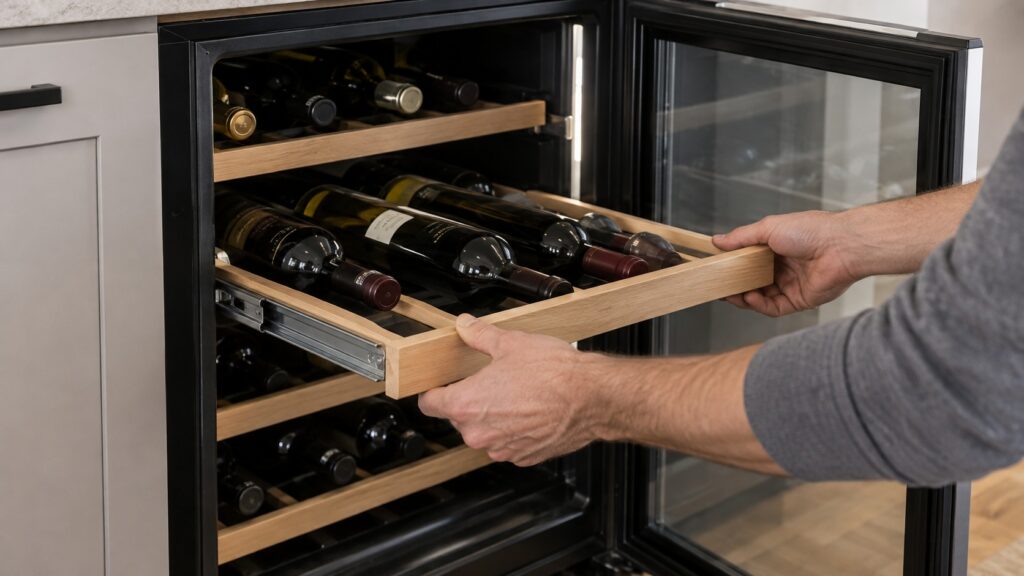
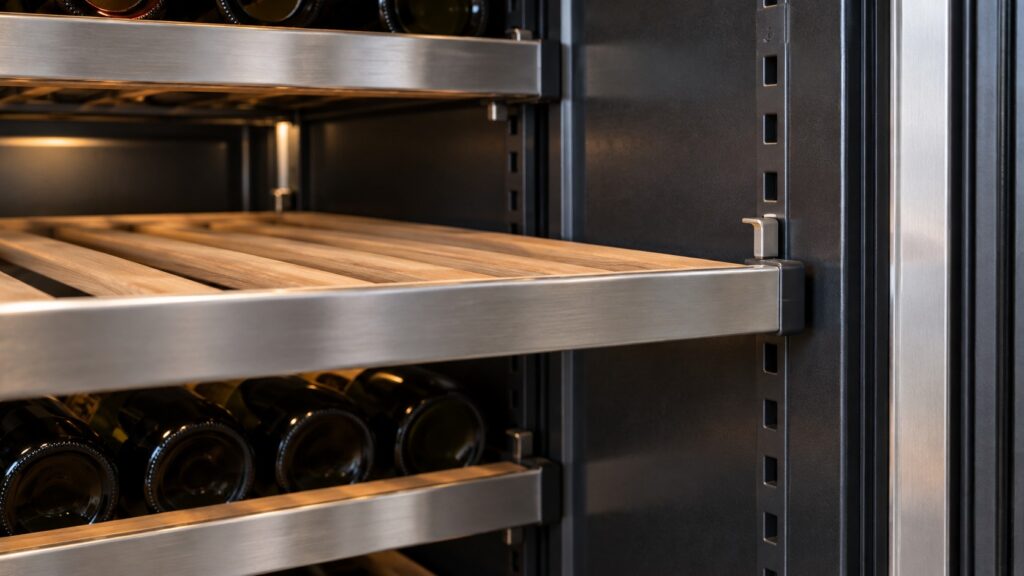
Thermador FlexRack shelves sit on sliding rails inside the cooler cabinet rather than being fixed at set heights, which means the spacing between shelves can be widened for magnums or large-format bottles and narrowed again for a fuller run of standard bottles, all without removing capacity from the unit the way a fixed shelf layout would. A collection that mixes bottle sizes — a few magnums picked up for a special occasion alongside a normal rotation of standard bottles — is exactly the situation FlexRack is designed to handle without wasted space or bottles balanced awkwardly on top of each other.
The tradeoff for that flexibility is that the shelves and their rails need periodic attention that a fixed shelf never would, since anything that slides is also something that can bind, wear, or come loose if it is handled roughly.
How do you remove a FlexRack shelf to clean it?
Most Thermador FlexRack shelves lift free of their rails with a combination of a slight tilt and a straight pull — check the specific model’s manual for whether a tilt-release catch needs to be engaged first, since forcing a shelf that is still engaged with its rail is the fastest way to bend the rail or the shelf frame. Remove bottles before removing the shelf itself; a loaded shelf is heavier and harder to control on the way out, and a dropped bottle inside a wine cooler is a bigger cleanup than the shelf ever needed to be.
Once a shelf is out, wipe both the shelf and the exposed rail section with a damp cloth and mild soap, avoiding harsh solvents that can degrade the rail’s coating or any rubber bottle-rest inserts. Dry both before sliding the shelf back in, since a damp rail attracts dust that turns into grime faster than a dry one.
How do you keep the rails from binding?
Rails bind for two reasons: dust that has built up in the track over time, and dried spilled wine that has hardened into a sticky residue the shelf has to drag through every time it slides. Both are preventable with the same habit — wiping the visible rail surface whenever you notice a spill, rather than waiting for a scheduled cleaning to deal with it. A spill left to dry for a week is measurably harder to remove than one wiped within a day, because the sugars in wine turn tacky and then hard as they dry.
If a rail is already binding, a soft brush or a cloth wrapped around a thin tool can clear the track without needing to remove the shelf at all, which is worth trying before assuming a shelf needs replacing.
How much weight can a FlexRack shelf actually hold?
Each shelf has a rated capacity, typically expressed as a bottle count for standard 750ml bottles, and that rating accounts for the rail hardware as much as the shelf material itself. Exceeding it, even for a short time while reorganizing, puts strain on the rail mechanism that a single overload event may not break outright but that adds up over repeated overloading. A shelf that has started to sag or that no longer sits level on its rails has often been overloaded at some point, even if it seemed fine at the time.
When reorganizing for a mix of bottle sizes, it is worth counting bottles against the rated capacity rather than eyeballing how full a shelf looks, since magnums and larger formats weigh meaningfully more per bottle than standard sizes.
Does FlexRack maintenance differ for magnums versus standard bottles?
The maintenance routine is the same regardless of what size bottles a shelf is set up for — clean shelves, clean rails, respect the rated weight — but the practical stakes are higher with magnums, since fewer bottles reach a shelf’s weight limit and a single magnum represents more weight concentrated in less contact area than a standard bottle. Spacing shelves wider for magnums is exactly what FlexRack is built to do, but it is worth rechecking that a wider spacing still has the rail properly engaged along its full length rather than just at one end.
What should you do with the bottles while you clean the shelves?
Move bottles somewhere cool and dark for the short time a shelf-out cleaning takes, rather than lining them up on a sunlit counter for an hour while you work through the cabinet. Wine held at room temperature or in direct light for a brief cleaning session is not going to spoil, but it is a habit worth keeping deliberately short — a countertop near a window on a warm afternoon is a meaningfully different environment than the inside of a temperature-controlled cooler, and there is no reason to stretch that exposure longer than the cleaning actually requires.
Working through the cabinet zone by zone, rather than emptying every shelf onto the counter at once, keeps most of the collection inside the cooler at its normal temperature while you clean one section at a time.
When does a FlexRack problem need more than cleaning?
A shelf that has visibly bent, a rail that has come loose from the cabinet wall rather than just gathering dust, or a shelf that will not seat evenly on both sides after cleaning are mechanical problems rather than maintenance ones, and forcing a bent shelf back into place usually makes the misalignment worse rather than better. Those situations call for parts or adjustment rather than another cleaning pass.
We are an independent repair company, not a factory service arm. Pricing starts from a diagnostic visit and we confirm the estimate before any work begins. See our Thermador wine cooler care guide for cabinet and door-seal maintenance beyond the shelving, and wine cooler organization tips for getting the most out of adjustable shelving day to day. Thermador wine cooler repair covers shelf and rail hardware, and you can schedule a visit online.