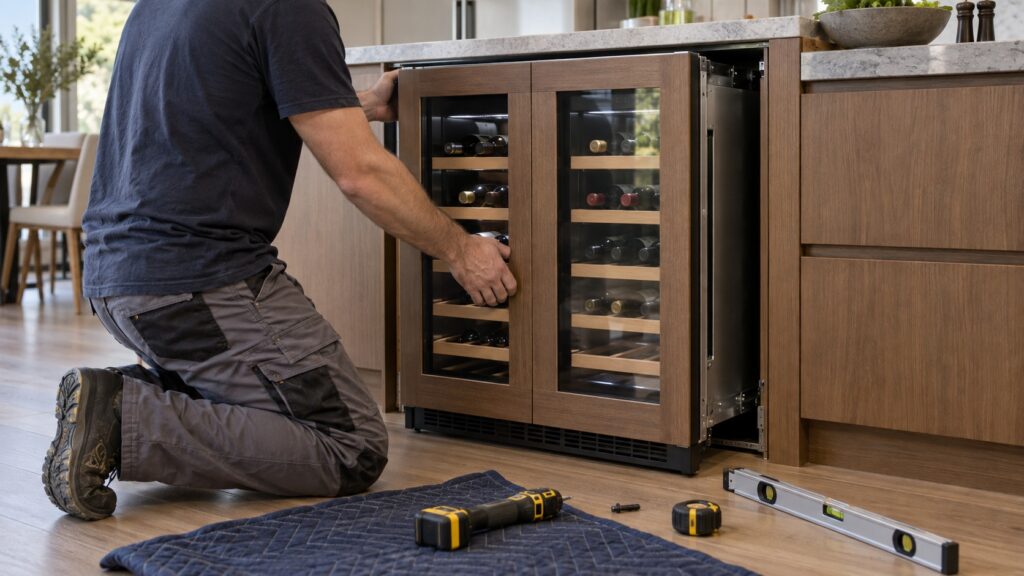
Thermador dual-zone wine cooler setup is not the same job as installing a single-zone unit, and treating it that way is the single most common mistake in a wine cooler installation. A dual-zone cooler has two separate compressors and two separate cooling circuits, one for each temperature zone, and every part of the install that touches power, ventilation or airflow has to account for both circuits rather than one. Skipping that distinction is how a cooler ends up running fine on the shelf and struggling for years inside the cabinet.
Why does a dual-zone wine cooler need more attention at installation than a single-zone unit?
A single-zone cooler is, mechanically, one refrigeration circuit: one compressor, one condenser, one path for heat to leave the cabinet. A dual-zone unit runs two of everything, because the two zones are kept at genuinely different temperatures and that separation only works if each zone has its own independent cooling. That means Thermador dual-zone wine cooler installation involves twice the mechanical hardware generating heat inside roughly the same footprint, and twice the airflow requirement to move that heat away from the unit.
The practical result is that clearances and venting specifications written for a single-zone model understate what a dual-zone model actually needs. Reading the installation sheet for this specific unit, rather than assuming wine coolers are all installed the same way, is the first step that prevents problems later. Our general Thermador wine cooler installation guide covers opening size, power and venting basics that still apply as a starting point.
What electrical circuit does a dual-zone wine cooler actually need?
Two compressors cycling independently draw more current, at least intermittently, than a single-zone unit on the same nominal voltage, and both can start at overlapping times depending on how each zone is calling for cooling. Confirm the dedicated circuit for this unit is rated for the combined draw specified on the nameplate and installation sheet, not for a single-zone unit’s typical draw. A circuit that is marginal for a single compressor becomes a real problem when two compressors are cycling on a shared line, showing up as nuisance trips or as compressors that start sluggishly under low voltage.
This is also not a circuit to share with other kitchen appliances. A dedicated circuit sized correctly for the nameplate rating is worth confirming with an electrician before the unit ever goes into the cabinet, not after it is wired in and struggling.
How much clearance does each cooling circuit need?
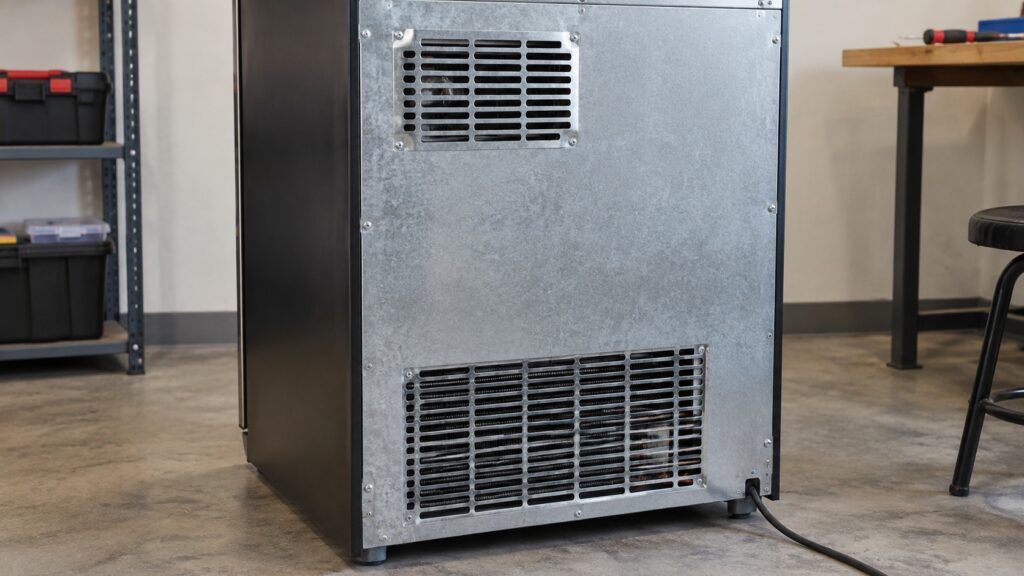
Because a dual-zone unit vents heat from two separate circuits, clearance has to be confirmed for both, and the two paths are not always in the same location. Some dual-zone models vent both circuits from the same rear or front grille; others separate the two paths to different sides or levels of the cabinet. The installation sheet for this specific model states where each path is and how much clearance it needs — treating one vent path as “the” vent path and giving it generous clearance while leaving the second path against a wall or shelf undoes the benefit of the first.
Rear clearance matters most in cabinetry with a solid back panel, since that panel is exactly what turns a small gap into a sealed compartment. Side clearance matters most in a narrow run of cabinets where two units sit close together. Check both, for both circuits, before final fastening.
Does a fully enclosed cabinet need a fan kit for a dual-zone cooler?
If the wine cooler is going into a cabinet that is boxed in on all sides with no natural air path — a common look for a seamless kitchen island installation — a fan-assisted venting kit is very likely necessary, and more so for a dual-zone unit than a single-zone one, since there is more heat from two compressors that needs an active path out. Without one, both circuits are drawing warm air from inside a sealed box and returning heat to that same sealed box, which is a cycle that steadily raises the internal cabinet temperature and forces both compressors to work harder than the unit was designed for.
Confirm with the specification sheet whether this particular model requires forced venting in a fully enclosed installation or only recommends it. Treat “recommended” as “required” in any cabinet with no other air path, since the alternative is a compressor working continuously against its own trapped heat.
What happens if only one compressor’s airflow gets blocked?
Because the two zones are mechanically independent, blocking one circuit’s airflow does not immediately affect the other zone’s temperature — which is exactly what makes the problem easy to miss during installation. One zone will hold its set point normally while the other, starved of airflow, runs its compressor longer and harder to compensate for heat it cannot shed efficiently. Left long enough, that circuit runs hotter than it should and shortens the life of that compressor specifically, while the other zone shows nothing wrong at all.
That is the practical argument for checking both vent paths individually during installation rather than confirming “the cooler is vented” as a single yes-or-no question.
What should be checked before calling the installation finished?
Confirm both temperature zones reach and hold their set points independently over a full day, confirm the dedicated circuit is not tripping or showing signs of strain, and confirm both compressor compartments — front or rear, per the spec sheet — are not measurably warmer to the touch than the surrounding cabinetry after a few hours of normal operation. Any of those failing points back at venting or electrical capacity rather than the cooler itself.
We are an independent repair company, not a factory service arm. Pricing starts from a diagnostic visit and we confirm the estimate before any work begins. See how Thermador dual-compressor cooling works for the mechanism behind two independent zones, and our wine cooler buying guide if you are choosing between single- and dual-zone models. Thermador wine cooler repair covers installation checks and airflow problems, and you can schedule a visit online.