A thermador refrigerator compressor repair or replace decision is different from a general refrigerator repair-or-replace decision, because the compressor is the single most expensive part in the sealed system and its cost relative to the unit’s age is usually what tips the scale one way or the other. Knowing the specific symptoms of a failing compressor, and why the sealed system is not something to open yourself, is what turns a guess into an informed decision.
What are the symptoms of a failing Thermador refrigerator compressor?
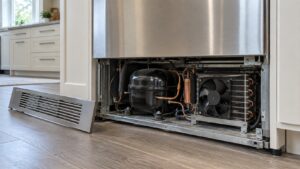
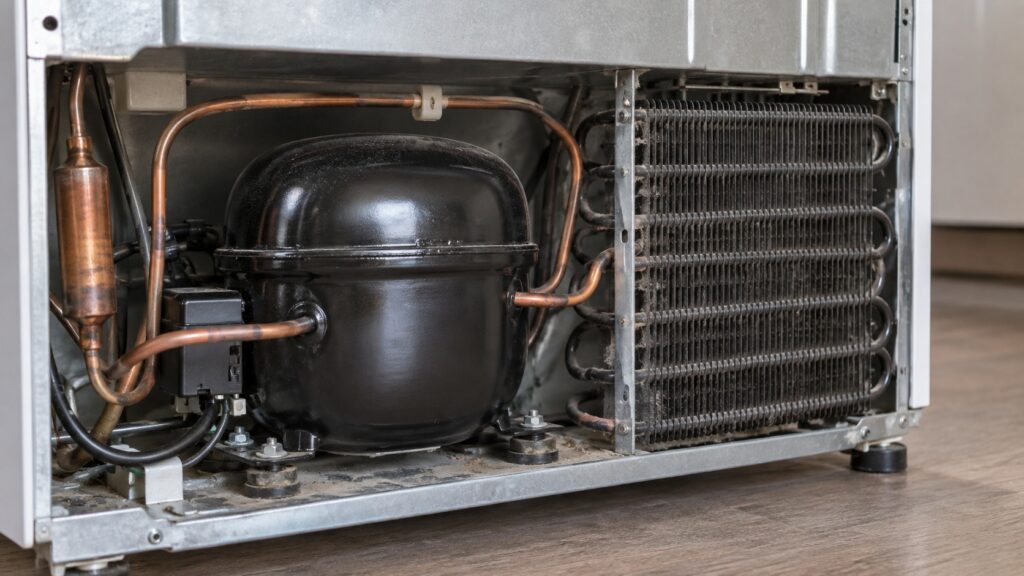
A refrigerator that will not cool at all, with the compressor either silent or running without ever building the pressure needed to circulate refrigerant, is the clearest sign of compressor failure. A refrigerator that runs almost continuously, rarely if ever cycling off, is another: the compressor is working as hard as it can and still struggling to reach its setpoint, which points at reduced efficiency inside the compressor itself rather than a simple door-seal or thermostat problem. A repeating pattern of humming, a click, and then silence is the overload protector doing its job — shutting the compressor down before it damages itself when it cannot start properly — and it is one of the more recognizable compressor-failure sounds in any sealed-system appliance. A compressor compartment that feels noticeably warm to the touch, beyond what is normal for a running compressor, rounds out the pattern, especially when it appears alongside any of the other three symptoms.
None of these symptoms on their own guarantees a compressor problem — a warm compartment with normal cooling can be nothing at all — but two or more together, especially reduced cooling paired with cycling or constant running, point strongly at the compressor rather than at a smaller, cheaper part.
Why does compressor cost drive the repair-or-replace decision so directly?
A compressor is not a simple swap. Replacing one on a sealed system means recovering and evacuating the existing refrigerant, replacing the compressor itself, recharging the correct refrigerant type and amount, and confirming the sealed system holds pressure afterward — labor and parts that add up to one of the largest single repair costs a refrigerator can need. That cost has to be weighed against what the rest of the unit is worth: a compressor failure on a refrigerator that is two or three years old is worth repairing without much debate, since the rest of the appliance has a long life ahead of it. The same failure on a unit well past the midpoint of its expected service life is a much closer call, because the money goes into one component while everything else on the unit is aging at the same rate.
This is the same logic behind any thermador refrigerator compressor repair or replace decision on an appliance nearing the end of its typical lifespan — the question is never just “can this be fixed,” it is “does fixing this one expensive part make sense given everything else on the unit.” Our general Thermador refrigerator repair vs. replace guide covers that broader age-and-cost logic across every kind of failure, not just the compressor.
Does a Freedom Column’s modular design change this decision?
Yes, meaningfully. On a Freedom Column installation, the refrigerator, freezer and wine columns each run independent sealed systems, so a compressor failure in the refrigerator column does not affect the paired freezer or wine column at all, and replacing that one column’s compressor — or, in a severe case, the column itself — never means touching the rest of the installation. That independence tilts the repair-or-replace math further toward repair on a column system, since the alternative to a compressor repair is replacing one column rather than an entire multi-unit refrigeration wall.
What does a compressor repair actually cost relative to a new unit?
Sealed-system compressor work starts around several hundred dollars and climbs from there depending on the refrigerant type, the compressor’s accessibility, and whether other sealed-system components need attention at the same time. On a refrigerator or refrigerator column still within a reasonable portion of its expected life, that cost is normally well below the price of a comparable replacement unit, which is why repair remains the right call for most compressor failures on newer appliances. The calculation shifts once a unit is old enough that a compressor repair is competing with a meaningful fraction of a new unit’s price, at which point the remaining unknowns about the rest of the appliance start to matter as much as the compressor itself.
Why is the sealed refrigerant system not a DIY repair?
Refrigerant handling requires EPA certification by law in the United States, and for good reason: refrigerant is pressurized, some types are flammable, and recovering, evacuating and recharging a sealed system incorrectly can leave a unit that runs but cools poorly, or fails again within weeks. Beyond the legal requirement, the tools needed to properly evacuate and recharge a sealed system — a vacuum pump, a manifold gauge set, and the correct refrigerant — are not equipment most households own or need for anything else. Opening a sealed system without that equipment and training does not save the cost of a repair; it usually adds the cost of a second repair once the first attempt is diagnosed as the cause of a new problem.
When should you call a technician instead of deciding on your own?
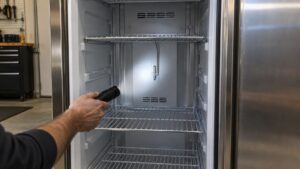
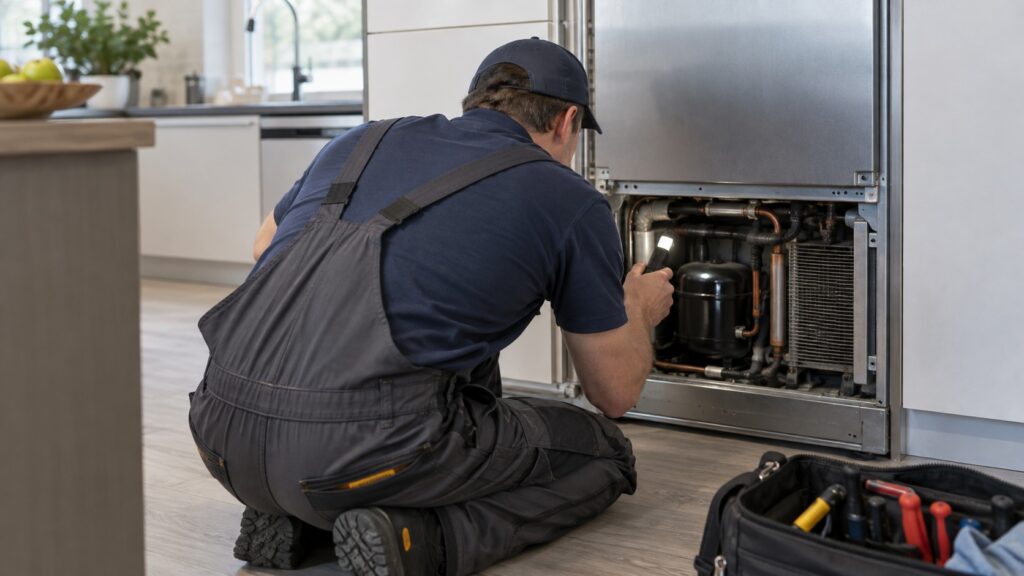
Any of the four symptoms above, on their own or together, is worth a diagnostic visit before deciding anything, since a technician can confirm whether the compressor itself is at fault or whether a cheaper part — a start relay, a run capacitor, a fan motor — is producing a similar-looking symptom. That diagnosis is also what gives you the real cost figure needed to weigh against the unit’s age, rather than guessing at what a compressor repair runs.
We are an independent repair company, not a factory service arm, and we will tell you honestly when a compressor repair does not make sense on an older unit. Pricing starts from a diagnostic visit and we confirm the estimate before any work begins. See our guide to Thermador refrigerator E11 and E20 compressor codes if the unit is showing an error, and Thermador refrigerator repair covers compressor diagnosis and sealed-system work. You can schedule a visit online.