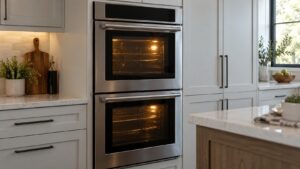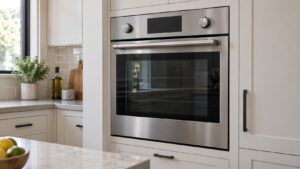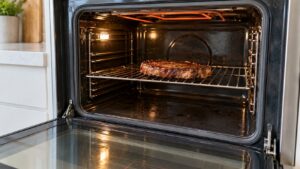
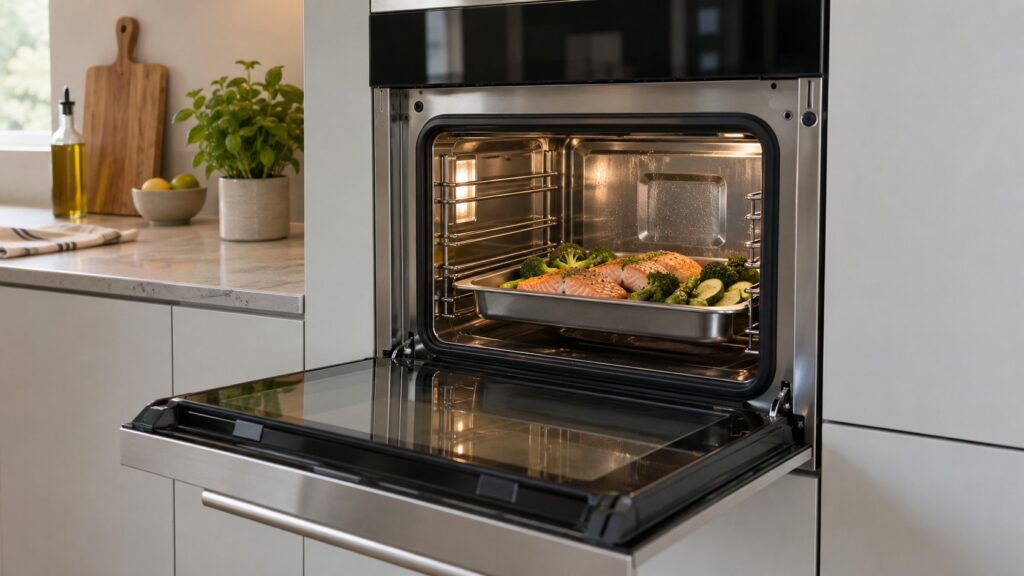
Thermador steam oven cooking is gentle cooking with moist heat. The steam keeps food from drying out, which is why it suits vegetables, fish, rice and reheating, and why it can be combined with dry convection heat for roasts and bread. Our model page for the Masterpiece MEDS301WS describes a 30-inch steam convection oven with nine cooking modes that combine steam and dry heat, and our guide to Thermador speed and steam ovens lists full steam, convection steam and reheat steam. The tips below help you choose the right mode, pans and finishing step. What each mode is called and does on your oven is in your owner’s manual.
What does a steam oven do better than a regular oven?
It keeps moisture in the food. Dry oven heat pulls water from the surface, which is why a reheated slice of bread or a piece of fish can come out dry. Steam does the opposite. It heats the food gently and keeps it moist, so vegetables stay bright, fish stays tender and rice cooks evenly. Our speed and steam oven guide lists full steam for vegetables, fish and rice, convection steam for bread and roasts, and reheat steam, where gentle moisture prevents drying.
The oven also changes how you reheat, since our guide describes a reheat steam mode in which gentle moisture prevents drying. Which mode to use for reheating, and for how long, is in your manual.
Which foods suit steam cooking?
Foods that you would otherwise boil, poach or steam on the stove. Vegetables keep their color and texture. Fish and shellfish cook gently and stay moist. Rice is on our guide’s list for full steam, and your manual says how to cook rice and grains in your oven. Anything you want crisp or deeply browned, such as roast potatoes or a crusty loaf, wants dry heat or a combination of steam and dry heat.
The rule of thumb is to start with the food, not the mode. Ask whether you want it moist, crisp or both, then choose steam, dry convection or a steam-and-convection combination. If your manual has a chart for your oven, follow it. Our pages give no times or temperatures, and we will not guess at them.
What pans and trays should you use?
Shallow pans, as our guide says, because they let steam circulate around the food. Use pans and dishes that are safe in your oven and in the mode you are using. Our guide notes that metal pans are a problem in the speed oven’s combined microwave mode, which is a different oven from a steam oven. Check your manual for what is allowed in each mode on yours.
Do not cover food tightly, since that stops steam reaching it. Do not stack pans so they block each other, and do not crowd the rack. Leave room between items, and keep them in a single layer where you can.

How do you use the water reservoir?
Fill it before you start, as the manual says, and use the water your manual specifies. Our guide says to refill before starting if the indicator is low, and warns against overfilling, which makes water drip during preheating. After cooking, empty the reservoir. Our guide says standing water grows bacteria.
The reservoir leads to the next tip: descale on a regular basis. Our guide calls mineral buildup the number one cause of steam failure. Your oven may have a descaling program, and your manual explains how to run it and which descaling product is approved. Do not use a household cleaner that the manual does not allow.
How do you get crisp results from a steam oven?
Finish with dry heat. Our guide suggests finishing with a few minutes of dry convection after steam cooking for crispy results, and using less steam for foods that should be crisp. That means that a roast can be cooked gently with steam and then browned, and a loaf can start in steam and finish dry. Which mode combination does this on your oven is in the manual.
Preheat in the mode you want, because our guide says steam preheating makes steam in the cavity before the food goes in. Opening the door lets steam escape, and the steam you let out is the steam your food is not getting, so open as seldom as you can.
What safety points apply to a steam oven?
Steam burns are worse than most people expect. When you open the door during or just after cooking, stand back, let the steam escape for a moment and open the door gradually, with your face and arms clear. Use oven gloves. Keep children away from the oven during use. Never put anything in the cavity that the manual does not allow, and never block the vent. If you see water leaking from the door or the oven, or smell burning, turn the oven off, and if water reaches an outlet, switch off the breaker at the panel while standing on a dry floor.
When is it a repair and not a tip?
If the oven will not make steam, drips water, shows a code or does not heat, descale if the manual says it is due and check that the reservoir is filled as the manual describes. If that does not help, do not take the oven apart. We are an independent repair company, not the manufacturer. Our speed oven and steam oven guide covers the modes and the common mistakes, our oven maintenance guide mentions steam oven upkeep and the Thermador oven repair page explains how a visit works. You can book a visit online.