Why CFM matters
CFM (cubic feet per minute) measures how much air your Thermador vent hood moves. Too little CFM and cooking smoke, grease, and moisture linger in your kitchen. Too much CFM (relative to room size) and you create a negative pressure that pulls air from unintended sources — including backdrafting gas appliances, which is a safety hazard.
The BTU-to-CFM formula
For gas cooktops: divide total BTU output by 100. A Thermador 36″ gas cooktop with 60,000 total BTU needs at least 600 CFM. A Pro Grand 48″ with 120,000+ total BTU needs 1,200+ CFM. For induction cooktops: use a lower ratio — induction produces less heat and steam. A 36″ induction cooktop typically needs 400-600 CFM.
Duct sizing
Use the duct size specified by Thermador for your hood model — never smaller. Common sizes: 6″ round (for up to 600 CFM), 8″ round (for 600-1,000 CFM), 10″ round (for 1,000+ CFM). Round duct is more efficient than rectangular. Every 90° elbow in the duct run reduces effective CFM by about 15%. Keep the duct run as short and straight as possible.
Makeup air
Hoods above 400 CFM may require a makeup air system in some building codes — especially in tightly sealed modern homes. Makeup air replaces the air exhausted by the hood, preventing negative pressure. Check local building codes before installing a high-CFM hood. Thermador’s remote blower option can be paired with an interlocked makeup air damper for code compliance.
Hood width
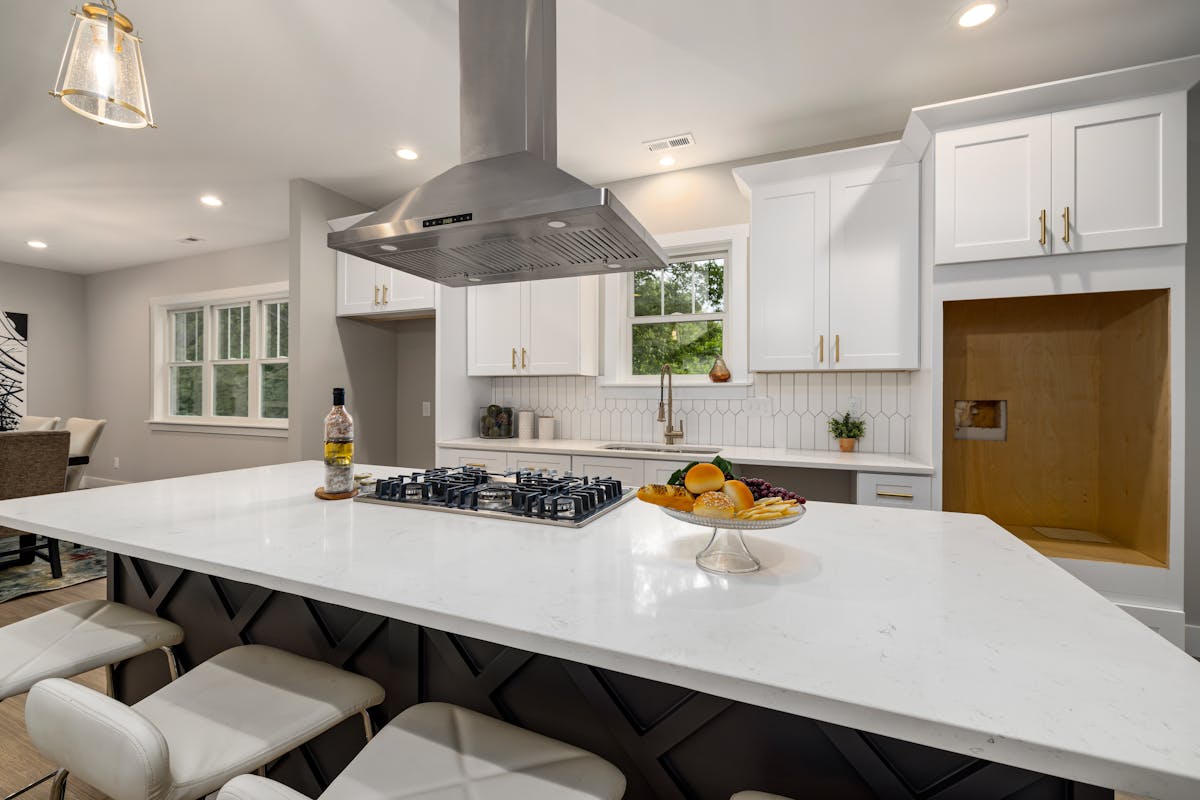
The hood should be at least as wide as the cooktop — ideally 3-6″ wider on each side. A 36″ cooktop needs at least a 36″ hood (42″ is better for island installations where air currents disperse laterally). Undersized hoods miss steam and grease at the edges of the cooktop.
Need professional Thermador Vent Hood service?
If troubleshooting doesn’t resolve the issue, our certified Thermador technicians can help. We service all Thermador Vent Hood models across all 50 states with genuine OEM parts and a 30-day labor warranty. Schedule service online — same-day booking available.
Related Thermador resources
- Thermador Vent Hood repair service — certified technicians in all 50 states
- Thermador error code database — search all Vent Hood error codes
- Thermador model database — specifications and repair info by model number
- Thermador official site — official specifications, manuals, and product information
Important notes for Thermador vent hood owners
- Always use genuine OEM parts — aftermarket components may fit but can compromise performance, safety, and warranty coverage on Thermador appliances
- Never ignore error codes — Thermador codes are diagnostic aids designed to prevent small issues from becoming major failures. Address them promptly
- Keep your owners manual accessible — it contains model-specific maintenance schedules and troubleshooting trees. Digital versions are available on the Thermador official site
- Document issues before calling — note error codes, symptoms, when they started, and patterns. This helps the technician diagnose faster
- Use surge protectors — power fluctuations damage electronic control boards. A quality surge protector protects your investment
When DIY troubleshooting is not enough
Some Thermador vent hood issues can be resolved with the steps in this guide. However, call a certified technician immediately if you encounter:
- Gas smell (gas models) — turn off the appliance, open windows, leave the house, call from outside
- Burning smell or smoke — disconnect power immediately. Do not use until inspected
- Electrical sparking — turn off at the circuit breaker. Wiring or component failure
- Water leaking inside walls — shut off supply and call to prevent water damage
- Error codes that return after power reset — persistent codes indicate real component failure
- Sealed system issues — compressor, refrigerant work requires EPA-certified technicians
Schedule service online — our certified Thermador technicians carry genuine OEM parts and serve all 50 states with a 30-day labor warranty.