Installation types
Thermador vent hoods install in five configurations, each with unique requirements:
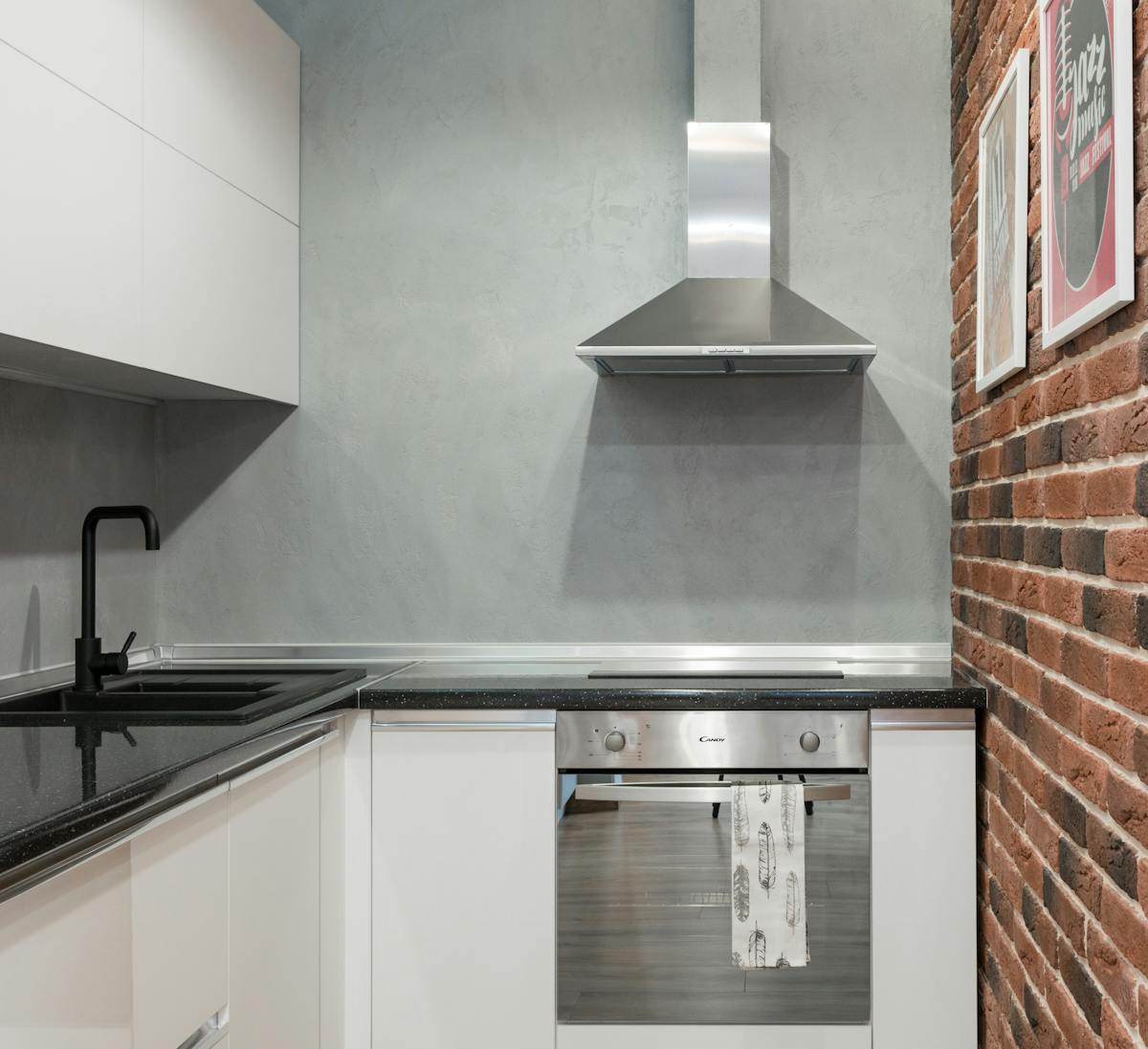
- Wall mount: Bolts to wall studs above the cooktop. Chimney duct extends to ceiling. Most straightforward installation.
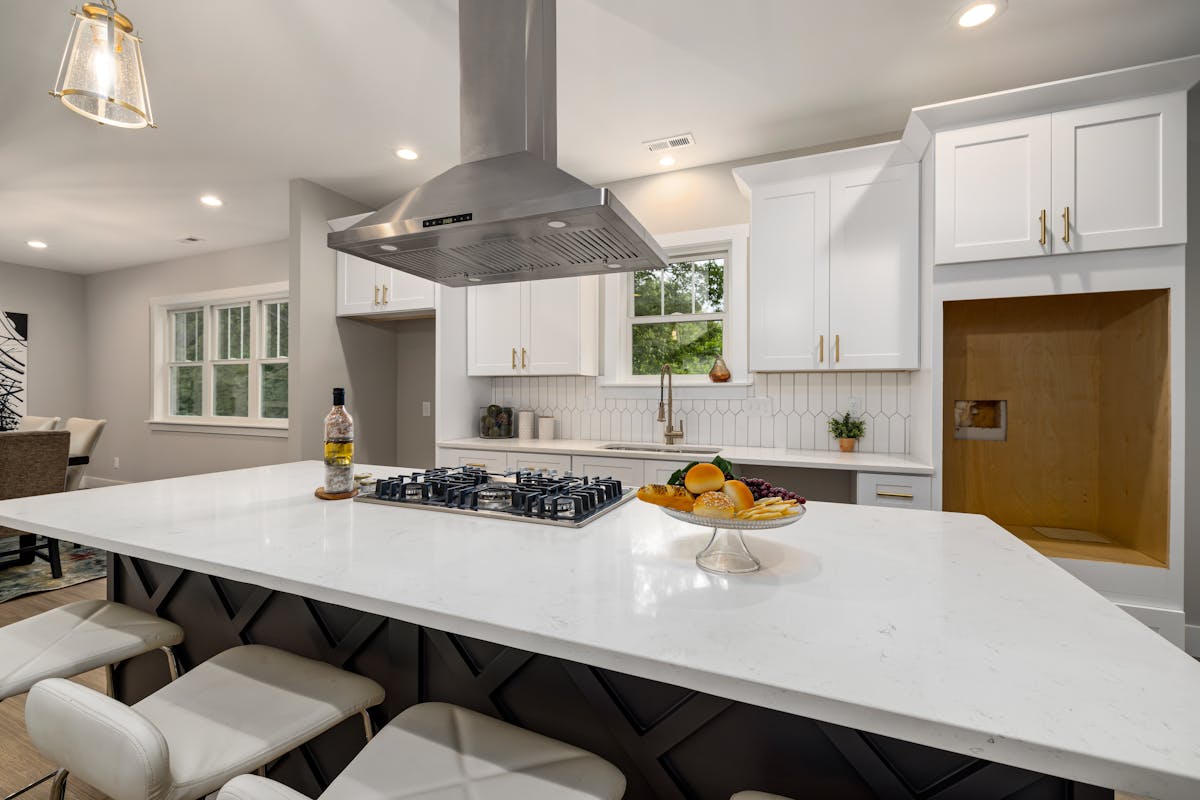
- Island: Ceiling-mounted over a kitchen island cooktop. Requires structural ceiling support and duct routing through ceiling joists.
- Under-cabinet: Mounts to the bottom of a wall cabinet. Compact profile. Duct exits through the cabinet above.
- Liner insert: Installs inside a custom hood enclosure built by your cabinet maker. Maximum design flexibility.
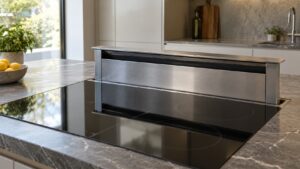
- Downdraft: Mounts behind or beside a cooktop, rising from the counter when activated. Requires countertop cutout and below-counter duct routing.
Ductwork
Use the duct diameter specified by Thermador for your model — never smaller. Round duct is more efficient than rectangular. Minimize bends (each 90° reduces CFM by ~15%). Terminate the duct to the exterior with a wall or roof cap with backdraft damper. Never duct into an attic, crawlspace, or another room.
Electrical
Most hoods: 120V, 15-amp dedicated circuit. The junction box is typically inside the hood body or chimney. For remote blower installations, an additional circuit may be needed at the remote blower location.
Mounting height
Maintain the mounting height specified in the installation manual — typically 24-30″ above the cooktop surface for gas, 20-24″ for electric/induction. Too low creates a head-strike hazard; too high reduces extraction efficiency.
Makeup air
Hoods above 400 CFM may require a makeup air system per local building codes. This replaces the air exhausted by the hood to prevent negative pressure in the home, which can cause backdrafting of gas appliances — a carbon monoxide hazard.
For post-installation service or duct inspection, Schedule service online.