Thermador ExtraLow is the setting that takes a gas burner far below what a burner can normally hold. Instead of trying to sustain a tiny flame — which goes out under a lid, in a draught, or for no obvious reason at all — the burner cycles between a low flame and off, so the average heat delivered is lower than any steady flame could manage. It is the answer to the single most common complaint about professional cooktops: they are wonderful at high and useless at very low.
Why a tiny flame does not work
A gas flame needs a minimum amount of gas and air to stay lit and stay stable. Turn a normal burner far enough down and you reach the point where the flame lifts, flickers and goes out — sometimes immediately, sometimes twenty minutes later when a door opens across the room. Every cook who has lost a béchamel to this knows the feeling.
ExtraLow sidesteps the physics rather than fighting it. The burner lights a flame that is comfortably viable, holds it briefly, shuts off, and relights. The pan sees the average, which is far lower than the flame itself, and the flame never has to survive at a level it cannot sustain.
The flame going out is the feature
This is the thing we are asked about most often, and it is worth saying plainly: on ExtraLow, the burner going out and relighting on a cycle is correct behavior. It is not a failing igniter, not a gas supply problem and not a burner that needs cleaning. People switch to ExtraLow, watch the flame vanish, and book a service call.
What would be a fault is a burner that goes out and does not relight, or one that clicks repeatedly without lighting at all. Our page on cooktop troubleshooting covers those, and they look quite different once you know the cycle is normal.
Cookware decides whether it feels smooth
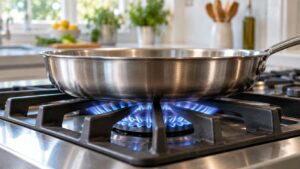
- Heavy base, always. Thermal mass smooths the cycle into a steady low temperature. A thin pan passes the on-off straight through to the food.
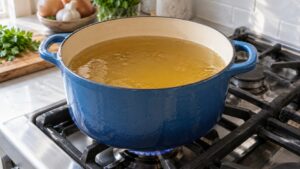
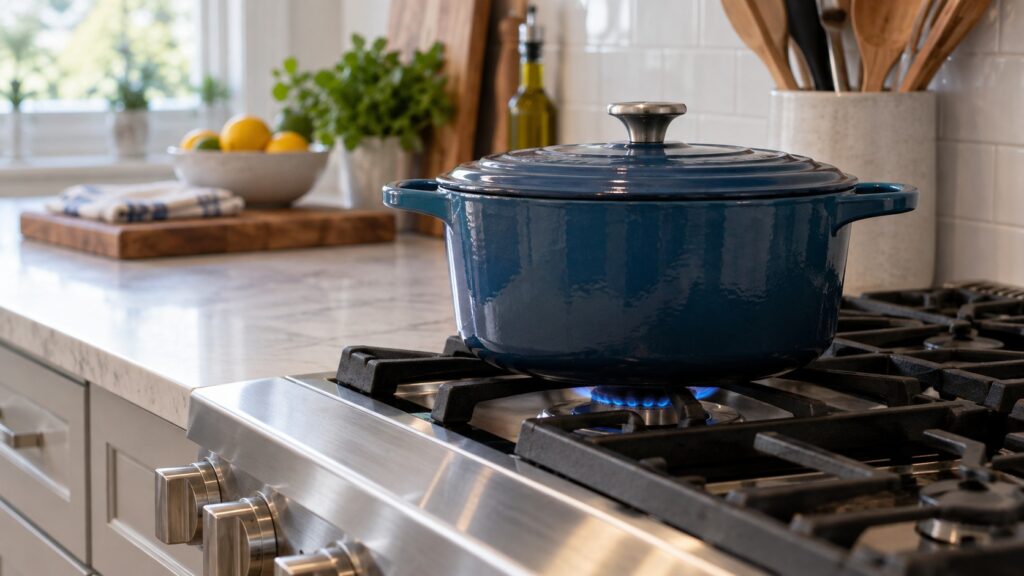
- Enameled cast iron is ideal for long, slow work — it stores heat and releases it evenly between cycles.
- Match the pan to the burner. A small pan on a large burner still catches flame up the sides during the on phase.
- A diffuser is unnecessary here. ExtraLow is doing what a simmer plate does, electronically and better.
What it is genuinely good at
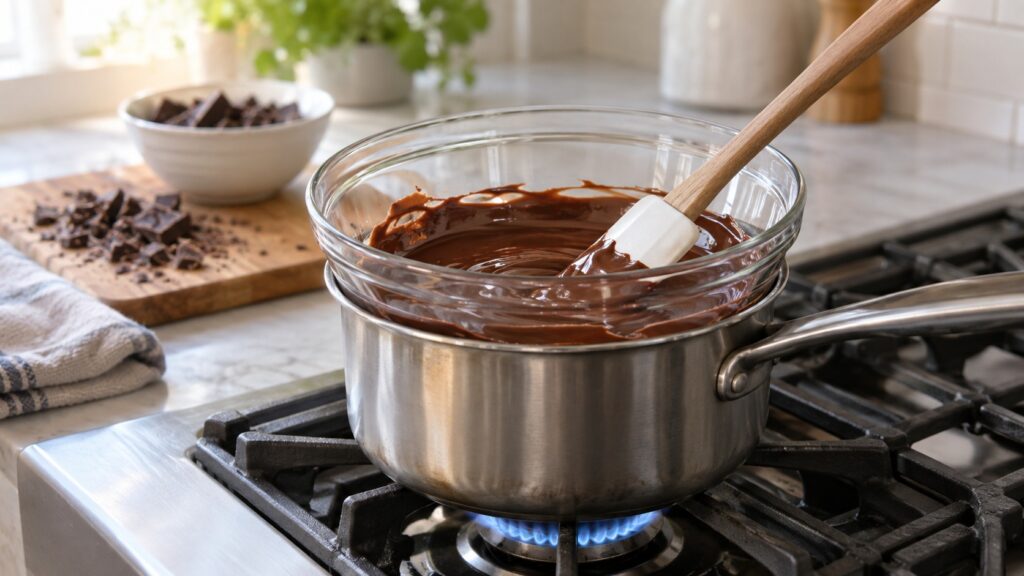
Chocolate and delicate sauces are the obvious cases — anything that seizes or splits at a few degrees too warm. Beyond those, it is the setting that makes long stocks and braises practical on a cooktop rather than in an oven, because the pot can sit for hours without reducing to a syrup or catching on the base.
It is also the honest answer to keeping food warm for a table that has not sat down yet. A pot on ExtraLow holds without continuing to cook, which is the thing a normal low flame cannot do. Our Star burner cooking tips cover the rest of the burner’s range.
Which burners have it, and how it is selected
ExtraLow is not available on every burner of every cooktop — it belongs to specific burners in the layout, and which ones depends on the model. That matters practically: a cook who reaches for the front left burner out of habit may never encounter the feature they paid for. Find out which burners on your cooktop carry it and use those for the work that needs it.
Selecting it is a deliberate act rather than simply turning the knob further. Depending on the model it is a marked detent past the lowest normal setting, or a separate position on the control. If you have never seen the flame cycle, it is worth checking the manual for which burners offer it and how far the control has to travel — plenty of owners have the feature and have never used it.
Timing, and what to expect in the first minutes
The cycle is not instant. A pan put onto ExtraLow from cold takes a while to reach the temperature the setting is holding, because the average heat is low by design. That is worth knowing before concluding it is not working: judge it after ten minutes rather than after two.
The reverse is also true. A pan brought to temperature on a higher setting and then dropped to ExtraLow settles quickly, which is how the setting is meant to be used for stocks and braises — get it there, then hold it. Starting a long braise on ExtraLow from cold is technically possible and needlessly slow.
ExtraLow against an induction low setting
Induction reaches very low heat by pulsing power, which is the same idea implemented electronically, and on a thin pan it produces the same complaint — heat arriving in bursts. The difference is that induction’s pulses are shorter and faster, so a given pan smooths them more easily. ExtraLow gets a gas burner to the same practical place, which is the point: it removes the one area where gas was clearly beaten.
If you are still choosing between formats, our comparison weighs it properly — and it weighs it against a burner that has ExtraLow, not against an ordinary one.
When something really is wrong
A burner that will not relight during a cycle, one that clicks continuously, or one that has lost its high end as well as its low is not an ExtraLow question — see our page on the high end failing, since a partly blocked crown affects both directions eventually. Lazy yellow flames across every burner point at gas type rather than at any setting.
We are an independent repair company, not a factory service arm. Pricing starts from a diagnostic visit and we confirm the estimate before any work begins. Thermador cooktop repair covers burners, valves and ignition, and you can schedule a visit online.