Thermador StarSpeed is the high-output setting on a Star burner — the mode that brings a large pan of water up fast and then hands back to normal control. When it stops behaving, the symptom is rarely dramatic: the burner still lights, still cooks, and simply no longer delivers the surge it used to. That makes it easy to live with and easy to misdiagnose, because everything about the burner looks normal.
What the star shape is doing, and why it matters here
A Star burner spreads its ports along the arms of a star rather than around a circle, which puts flame closer to the center and further out at the same time. That geometry is what gives the burner its range — a genuinely low simmer and a high output from the same head. Our explainer on how the Star burner works covers the design.
The consequence for troubleshooting is that the high setting is the most demanding thing the burner does. It needs every port open and the full air supply. A crown that still simmers perfectly can fail to support the surge, which is why “it works, just not on high” is the classic StarSpeed complaint rather than a sign of something exotic.
Start with the cap and the crown
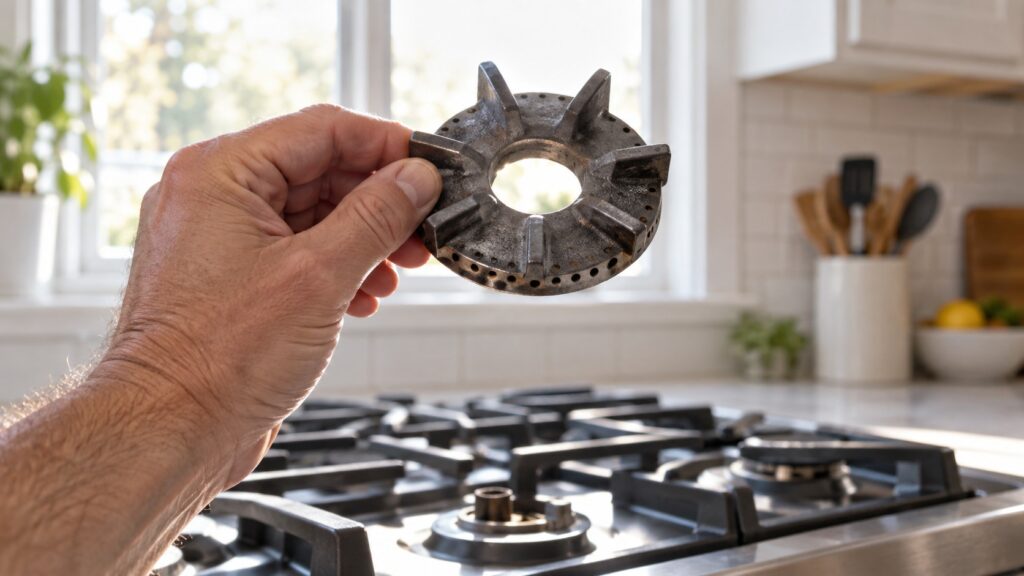
Lift the cap and the crown off the burner and look at them in the light. You are checking three things: that the ports are open along their whole length, that the crown is not distorted, and that both parts are the ones that belong to this burner. Star burner caps differ between burner sizes on the same cooktop, and a cap swapped during cleaning gives a flame that looks nearly right and never performs.
Clear blocked ports with a pin rather than a knife — a knife widens a port and changes the flame pattern permanently. Then let both parts dry completely before refitting. 🔴 A crown refitted damp is the single most common cause of a burner that clicks and will not light, because the spark tracks across the moisture instead of jumping to the gas.
Cookware can hide a healthy burner
- A pan much wider than the burner traps the flame underneath and reflects heat back at the crown, which reads as poor performance and is actually a cooking problem.
- A warped base touches only at the rim, so the surge goes into the air around the pan rather than into the pan.
- A very heavy pan takes longer to show the surge. That is thermal mass, not a fault.
- A lid changes everything: it raises the temperature inside and starves the flame outside.
When every burner behaves the same way
If the whole cooktop has lost its high end, stop looking at burners. That pattern points at the supply: a partly closed shutoff valve, a regulator problem, or a cooktop set up for the wrong gas. Lazy yellow flames across every burner in particular point at gas type — a unit configured for natural gas running on propane, or the reverse, without the correct orifices.
That is not an adjustment and it is not something to work around. It needs the correct conversion kit and a qualified technician. Our page on cooktop troubleshooting covers the wider pattern.
What the flame is telling you
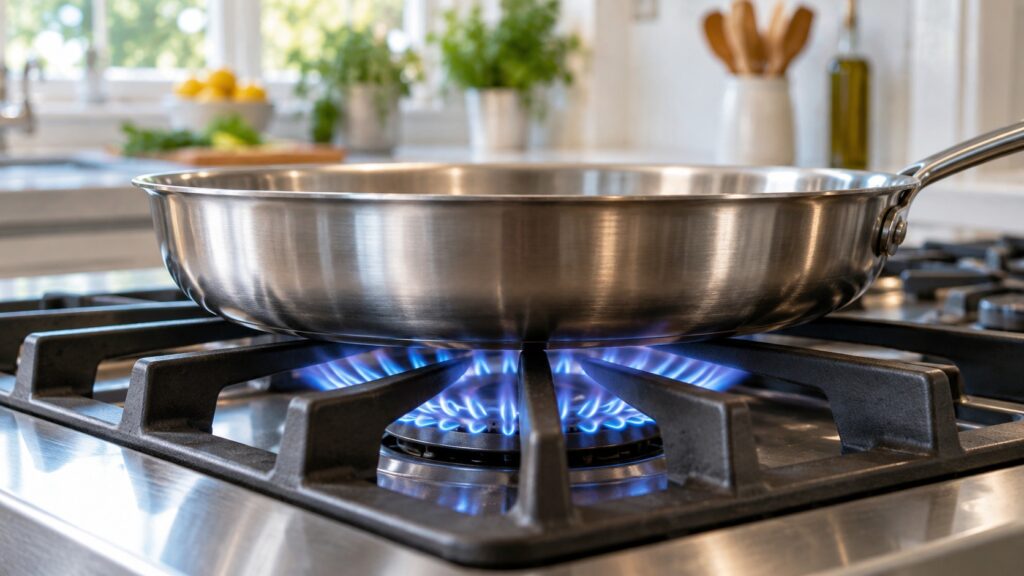
Read the flame rather than the dial. A healthy Star burner at high runs blue, sits down on the crown rather than standing off it, and is continuous along every arm. Gaps around the star are blocked ports. A flame that lifts away from the crown with a visible gap beneath is about to go out and is usually a cap seated crooked. Yellow tips mean the burner is short of air.
None of that needs a tool. It needs looking at the burner once, deliberately, rather than glancing at it while stirring.
How the high end degrades, and why nobody notices
This fault almost never arrives suddenly. Residue accumulates in the crown ports a little at a time, and the burner loses a fraction of its surge each month. Because cooking adapts around it — the pot takes a bit longer, so you start it a bit earlier — the change is invisible until someone times a boil or uses a different cooktop and notices the difference.
That is the argument for a monthly clean rather than a clean when something goes wrong. Lift the cap and the crown, check the ports against the light, and the burner never reaches the point where you have to diagnose it. On a cooktop used hard, particularly with anything that boils over, monthly is not excessive.
Electrical, not just gas
A gas cooktop still needs electricity for its spark ignition and controls, and a StarSpeed setting that is selected electronically depends on that supply being healthy. A cooktop on a shared circuit with something heavy can behave oddly when the other appliance starts. If the controls are inconsistent as well as the flame, the supply is worth ruling out before the burner.
When to call
A single burner that underperforms after the cap and crown have been cleaned and correctly seated, a burner that will not hold high without going out, any burner that will not light while its neighbors do, and anything at all involving the valves behind the fascia — those are service work. So is every burner behaving the same way, which usually turns out to be supply or gas type rather than the cooktop.
We are an independent repair company, not a factory service arm. Pricing starts from a diagnostic visit and we confirm the estimate before any work begins. Thermador cooktop repair covers burners, valves and ignition, and you can schedule a visit online. For getting the most out of the burner when it is working, see our Star burner cooking tips.