For a Thermador microwave repair or replace decision, the dividing line is the sealed microwave-generating hardware. Door, latch, light, keypad, fan and control faults on a built-in Thermador microwave such as the MC30WS or MC30WP are usually worth repairing, especially on a unit under about ten years old. A failed magnetron or high-voltage section, or a cavity damaged by arcing or rust, usually points to replacement, and none of those parts is safe for a homeowner to touch.
Which Thermador microwave faults are worth repairing?
Most faults involve parts that are cheap compared to the oven itself and easy to reach for a technician. A door that does not latch, or a microwave that acts as though the door is open, is often a worn latch or interlock switch. A dead keypad, a display that flickers or a cooking cycle that will not start may come from a control board or a membrane panel. A noisy or weak ventilation fan and a burned-out light are routine fixes.
These repairs restore full function and do not touch the microwave-generating section. They are good value on a young unit and often on an older one that is otherwise sound. The test is whether the fault can be pinned to a single part and whether that part is available. Our Thermador control board repair or replace guide explains how to weigh a control board repair, which applies equally to a microwave.
Which faults usually mean replacement?
A microwave that runs but does not heat has lost its microwave generation, and the cause is usually the magnetron, the high-voltage capacitor, the diode or the transformer. Those parts work at lethal voltages and carry a charge even when unplugged. The repair is possible for a trained technician but often costs a large share of a new unit, and on an older microwave it is rarely a good use of money.
Physical damage matters too. Burn marks or arcing marks in the cavity, rust that has eaten through the paint, a damaged waveguide cover or a warped door that no longer seals are all reasons to stop using the microwave and replace it. Sparks inside the cavity are a sign to stop at once. Never run the microwave empty or with metal inside, and never operate one with a damaged door.
Does it matter that the microwave is built in?
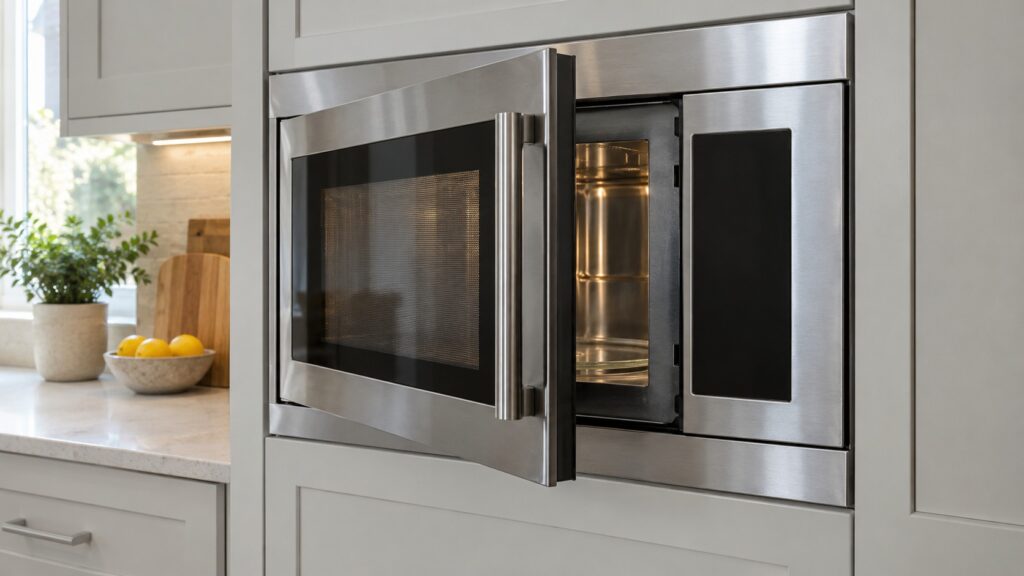
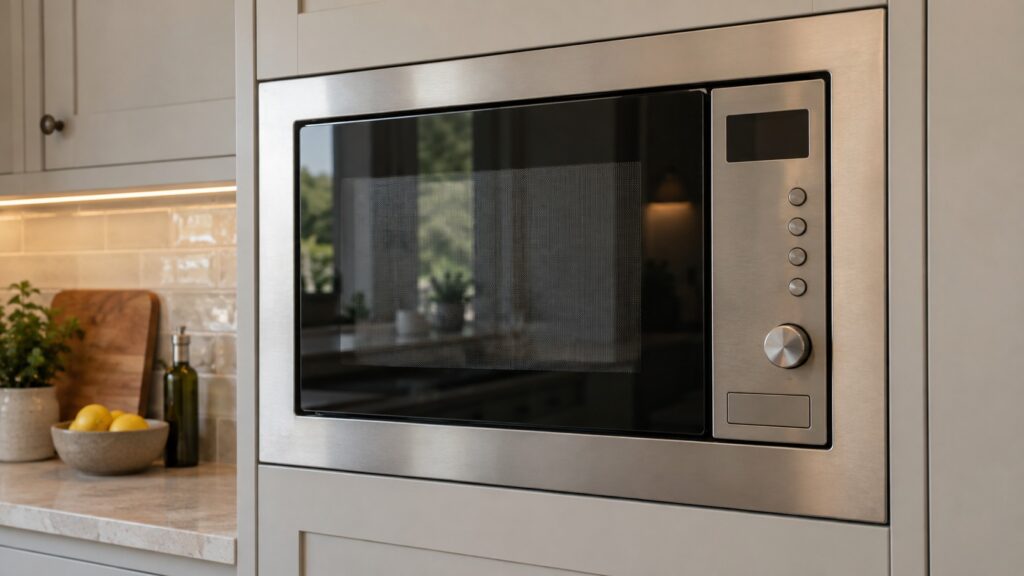
Yes. A built-in microwave sits in a dedicated cabinet opening or a trim-kit frame, and replacement is not as simple as swapping a countertop unit. The new microwave must fit the same cutout, match the ventilation and electrical arrangement and suit the trim. Thermador builds its microwaves to be paired with its ovens, so a mismatch can leave a visible gap or an uneven line. Plan to check the model’s dimensions and the trim kit before you commit.
That fit consideration is a reason to favor repair when the fault is modest. Retaining the original microwave keeps the look of the wall intact. Conversely, if you plan a kitchen remodel soon, a short-term repair to bridge the gap may be sensible. Our Thermador model number guide helps you read the code on the rating plate so you can match a replacement correctly.
What safety rules apply to any microwave?
Never remove the outer casing of a microwave, and never attempt to test the high-voltage section. The capacitor can hold a dangerous charge long after the unit is unplugged. Do not use a microwave with a broken door, damaged hinges or a seal that is torn or burned. Do not defeat the door interlocks. If you see sparks, smell burning or smoke, stop the cycle, leave the door closed and unplug the unit if you can do so safely.
Because these risks are real, the first step for most microwave faults is simply to stop using the unit and have it checked. A diagnostic visit costs far less than an injury or a kitchen fire. Our Thermador oven repair vs replace guide covers the same decision for wall ovens, which are a different class of appliance with different risks.
How do you decide for your own microwave?
Work through four questions. How old is it? Under ten years favors repair. What exactly failed? Door, control and fan faults favor repair, while loss of heat or cavity damage favors replacement. Is the repair price a large share of the price of a new built-in? If it is close to half, lean toward replacing. Does a replacement fit the cabinet? If not, repair gains weight. A technician who inspects the unit can answer the first two reliably, and you can answer the last two from your kitchen. Write the answers down before the visit, along with the model number from the rating plate and a note of exactly what the microwave does and does not do, because a precise description speeds up the diagnosis and often shortens the visit.
It also helps to check what coverage you still have on the unit, because a young microwave may still have protection. Our Thermador warranty guide explains how to find out. If the microwave is part of a larger set of appliances you plan to replace together, the Thermador complete kitchen guide may help you plan.