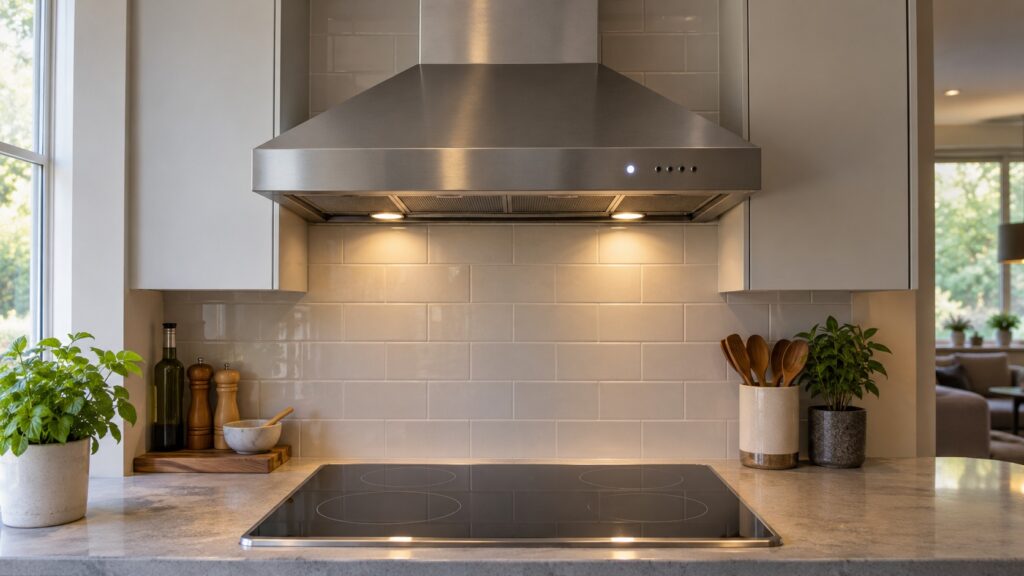
A flashing filter light on Thermador hood models most often means the hood wants attention to its filters: clean the stainless steel baffle filters, or replace the charcoal filter if your hood recirculates air. Our error code database describes this reminder as code E3, a timer-based alert that has nothing to do with a failed part, but how a given hood shows it differs by model. This guide therefore explains what E3 says, what to do to the filters, how to tell a reminder from a real fault and how to confirm the reset for your own hood without guessing at button sequences.
What does a flashing filter light on Thermador hood panels mean?
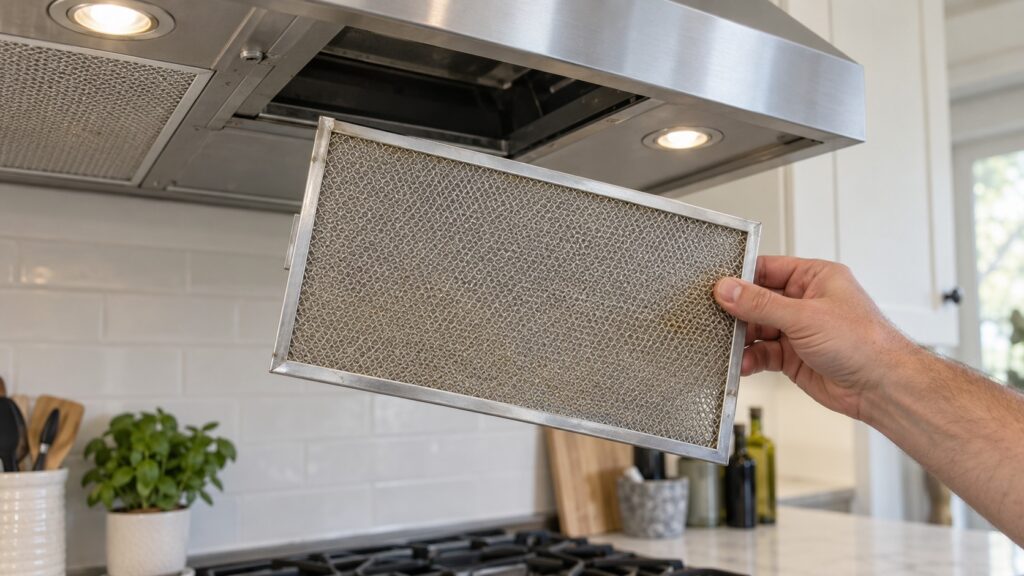
Our E3 error code page lists E3 on Thermador hoods as a filter maintenance reminder: the hood has reached its filter cleaning or replacement interval based on hours of operation. It is classed as low severity, described as a timer-based alert and not a problem, and it does not need a technician. A filter light is the most likely way you will see it, though the pages do not say how every model displays it. Thermador hoods use stainless steel baffle filters on ducted installations and charcoal (activated carbon) filters on recirculating ones, so the right action depends on which type you have. Our Thermador vent hood filter guide explains both types.
Be clear about what is and is not known. The E3 page says to clean the baffle filters, replace the charcoal filter on a recirculating hood, and then reset the timer by pressing and holding the filter reset button for 3 seconds. The pages do not show where that button is on each model, so after the filter work, find it in your owner’s manual. Do not press buttons in a random order hoping to clear the light, because other buttons control the fan and lights.
How do you clean baffle filters on a ducted Thermador hood?
Our filter guide says stainless steel baffle filters should be washed every two to four weeks, or weekly for heavy cooking. Let the hood cool and switch it off. Release the filters by their latches or handles, and slide them out one at a time, holding them level so grease does not drip. Place them on the bottom rack of the dishwasher with the baffles facing down, use a normal cycle with detergent and let them dry completely before you reinstall them.
If grease is baked on after a long gap, the guide suggests soaking the filters in hot water with degreasing dish soap and baking soda for about thirty minutes before washing. Check the hood interior while the filters are out, because grease collects there too. Wipe it with a degreasing cleaner and a soft cloth. Make sure each filter seats firmly when you put it back, since a loose baffle filter can rattle.
What if your Thermador hood recirculates air?
A recirculating hood, one that is not ducted outside, uses a charcoal filter behind the baffle filters. Our guide says these cannot be cleaned and should be replaced every six to twelve months depending on how often you cook. If the light is flashing and your charcoal filter is older than that, or odors linger long after cooking, replacing it is the likely fix. Remove the baffle filters first, take out the charcoal panel, fit the new one and put the baffles back.
If you do not know which type you have, look for a duct leaving the hood through the wall or roof. A hood with no duct is recirculating. The installation sheet or the model number will confirm it, and our vent hood maintenance guide lists the full care schedule, including the annual duct check.
Is it a reminder or a real fault?
A reminder does not change how the hood works, since E3 is described as a timer-based alert. A fault usually comes with weak suction, a noisy blower, a fan that will not start or a different numbered code. Our vent hood pages list E7 for lost remote blower communication, E6 for a speed control board failure and E4 for a heat sensor malfunction, which the E4 page says means the hood will not switch on automatically when cooking starts while manual operation still works. Check whether the display shows one of those codes and read its page rather than assuming the filter light is the whole story.
If suction is weak even after you clean the filters, our vent hood troubleshooting guide points to a clogged duct, a stuck backdraft damper or a tired blower motor. If the hood is noisy, see our vent hood noise guide. Neither is a reason to open the hood body yourself.
When should you stop and call a technician?
Call if the light keeps flashing after the filters are clean or new and you have followed the reset steps in the manual, or if you see E6 or E7, if the blower stops or squeals, or if you smell burning. Greasy ducts are a fire hazard, and our maintenance guide suggests inspecting the duct run every year. If there is ever a grease fire on the cooktop, cover the pan with a lid, turn off the heat and do not run the hood or pour water on it. If you smell burning from the hood, switch it off at the breaker from a dry spot and call.
We are an independent repair company, not the manufacturer. Our Thermador vent hood repair page explains how a visit works, and you can schedule a visit online.