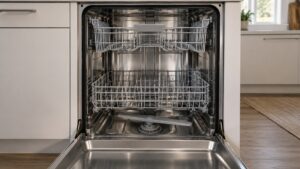
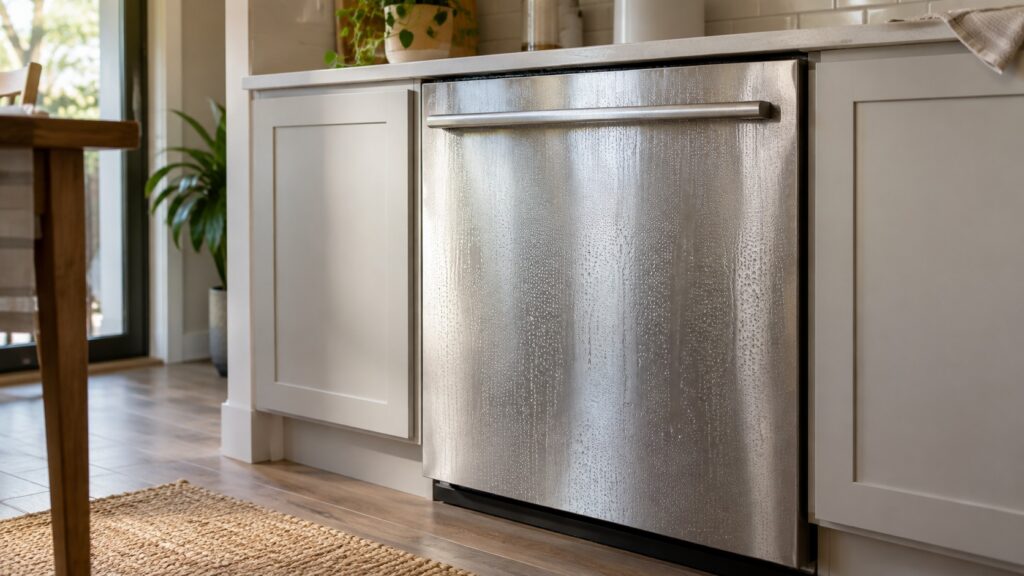
A Thermador dishwasher cycle works in stages: water comes in, the wash system circulates it over the dishes while the AquaSensor reads how dirty it is, the drain pump empties the tub, and a drying phase finishes the job, either by condensation or, on CrystalDry models, with a zeolite cassette. AquaStop leak protection watches over the whole process. This guide walks through those stages using what our site says about each part, and it points out which stages you can influence yourself.
How does a Thermador dishwasher cycle work from start to finish?
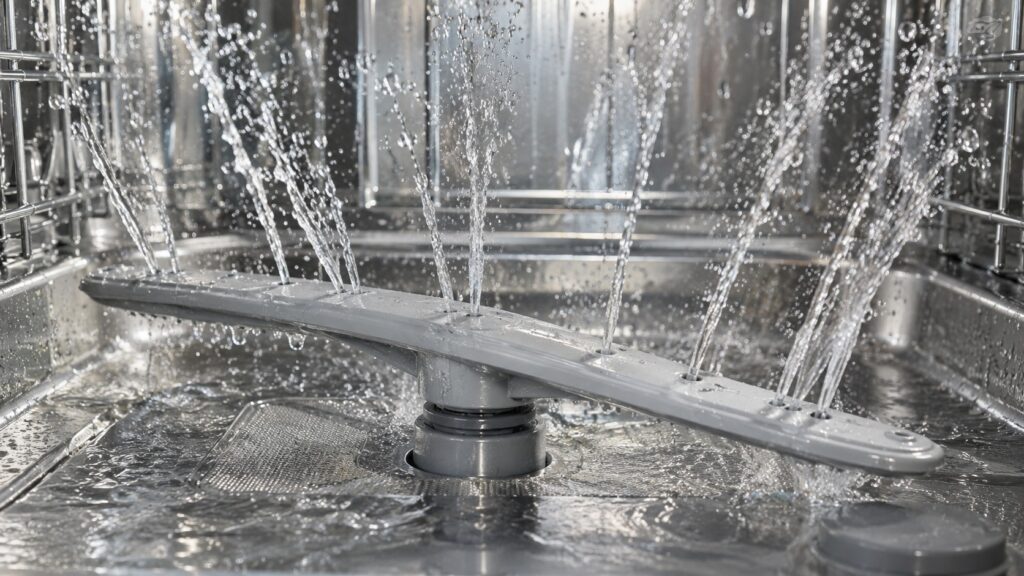
Every cycle follows the same outline, and what changes between models is how each stage is done. First the tub fills with water. Then the wash system circulates that water over the dishes through the spray arms. When the wash phases are finished, the drain pump removes the water, and the drying phase dries the dishes. Our model pages list several dishwasher families, including Sapphire, Emerald and Star Sapphire, all with Home Connect and panel-ready installation.
We do not publish the length of each stage, the wash temperature or the water volume for each program here, because those depend on the model and the cycle you choose. Your owner’s manual lists them, and the program table in the manual is the right place to compare cycles.
What does the AquaSensor do during the wash?
The AquaSensor is an optical turbidity sensor in the wash water circuit. Our AquaSensor glossary says it measures how much light passes through the wash water, so cloudier water means more food soil, and it changes the cycle length and the number of water changes. That is why two loads that look the same can finish at different times: the machine is reading the water, not the dishes on the racks. A pre-rinsed load reads cleaner and runs shorter, and a heavily soiled one gets more wash phases.
The glossary also says the sensor does not change wash temperature targets or detergent dosing, which follow the cycle you selected. Our Thermador AquaSensor glossary explains what a dirty sensor can do, and the dishwasher maintenance guide covers keeping it clean.
How does the water get drained and the filter protected?
After the wash, the drain pump empties the tub. Debris is caught by the drain filter at the bottom of the tub, and our maintenance guide lists cleaning that filter as a monthly job (the manual for your model gives its own advice). A clogged filter is the most common reason a dishwasher drains slowly, according to our troubleshooting guide, and the first thing to check before assuming the pump has failed. The error code pages list drain pump faults separately: E23 as a drain pump triac problem and E21 as a drain pump overload.
Cleaning the filter is an owner task described in the manual. Opening the drain pump, the wash motor or the control board is not. If water remains after you have cleaned the filter, our guide to a Thermador dishwasher not draining explains the next steps.
How are the dishes dried?
This is where the lines differ. According to the Sapphire model page, the Sapphire uses condensation drying. Our buying guide says condensation works well for ceramics and glass but plastics may retain some moisture. The Emerald and Star Sapphire use CrystalDry instead. Our CrystalDry guide says a cassette of zeolite, a mineral that absorbs moisture, sits in the airflow path. During drying a fan pushes warm, moist air through the cassette, the zeolite absorbs the water, and the heat released goes back into the tub.
The same guide says the zeolite dries out again during the next wash cycle, when hot wash water passes near the cassette. Our how Thermador CrystalDry works guide has the full description. If drying gets worse over time, our troubleshooting guide suggests running a hot cycle with a dishwasher cleaner, and your manual says which cleaner and how often. If that does not help, do not try to open the cassette yourself; that is a technician’s job.
How does AquaStop protect the cycle?
AquaStop Plus is described on our site as a system with three layers. A float sensor in the base pan detects water that has escaped the tub, a double-wall supply hose contains a leak in the inner hose, and an electric shutoff valve at the tap closes when the sensor triggers. When the base pan sensor trips, the dishwasher stops water intake and runs the drain pump, and the site lists the resulting code as E15. If E15 appears, the protection is working as designed, and the leak source needs a technician. Read how Thermador AquaStop works for the detail.
If you ever see water on the floor near an outlet, switch off the breaker at the panel while standing on a dry floor, and never pull a plug from a wet outlet. Then call us.
What should you do if a cycle fails?
Note the exact code and the stage where the dishwasher stopped. Our Thermador dishwasher error codes guide lists what each family points to, for example E19 for a diverter valve problem in water distribution and E20 for wash motor overheating. Check the filter, the spray arms and the load, as the manual describes. For anything beyond that, our Thermador dishwasher repair page explains how a visit works.