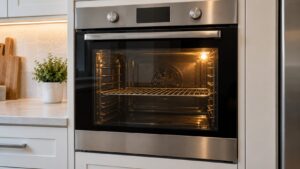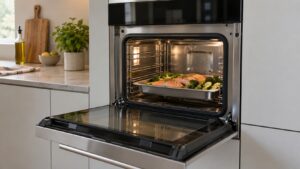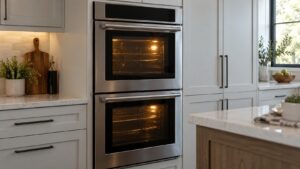
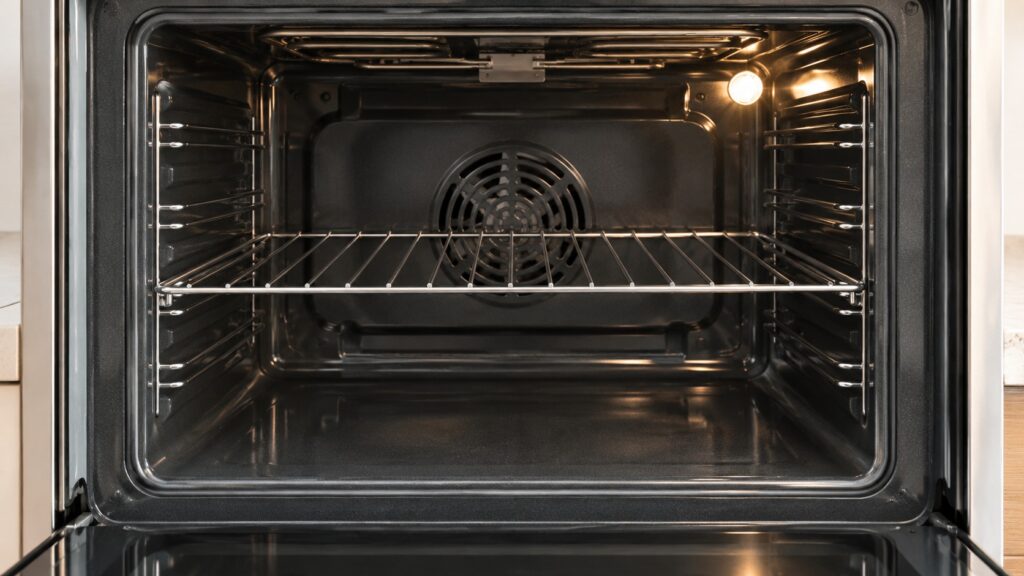
Thermador oven interior rack cleaning comes down to three habits: let the oven cool completely, wipe spills before they bake on and take the racks out to clean them separately. Our oven maintenance guide advises wiping spills promptly once the oven cools because baked-on residue gets harder to remove with each heat cycle, using a paste of baking soda and water for spot cleaning and avoiding commercial oven cleaners on a self-cleaning oven. Your owner’s manual is the final word on which cleaners and methods are safe for your oven’s interior and racks.
How do you clean the inside of a Thermador oven by hand?
Start cold. Make sure the oven is off and has cooled completely, with the racks out of the way, and wipe loose crumbs with a dry cloth. For stuck-on spots, make a paste of baking soda and water, spread it on the spot and let it sit, then wipe it off with a damp cloth. Our maintenance guide gives that method for spot cleaning. Rinse the cloth often and wipe the area clean of paste, because dried baking soda leaves a white film. Our guide says to let the paste sit, then wipe.
Work gently. A soft cloth or a non-scratch sponge is enough. A metal scraper or a steel pad can scratch the enamel. Keep cleaner away from the heating elements, the fan opening and any vents, and do not spray anything directly into the cavity. Apply cleaner to the cloth, not to the oven.
Can you use oven cleaner in a self-cleaning oven?
Our maintenance guide says no: avoid commercial oven cleaners on self-cleaning ovens, because the chemicals can damage the high-heat enamel coating. Check your manual, which says which cleaners, if any, are approved for your model. Do not use a cleaner and then run the self-clean cycle on top of it.
Our guide to how Thermador self-clean works explains the cycle. Self-clean is a hard job for the oven, and our maintenance guide says that excessive use stresses parts such as the thermal fuses and door locks, so for routine cleaning, the baking soda method is a better first choice. Never leave the house during a self-clean cycle.
How do you clean the oven racks?
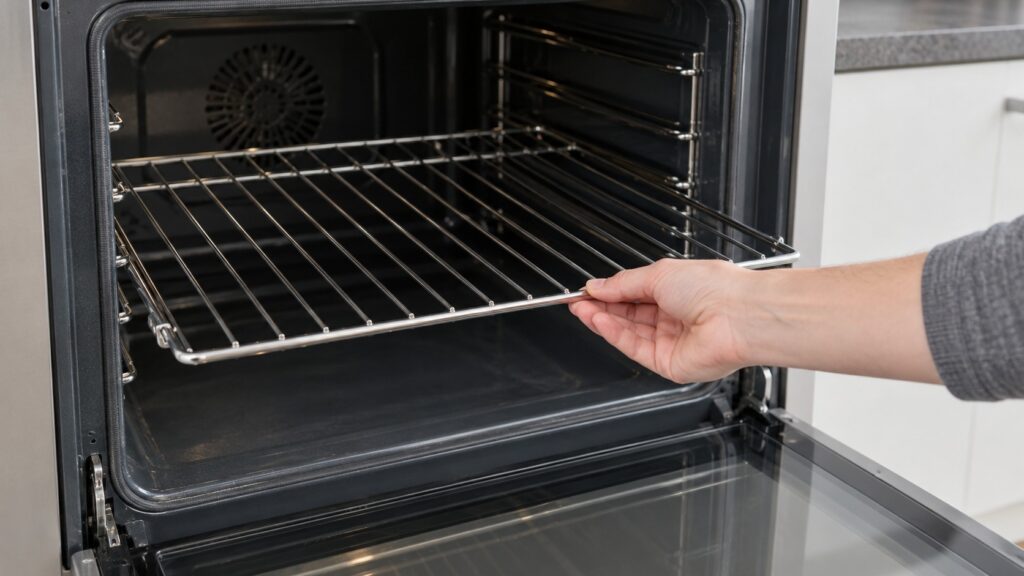
Take them out when the oven is cool, as the manual shows, and wash them in the sink with warm water, dish soap and a non-scratch sponge. For stuck-on food, soak them first. If a rack is very dirty, check your manual before you use any cleaner, because some finishes are damaged by harsh chemicals or abrasives. Rinse well and dry them before they go back.
Self-clean and the racks do not mix. Our maintenance guide says to remove the racks before self-cleaning, because the high heat can discolor and warp them. If your manual lists racks that can stay in during self-clean, follow it, but when in doubt take them out. Put the racks back at the positions you use, and check that they slide smoothly. Our oven rack positions guide explains how rack positions affect cooking.
What about the door glass and the seal?
Wipe the glass on the outside with a glass cleaner applied to a cloth, and the inside of the door with the same baking soda and damp cloth method once it is cool. Do not take the door apart to clean between the panes, and do not force the door open beyond its range, as our maintenance guide cautions for the hinges. The door gasket, where the oven has one, should be wiped gently, not scrubbed. The glass and the gasket are part of what keeps the heat in, so a damaged one is a reason to call a technician. Our SoftClose oven door guide covers the hinge on Professional ovens.
What should you avoid?
Do not spray cleaner at the element, the fan opening or the vents, and do not wipe a hot oven. Do not use a steel pad, a razor blade or a metal scraper on the enamel. Do not leave baking soda paste to dry on the walls before the oven is used. Do not mix cleaners. If you smell fumes, open a window and let the room air out, and keep the oven off until the smell is gone. If you see sparks, a flame or smoke that does not stop, keep the door closed, turn the oven off and switch off the breaker at the panel while standing on a dry floor. Do not use water on an oven fire.
Also leave the parts that are not for you. The back panel, the rear cover and anything held by screws are a technician’s job. Our Thermador oven maintenance guide lists what you can safely do.
When is it more than a dirty oven?
If the oven smokes even when it is clean, heats unevenly after cleaning, shows a code or the door will not lock after a self-clean cycle, the cause may be a part. Our Thermador oven not heating guide helps you rule out simple causes. We are an independent repair company, not the manufacturer, and our Thermador oven repair page explains how a visit works. You can book a visit online.