Having a burner that reaches genuinely low heat is one thing; using it well is another. A Thermador ExtraLow simmer will hold a stock for six hours without reducing it to glue, and it will also scorch a béchamel if the pan is wrong. These are the habits that separate the two outcomes, and none of them involves the control.
The pan does more than the setting
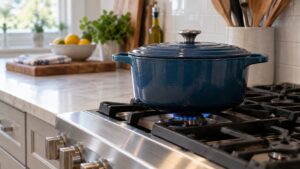
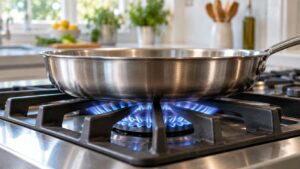
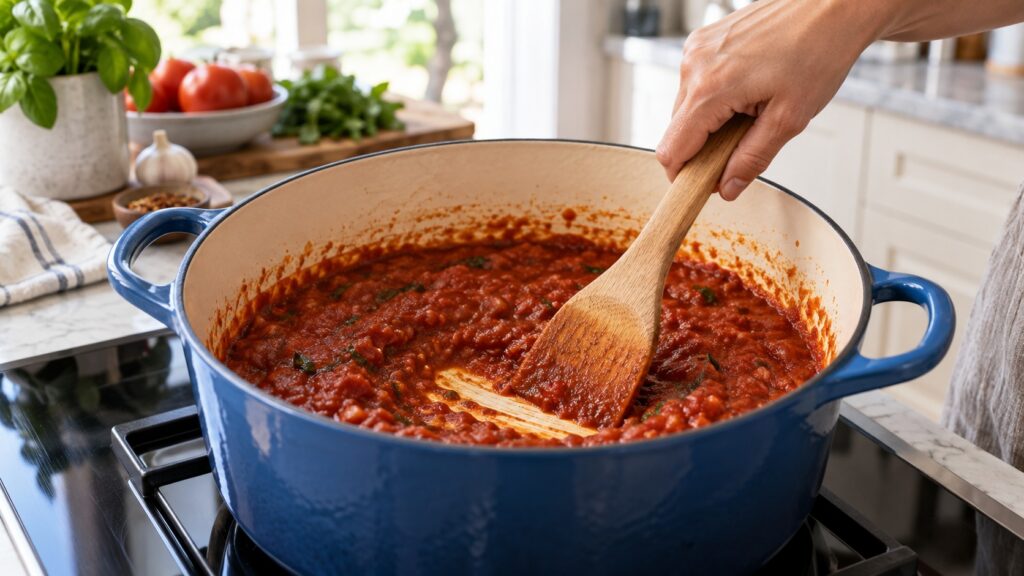
ExtraLow works by cycling a flame on and off, so what the food experiences depends entirely on how well the pan smooths that cycle. A heavy enameled cast iron pot absorbs each pulse and releases it evenly, and the contents sit at a genuinely constant temperature. A thin stainless pan passes the pulses straight through, and the food alternates between too hot and not hot enough.
If one thing on this page is worth acting on, it is using your heaviest pot for anything that needs to sit for hours. Our ExtraLow explainer covers why the cycling exists in the first place.
Bring it up, then hold it down
ExtraLow is a holding setting, not a heating one. Starting a cold pot on it works and takes a long time, because the average heat delivered is low by design. The efficient sequence is to bring the pot to where you want it on a normal setting and then drop to ExtraLow, at which point the burner is doing the one job it is exceptional at.
This also avoids the most common misreading of the feature. Somebody puts a cold pot on ExtraLow, sees nothing happen for fifteen minutes, and concludes the setting is broken. It is not — it is holding, and there is nothing yet to hold.
What a simmer actually looks like
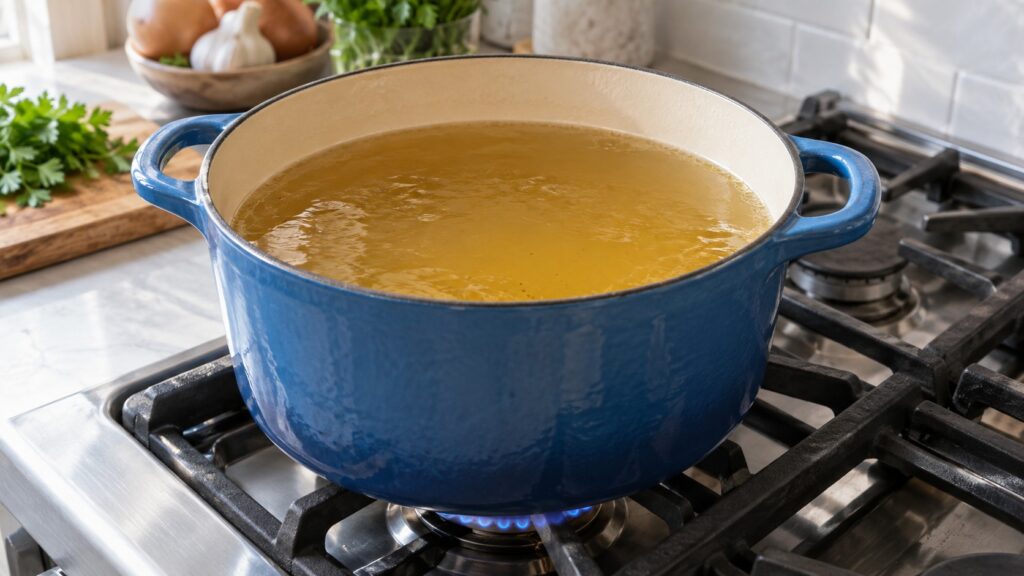
- A bare tremor at the surface, with an occasional bubble at the edge — that is a simmer, and it is where stocks and braises belong.
- A steady stream of bubbles is a low boil. Fine for reducing, wrong for holding.
- Nothing moving at all may be too low for food safety if you are holding for hours. Warm is not the same as safe.
- Judge the liquid, not the dial. The same setting behaves differently with a different pan and a different volume.
Long cooking without catching
Anything with flour, dairy, sugar or starch will settle and catch on the base given time, and a low flame does not prevent it — it only delays it. Two habits deal with this. Stir from the bottom with a flat-edged spoon rather than swirling the surface, and do it on a schedule rather than when you remember. And use a pot with a genuinely flat, thick base, because a thin spot is where catching starts.
For dairy-based sauces held for a long time, a splash of water on top before the lid goes on slows the skin forming, and a cracked lid lets the steam that does form escape rather than condensing back in.
Melting, holding and the water bath you no longer need
Chocolate, hollandaise and custards are the classic reason to own this setting. The traditional answer is a bowl over simmering water, which is fiddly and adds humidity to everything. A heavy pan directly on ExtraLow does the same job with one fewer vessel, provided the pan is heavy enough and you accept that you cannot walk away entirely.
For holding a finished sauce through a long service, the same applies — and it is worth checking with a thermometer once, so you know where your particular pan sits at that setting rather than guessing.
Volume, and the thing that changes everything
The same setting under the same pan behaves differently with a quart of liquid than with a gallon. A small volume has little thermal mass of its own and follows the burner’s cycle; a large one damps it almost completely. This is why a big pot of stock is the easiest thing in the world to hold and a small pan of sauce is the hardest.
The practical answer for small volumes is to increase the mass around them: a heavier pan than the quantity seems to need, or a larger pot with the sauce in it rather than the smallest one it fits. Cooks who fight a scorching sauce on a low setting are usually fighting a pan that is too light and too small rather than a burner that is too hot.
Walking away, and how long is reasonable
This is the honest limit of the setting. A large pot of stock on ExtraLow with a cracked lid will sit for hours and wants checking every hour or so — topping up if it has reduced, and a stir from the bottom. A braise in a heavy covered pot is similar. A dairy sauce, a custard or anything with sugar is not a walk-away dish at any setting, and treating it as one is how people conclude the burner runs hot.
Whatever is on, set a timer rather than relying on remembering. A pot that has been forgotten for four hours has usually reduced past the point where adding water rescues it.
Which burners, and planning the cooktop around it
ExtraLow is not on every burner of every model. Find out which burners on your cooktop have it and build your habits around those — the long, slow work goes there, the fast work goes elsewhere. Cooks who never checked frequently use the wrong burner for years and never encounter the feature at all.
Plan the layout of a meal the same way: the braise on the ExtraLow burner at the back, the searing on a Star burner at the front where the hood can reach the smoke. Our Star burner cooking tips cover the other end of the range, and the vent hood tips cover the extraction.
When it is not the technique
A burner that will not relight during its cycle, one that clicks continuously, or a cooktop that has lost its low end on every burner at once is a fault rather than a habit — see cooktop troubleshooting.
We are an independent repair company, not a factory service arm. Pricing starts from a diagnostic visit and we confirm the estimate before any work begins. Thermador cooktop repair covers burners, valves and ignition, and you can schedule a visit online.