A failed Thermador oven convection fan is almost always a repair, not a reason to replace the oven. Our oven repair or replace guide lists convection fan motors among the component failures that are cost-effective to repair, and our E106 page describes the fault as a single part problem that leaves standard bake and broil working. Replacement only enters the picture when the fan failure arrives together with other major faults, a damaged cavity or a very old unit. This guide explains what the convection fan does, what a failure looks like, the repair-or-replace test and what to ask a technician, without quoting prices.
What does the convection fan do in a Thermador oven?
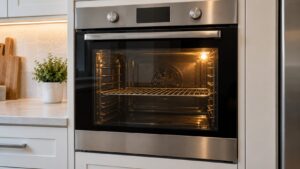
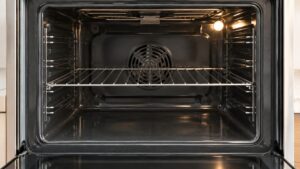
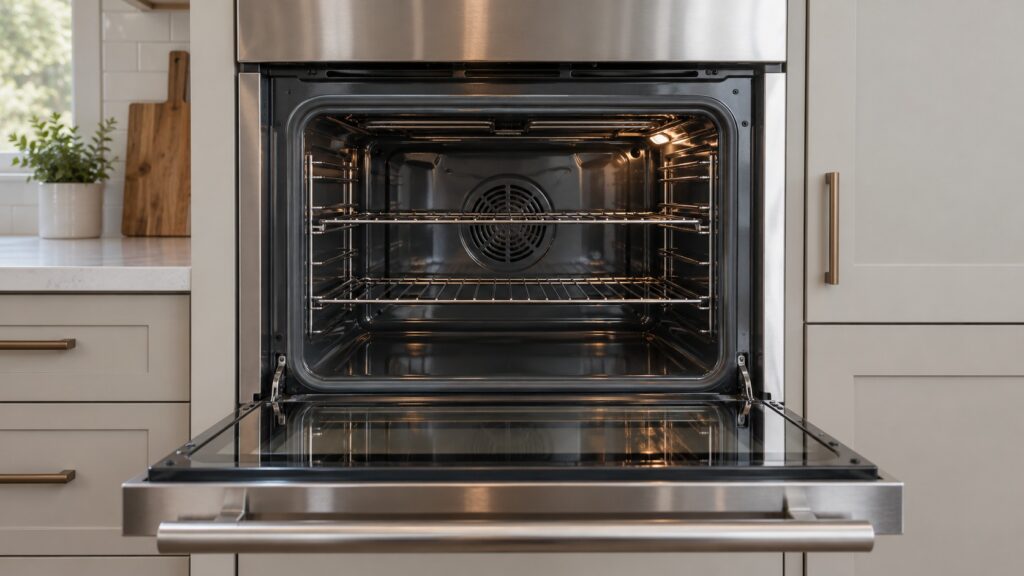
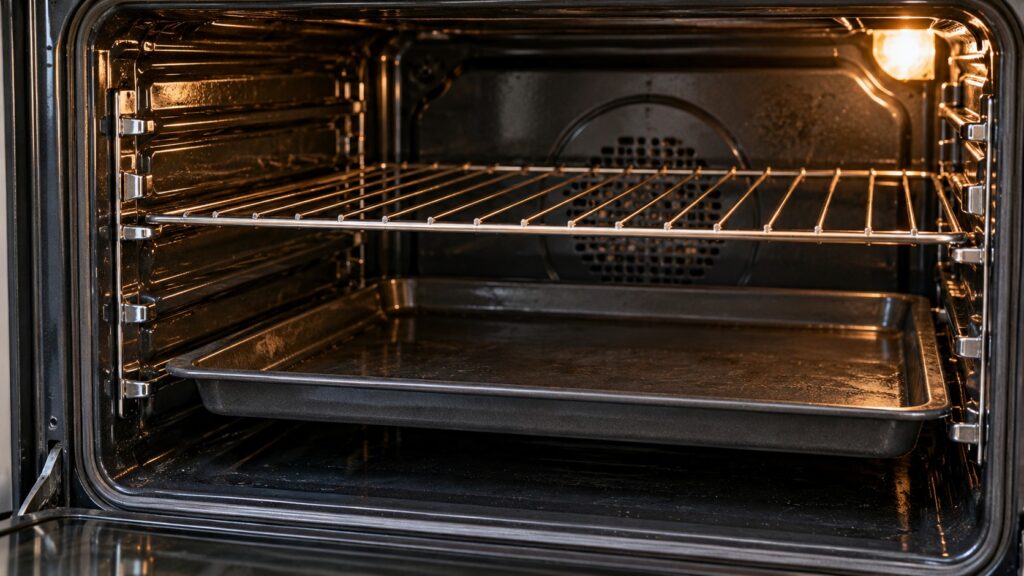
Thermador wall ovens use True Convection. Our guide on how True Convection works describes a dedicated third heating element behind the fan, so the fan circulates heat from the ring element and gives more even results across the racks without turning pans. The fan is therefore central to convection modes: without it, the circular element and the airflow cannot do their job. Standard bake and broil use the main elements without the fan, which is why they can keep working while convection does not.
That split is useful for judging how urgent the problem is. An oven with a failed convection fan can usually still bake and broil in the modes that do not use the fan, while multi-rack baking and roasting that rely on convection are affected.
How do you know the convection fan has failed?
Our E106 page covers the code in full: it is an upper oven convection fan motor failure, and the page lists the possible causes and the repair, so we do not repeat them here. In everyday terms, you may notice that the oven is quiet in convection mode where you expect an airflow hum, that food bakes unevenly, or that the code appears.
A sound is also a clue. A fan that grinds, squeals or rattles may be failing before it stops; a fan that makes no sound in convection mode may have stopped. Do not try to look at the fan or reach into the back of the cavity. The back panel inside the oven is removed only for repair, and the area is hot and wired. For other oven codes, see our oven error codes guide.
What can you check before booking?
Start with the ordinary things. Make sure you are in a convection mode, not a mode that does not use the fan. Check that nothing is blocking the airflow, such as foil, pans pressed against the back wall or overcrowded racks; blocked airflow can also cause uneven results, which is easy to mistake for a fan fault. Switch the oven off, let it cool completely and wipe the cavity as the manual allows. Our E106 page describes a power reset at the breaker, left off for a few minutes, as the one owner step; if the code returns, the fault is real and needs a technician. Stand on a dry floor and keep your hands dry when working at the panel.
Do not remove the back panel, the fan cover or any shield, and do not pick at the fan blades. A grease-jammed blade may look like a simple cleaning job, but it sits in a hot cavity behind a fastened panel, and the thermal fuse and wiring are part of the same assembly. Our oven troubleshooting guide lists the checks that are safe for an owner.
When is repair the right choice?
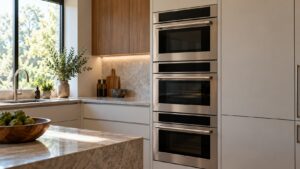
Almost always, if the rest of the oven is sound. Our oven repair or replace guide lists convection fan motors among the component failures that are cost-effective to repair, and says that a triple wall oven in particular is better repaired one cavity at a time than replaced. A fan problem is also a contained job: the part is replaced, the cause (a grease-jammed blade or a blown fuse) is addressed and the oven returns to full use. Ask the technician to confirm which of the possible causes applied, so you know whether anything else in the fan circuit was affected.
The decision test is simple. If the cavity is in good condition, the door and hinges work, there are no other codes and the oven has not needed repeated repairs, repair is the sensible route. The oven is a built-in unit, and a new one has to match the cutout, as the same guide points out, so replacing carries extra cost and work.
When does replacement make sense?
Replacement comes up when the fan is only one of several problems. Our repair or replace guide lists significant enamel damage in the cavity, an obsolete control board and multiple components failing at once on a unit over fifteen years old. Our guide to repairing or replacing an old Thermador oven adds that an old oven is worth repairing when there is one clear fault, and should be replaced when several parts are failing together. If you are weighing a new oven, the oven buying guide compares the configurations, and the installer must confirm the cutout and electrical supply first.
Ask for a written quote that names the part, the labor and any warranty, and ask what else the technician found. A quote that covers only the fan is a very different decision from a quote for the fan plus a failing board. We do not give prices here, because they vary with the model and the cavity.
When should you call a technician?
Call as soon as the convection mode stops working properly, E106 appears, the fan grinds or squeals, or the oven smells of burning. If you smell burning, see smoke or sparks, switch the breaker off at the panel while standing on a dry floor and do not use the oven. We are an independent repair company, not the manufacturer. Our Thermador oven repair page explains how a visit works, and you can schedule a visit online.