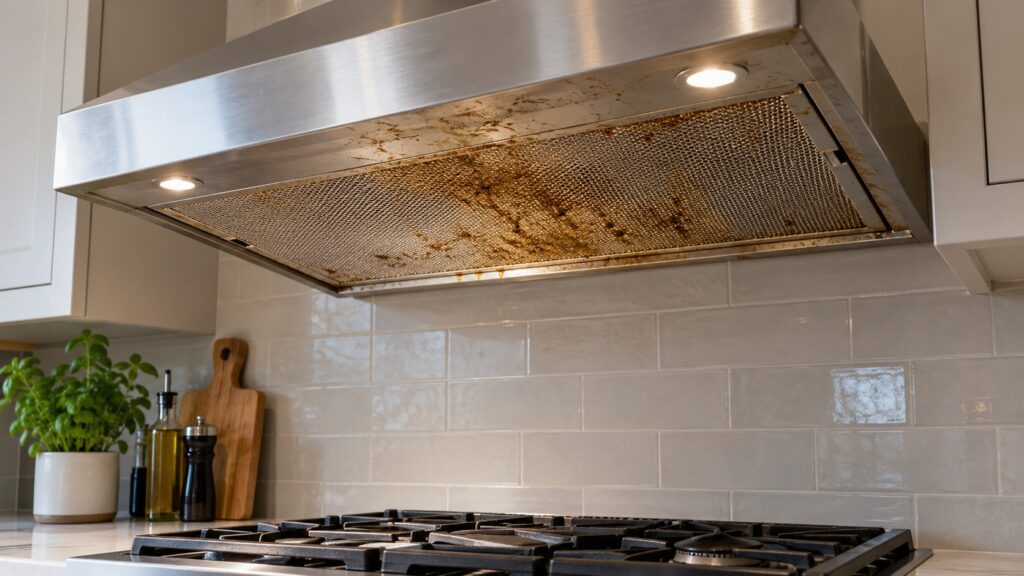
When a Thermador hood leaking grease drips onto the cooktop or runs down the front, the first suspect is the baffle filters. Our filter guide says that visible grease dripping from the hood during cooking means the baffle filters are severely overdue for cleaning, and that you should also check the hood interior for grease buildup. A hood that has been neglected for months can be saturated, and grease then has nowhere to go but down. This guide gives the order of safe checks, how to clean the filters, what a drip from the duct or the housing might mean, and when to stop and call for service. It also covers the fan noise that often shows up with a saturated hood.
Why is my Thermador hood leaking grease?
A hood catches grease on its filters, and the filters hold it until you clean them. When they are full, the grease keeps accumulating on the metal and the next place it collects is the underside of the hood and the edges of the filter frame. From there it runs, drips or pools. That is why dripping is a sign of neglect, not a sudden breakdown. Heavy frying, searing and wok cooking produce much more grease than boiling, so a hood that serves a busy cooktop needs cleaning more often.
It is also worth noting where the drips fall. Our guide does not describe a specific leak path for each hood model, so we cannot say exactly which edge your hood drips from. Describe what you see: dripping through the filter, along the front edge of the housing or from the chimney. That detail helps a technician.
How do you clean the baffle filters?
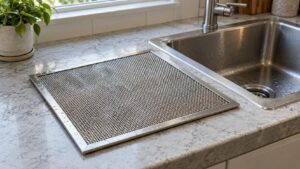
Our vent hood filter guide says to clean stainless steel baffle filters in the dishwasher every two to four weeks, or weekly for heavy cooking: place them on the bottom rack with the baffles facing down, run a normal cycle with detergent, and let them dry completely before reinstalling. For baked-on grease, it suggests soaking them in a sink with hot water, degreasing dish soap and baking soda before the dishwasher. Another page of ours says monthly for typical cooking, so treat these as guides and follow your owner’s manual for what your model allows. Turn the hood and the cooktop off and let them cool before you reach up to remove anything.
If your hood recirculates air and does not vent outside, it also has a charcoal filter behind the baffles. Our guide says charcoal filters cannot be cleaned and are replaced, with the interval depending on cooking frequency. A saturated charcoal filter will not stop dripping, but it can add to smells and weak airflow. The filter light guide explains the reminder light on hoods that have one.
What else can cause grease to drip?
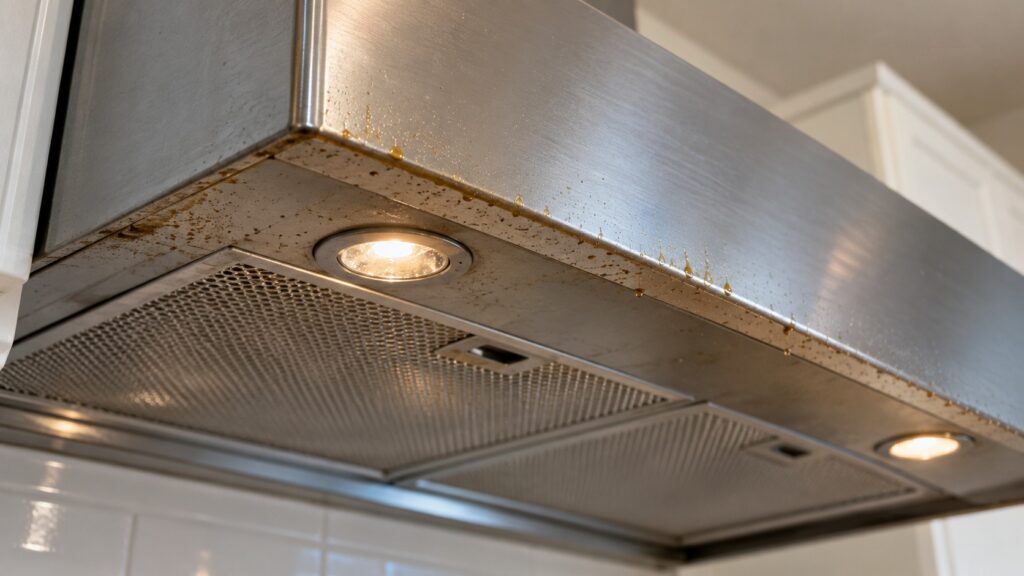
If the filters are clean and the hood still drips, grease has built up somewhere else. Our vent hood maintenance guide says grease also accumulates in the ductwork over time, reducing airflow and creating a fire hazard, and it recommends inspecting the duct run each year and professional duct cleaning every two to three years for heavy cooking. Our troubleshooting guide also mentions a backdraft damper that can stick from grease. The duct and damper are not an owner’s repair; they sit inside walls and ceilings or above the hood, and the work belongs to a technician or a duct cleaning service.
You can wipe the visible underside of the hood and the outside of the housing with a cloth and a degreasing dish soap solution once the hood is cool and switched off. Do not spray liquid into the hood, near the controls or into the lights. Do not remove the hood housing or reach into the blower area.
What if the hood is also noisy or has weak suction?
These often travel together. Our vent hood troubleshooting guide says grease-saturated filters drastically reduce airflow, and that a rattle can come from a loose baffle filter, housing vibration or duct resonance. A filter that is not fully seated in its track can rattle, so remove it and set it back carefully after cleaning. Grinding or squealing points to the blower motor, which is a technician’s repair. Our vent hood noise guide goes through the sounds in more detail.
Weak suction after cleaning the filters can also come from a duct restriction or a kitchen that is too tight on air; the make-up air guide explains that second cause. If your hood has an auto-on heat sensor, grease on its underside can stop it from detecting heat, according to the troubleshooting guide.
What should you do if grease catches fire?
Cooking grease can ignite on the cooktop. If a pan catches fire, cover it with a lid, turn off the heat and leave the cover in place. Do not move the pan, do not pour water on it, and do not turn on the hood, which can feed the flames. If the fire spreads or you cannot control it, leave the house and call 911 from outside. A hood with heavy grease buildup is a reason to clean it now, before this happens.
When should you call a technician?
Call when the hood still drips after the filters are clean and dry, when you see grease in the duct or around the blower, when the fan squeals or grinds, or when you smell burning. If you smell burning or see sparks from the hood, switch the breaker off at the panel while standing on a dry floor and do not use the hood. We are an independent repair company, not the manufacturer. Our Thermador vent hood repair page explains how a visit works, and you can schedule a visit online.