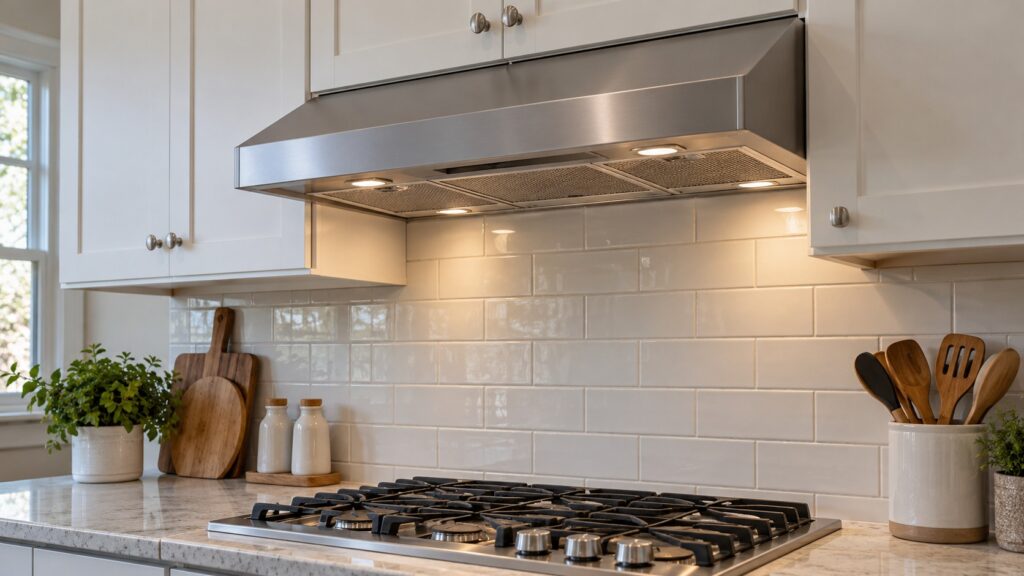
A Thermador under cabinet hood mounts to the underside of a wall cabinet above the cooktop, and it vents either outside through a duct or back into the kitchen through a filter, depending on how the kitchen is built. On our site the under-cabinet models are the UCVM30XS and the UCVM36XS, both in the Masterpiece collection with a 600 CFM blower. This guide walks through the planning that comes before any screw goes into a cabinet: choosing the width, deciding between ducted and recirculating operation, thinking about power and make-up air and understanding which parts of the job belong to a professional.
Which Thermador hoods are made for under-cabinet mounting?
Our model pages describe the UCVM30XS as a Masterpiece 30-inch under-cabinet hood with a compact 600 CFM blower, LED lighting and washable baffle filters. The UCVM36XS is described as a Masterpiece 36-inch under-cabinet hood with 600 CFM, a compact profile, LED lighting and dishwasher-safe filters. Both list Home Connect Wi-Fi and stainless steel construction.
Other Thermador hoods on our site are wall-mounted chimney, island or pro-style models. They have different mounting rules, so do not use this guide for them. Our guide to Thermador vent hood installation covers the general principles for all styles, and the vent hood buying guide helps you choose the style first.
How wide should the hood be?
An under-cabinet hood is chosen to match the cooktop or range below it. Thermador lists 30-inch and 36-inch under-cabinet models, which suit 30-inch and 36-inch cooking surfaces. In general a hood should be at least as wide as the cooking surface so that it catches the rising smoke and steam. A narrower hood leaves the edges uncovered. The exact guidance for your combination is in the installation sheet, and a wider cooktop may need a different style of hood.
Also check the cabinet above. An under-cabinet hood hangs from the cabinet, so the cabinet must be sturdy, anchored to the wall and wide enough, and it must leave room for the hood’s body and for the duct. If the cabinet above is shallow or has a bottom that cannot carry load, the installer may need to reinforce it. Do not mount a hood to a weak shelf.
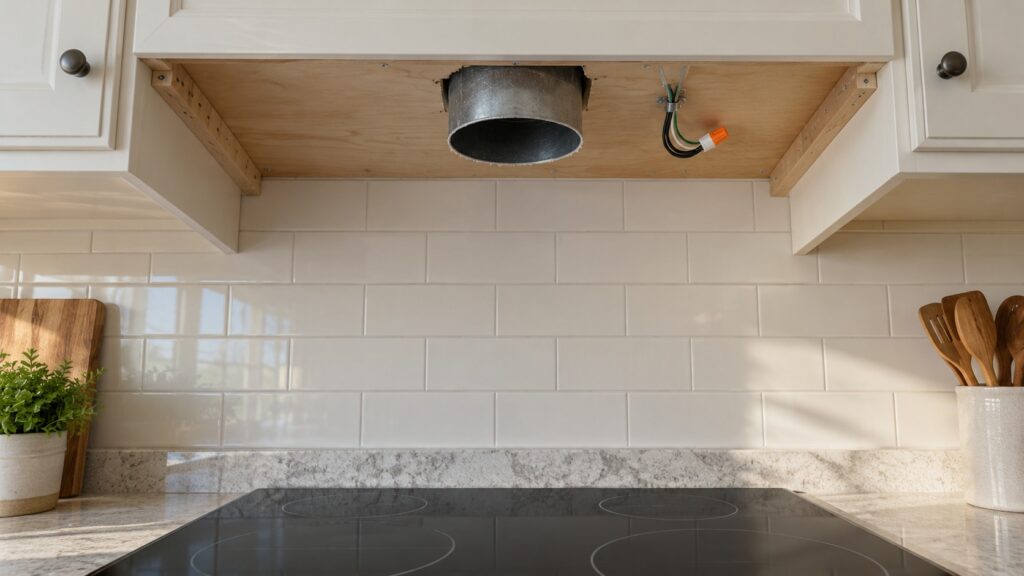
Ducted or recirculating?
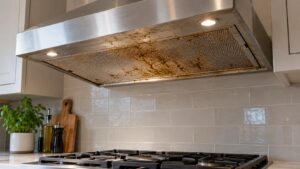
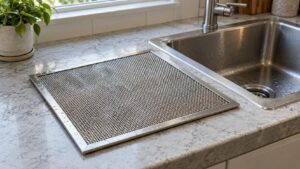
A ducted hood sends the air outside through a duct. A recirculating hood passes the air through a filter and returns it to the room. Our filter guide explains that Thermador hoods use stainless steel baffle filters on ducted installations and charcoal filters on recirculating ones. Ducting to the outside is generally the better way to remove heat, steam and smoke, but it needs a duct path through the cabinet and the wall or ceiling. Our guide on Thermador vent hood filters explains the filter types.
We do not give duct diameters, maximum duct lengths or the number of elbows, because they depend on the model. The installation sheet states them, and a long or twisting run reduces the airflow the hood can deliver. Do not use flexible foil duct unless the sheet allows it, and do not terminate the duct in an attic, a wall or a soffit. These are rules for the installer to confirm.
What about power, lighting and make-up air?
The hood needs an electrical supply. The sheet explains where the power comes in and what circuit is required; connect it only through a qualified electrician, with the breaker off and confirmed dead. The 600 CFM rating on these models is the airflow the blower can move, and powerful exhaust can pull air into the house through unwanted routes. Our guide on make-up air for Thermador hoods explains when a code or a gas appliance means you must plan to replace the exhausted air. Ask your installer and your local building department whether it applies in your area.
The CFM question is also about the cooktop. Our vent hood CFM guide explains how to think about airflow in relation to cooking power. If the hood sits above a gas cooktop, the installer must also keep the manufacturer’s clearance between the burners and the hood; the sheet specifies the height, and we do not quote a number.
What does the installation process look like?
In outline, a professional will confirm the cabinet and wall, mark the position, run or check the duct, bring the power to the hood location, lift the hood into place with a second person, secure it to the cabinet using the supplied brackets and screws, connect the duct and the power, fit the filters and test the fan, the lights and the controls. The order and the hardware are set out in the sheet. We do not describe the fixing details because they change by model.
These steps involve lifting a heavy appliance overhead, cutting openings, working with mains power and handling ductwork. Owners should not attempt it unless they are qualified. Keep the filters and the protective film in place until the end of the job, then remove the film as the manual says.
What should you check after the hood is installed?
Run the fan on each speed and check that it sounds smooth, that air is carried out through the duct and that the lights work. Hold a sheet of paper near the filters and watch whether it is drawn in. Check that the hood is level and tight to the cabinet and that no panel rattles. If the fan is loud, vibrates or moves little air, tell the installer, because a crushed duct or a loose part is a typical cause. For care after installation, our guide on the filters explains cleaning.
When should you call us?
Call if a newly installed hood does not run, trips a breaker, is very loud or draws poorly, or if the hood was working and stops. Do not open the housing yourself. We are an independent repair company, not Thermador. See our Thermador vent hood repair page, or schedule a visit online.