Almost every appliance in a Thermador kitchen wears the same finish, and almost every complaint about how it looks comes from cleaning it the way people clean a counter. Thermador stainless steel care is short, specific and mostly about what not to reach for — because the marks that bother people are usually the cleaning, not the cooking.
Why the grain matters
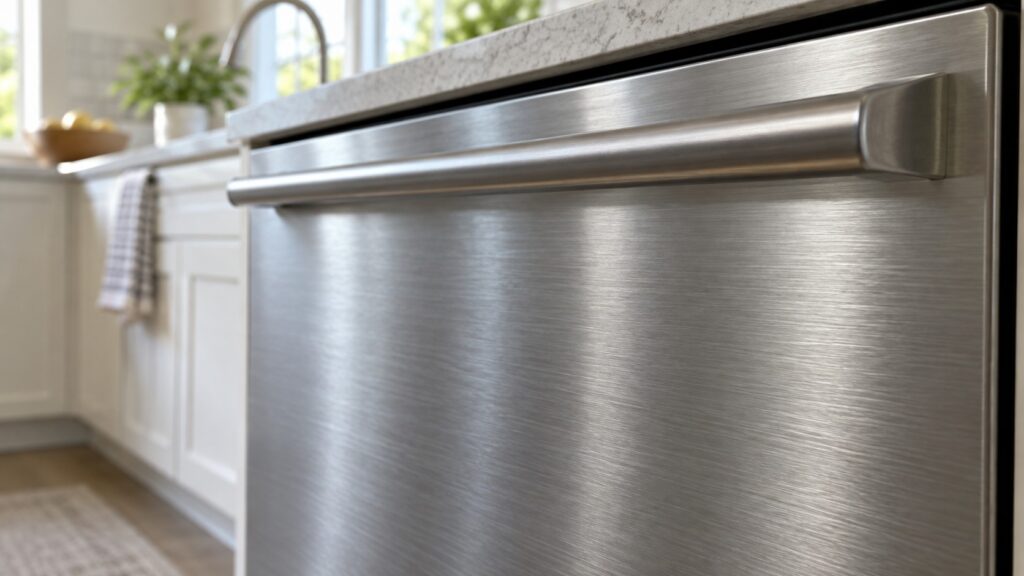
Stainless appliance panels are finished with a directional brush, and that grain runs a particular way on each panel — usually horizontally on a door, vertically on a tall column. Wiping across it drags soil into the grain and leaves streaks that catch the light; wiping along it lifts soil out.
The grain is visible if you look at the panel at a shallow angle in daylight. Once you know which way it runs on each appliance, the daily wipe takes the same time and leaves a noticeably better result. This single habit accounts for most of the difference between a kitchen that looks cared for and one that does not.
What chlorine does, and why it is the one unforgivable mistake
Stainless steel resists corrosion because of a thin passive chromium oxide layer on its surface. Chlorides attack that layer locally, and once it is breached the steel beneath pits. Bleach, chlorinated bathroom cleaners and some “all-purpose” sprays all carry chlorides.
The damage is not immediate and it is not reversible. A panel cleaned with bleach a few times develops small pits that then hold soil and look like rust. That is why the rule here is absolute rather than a matter of degree: nothing chlorinated goes near these surfaces, including as overspray from something being cleaned nearby.
Freckles of orange are usually not rust
Fine orange spotting on stainless is nearly always contamination rather than the steel failing. Airborne iron particles from a nearby workshop, minerals in hard water, or fertilizer dust land on the surface and oxidize there. It wipes off with a stainless cleaner and a soft cloth, and it comes back because the cause is in the environment.
What is worth attention is rust at a weld, at a fastener, or spreading from a scratch — that is the steel, and it progresses. Washing down regularly is the defense, particularly within a few miles of the coast.
Fingerprints, and the products that make them worse
- Oil-based polishes look wonderful for a day and then attract every fingerprint in the house. Use them sparingly or not at all.
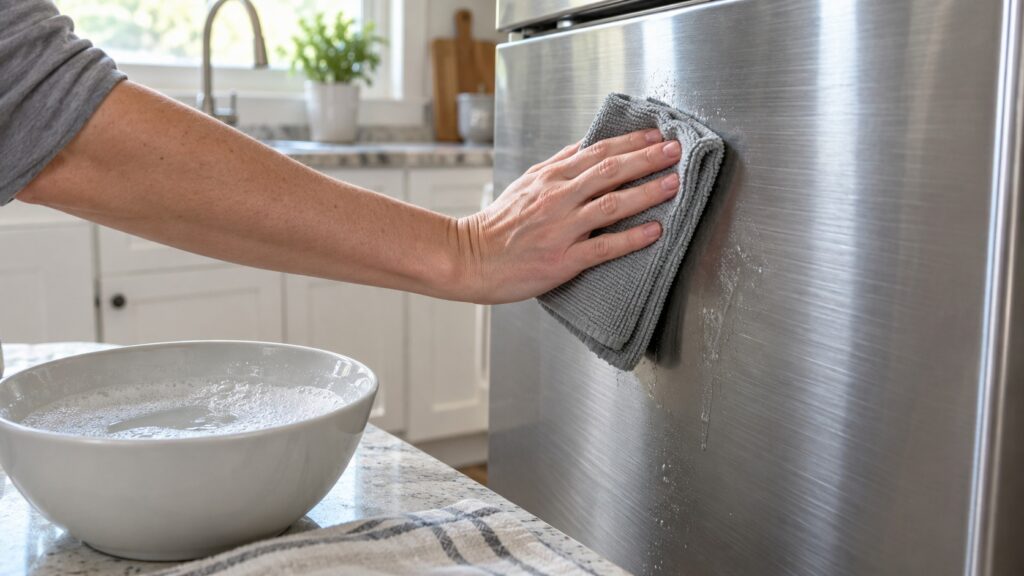
- Apply to the cloth, never spray onto the panel — overspray lands on adjacent surfaces, on glass, and in seams where it dries white.
- Dry afterwards. Water spots are mineral deposits left behind by evaporation, and drying prevents them entirely.
- Microfiber only. Paper towel is mildly abrasive and leaves lint in the grain.
Hard water is the other cause of spots
Water spots on stainless are not water — the water has gone. What is left is the mineral content it was carrying, dried onto the surface, and in a hard-water area that deposit builds into a dull haze that looks like the finish has aged. People then reach for something stronger, which is how the real damage starts.
The fix is at the drying step rather than the cleaning step. Wipe, then dry immediately with a second clean cloth, and the minerals leave with the water instead of staying behind. For a haze that has already built up, a stainless cleaner formulated to remove mineral film will lift it; scouring will not, it will only add scratches to a surface that is otherwise sound.
Magnets, and the surprise on some panels
Appliance stainless comes in more than one alloy family, and they behave differently in ways owners notice. Some panels hold a magnet and some do not, on the same appliance — which surprises people putting up a child’s drawing and occasionally worries them that a panel is not really stainless. It is: the alloys used for different components simply differ in magnetic behavior, and it says nothing about quality or corrosion resistance.
What it does affect is accessories. A magnetic towel rail or knife bar that grips one appliance may slide off the next one along, and that is not a defect in either.
The parts that are not stainless
A Thermador kitchen mixes materials, and the same cloth should not go everywhere. Glass doors want a glass cleaner, applied to the cloth. Control panels with printed markings want water alone — solvents lift the printing, and that damage is permanent. Knobs and bezels often have a different finish from the panels around them.
Where two materials meet is where residue collects and where careless cleaning does its damage. Work along the joint rather than across it. Our guides on cooktop cleaning and oven maintenance cover the surfaces that need their own treatment.
Heat, and the one mark that is permanent
Stainless discolors with sustained heat — a straw, blue or brown tint that appears on a panel beside a burner or above an oven vent. It is oxidation in the surface layer and it is cosmetic, but it does not wipe off and no cleaner reverses it.
The prevention is mechanical rather than chemical: keep the specified clearances, do not park a hot pan against a panel, and make sure a vent hood is actually extracting rather than letting heat roll up a fascia. Our vent hood maintenance guide covers the extraction side.
When it is damage rather than dirt
Pitting, deep scratches, heat discoloration and a finish that has gone dull in patches are all permanent. Panels are replaceable parts on most appliances, so a badly marked door is a part rather than an appliance question — worth asking about rather than living with on an otherwise excellent machine.
We are an independent repair company, not a factory service arm. Pricing starts from a diagnostic visit and we confirm the estimate before any work begins. Thermador range repair and our other services cover doors, panels and handles along with the mechanism, and you can schedule a visit online.