To clean a Thermador hood baffle filter, let the hood cool and switch it off, slide the filters out one at a time, wash them in the dishwasher or by hand with a degreasing soap, let them dry completely and fit them back until they seat firmly. That is the routine behind the common searches for a Thermador grease filter, a Thermador hood filter that can go in the dishwasher and how to clean Thermador vent hood filters. This guide explains what the baffle filter does, how often our pages say to clean it, when the dishwasher is acceptable, what to do about baked-on grease and when the filter light means something else.
What does a baffle filter do on a Thermador hood?
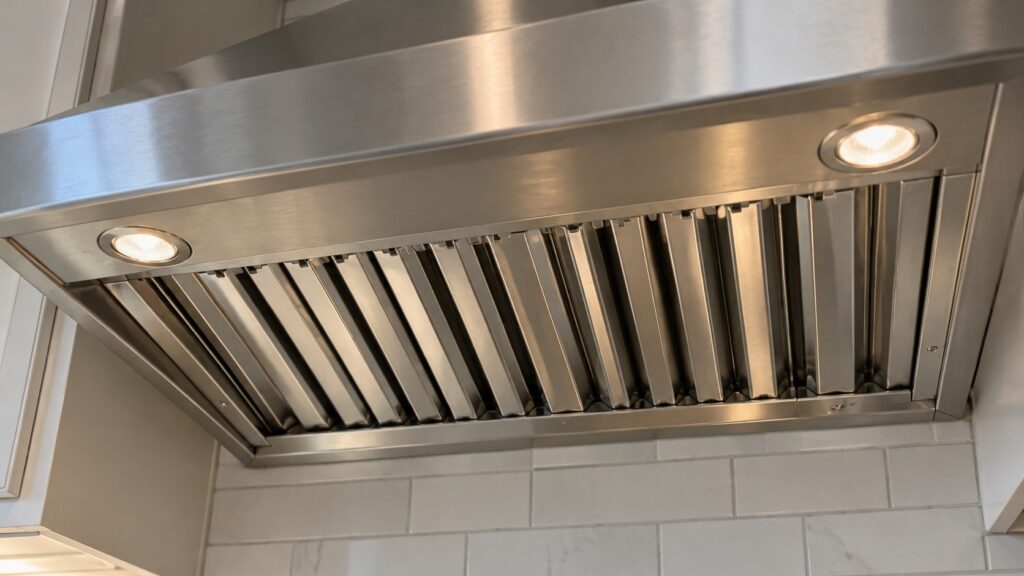
A baffle filter is a set of angled metal plates through which the air from the cooktop passes on its way into the hood. As the air changes direction between the plates, grease droplets hit the metal and stay there instead of traveling into the blower and duct. Our Thermador vent hood filter guide explains that Thermador hoods use stainless steel baffle filters on ducted installations and charcoal filters on recirculating ones, and that most hoods use the baffle type.
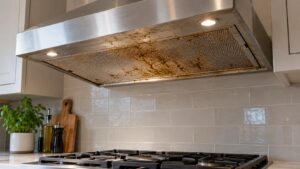
Because the filter is the first thing the cooking vapors meet, it clogs with grease over time. A clogged filter reduces the airflow even on the highest speed, lets grease reach the inside of the hood and can drip down onto the cooktop. Keeping it clean is the single most useful bit of upkeep for a vent hood. The under-cabinet models on our site, the UCVM30XS and UCVM36XS, are described as having washable baffle filters and dishwasher-safe filters respectively.
How often should you clean the filters?
Our filter guide says to clean stainless steel baffle filters every two to four weeks, or weekly if you cook heavily. Use that as a starting point, and adjust to your cooking. If you fry or sear often, check the filters more often. If you see a film of grease on the filter when you look up at it, or notice that the hood pulls less, clean them now. We do not tie the interval to hours of use, because the hood does not tell you how much grease you made.
Some Thermador hoods have a filter light that reminds you to clean. Do not treat that light as proof of how dirty the filter is. If it is flashing, read our guide on the flashing filter light, which explains what it means and why you should check your manual for the reset method on your model instead of pressing buttons at random.
How do you take the filters out safely?
Switch the hood off and let it cool, including the lights. Hold the filter level so grease does not run onto the cooktop, release the latch or handle that holds it and slide the filter out. Do this with one filter at a time, and put each on a towel or in the sink. The details of the latch differ between models, so look at the manual if the filter does not move easily. Do not pull hard or pry with tools, and do not remove anything other than the filters. The blower and the wiring sit behind them, and they are not for owners to touch.
Wear gloves if you prefer, because grease is slippery and metal edges can be sharp. Put the cooktop’s grates or covers aside if the filter might drip onto them. Check the underside of the hood and the area behind the filter opening with a flashlight; if there is a lot of grease, wipe what you can reach with a degreasing cleaner and a soft cloth, with the power off.
Can you put Thermador hood filters in the dishwasher?
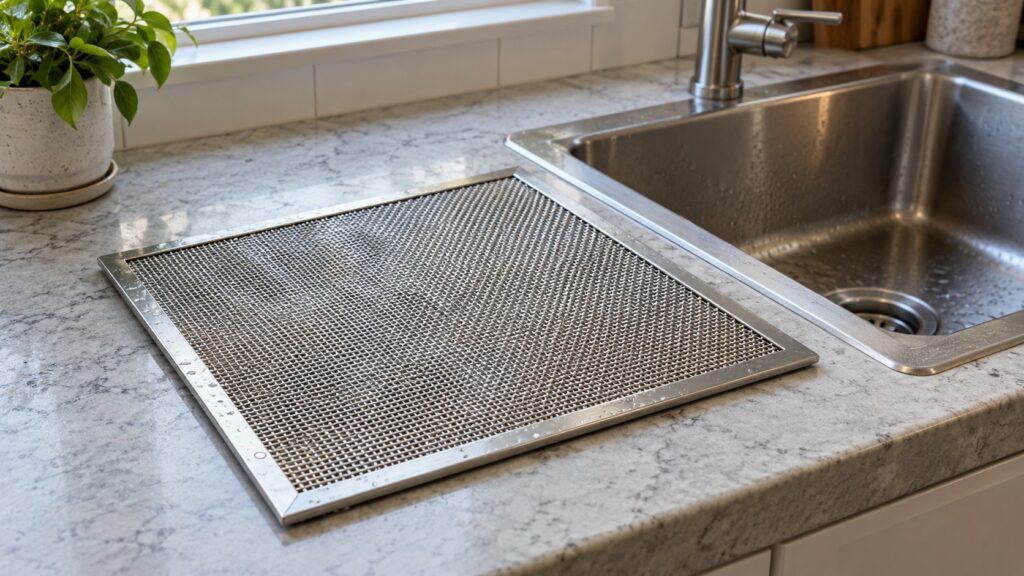
Our filter guide says stainless steel baffle filters can go in the dishwasher: place them on the bottom rack with the baffles facing down, use a normal cycle with detergent and allow them to dry completely before you reinstall them. The model page for the UCVM36XS describes dishwasher-safe filters. Before you rely on that for your own hood, check the owner’s manual for your model. If the manual says hand wash only, follow it. We do not know the filter material and finish of every model.
If the filters are very greasy, a dishwasher can spread grease to your dishes and clog the dishwasher’s own filter. Wash the filters alone, without dishes, or soak them first. Use a standard dishwasher detergent, not a hand-wash soap, and then run an empty cycle if you are concerned about residue. Our guide on cleaning a Thermador dishwasher’s filter shows how to keep that side clean too.
What if the grease is baked on?
If you have let it build up, soak the filters in the sink in hot water with a degreasing dish soap and baking soda before washing, as our filter guide suggests. Our guide gives about thirty minutes for that soak. Then scrub gently with a soft brush along the baffle plates and rinse. Do not use steel wool or an abrasive pad, which scratches stainless steel and makes it hold grease more easily, and do not use oven cleaner or any strong chemical unless the manual names it.
Never mix cleaning products. Do not combine bleach with anything else. After washing, dry the filter fully, since a damp filter can rust spots or cause odors, then check each one for dents. A dented filter does not seat well and may rattle.
What about charcoal filters?
Charcoal or carbon filters are used on recirculating hoods, to absorb odors. Our guide says they cannot be cleaned and should be replaced, roughly every six to twelve months depending on how much you cook. They normally sit behind the baffle filters. If your hood is ducted to the outside, you do not need one. Remember that the baffle filters still need cleaning on a recirculating hood.
If cooking odors linger after the hood has been on, the charcoal filter may be saturated, and reduced airflow suggests clogged baffle filters. If cleaning does not restore the airflow, or the fan makes unusual noise, call a technician. Our vent hood noise guide can help you decide.
When should you call a technician?
Call if the hood is weak after the filters are clean, if the motor hums or squeals, if grease is leaking from the hood body or if the lights or controls fail. Do not open the housing. We are an independent repair company, not Thermador. See our Thermador vent hood repair page, or schedule a visit online.