The Thermador refrigerator door gasket is the soft flexible seal around the edge of each door, and it is what keeps cold air in and humid room air out. Care for it by wiping it clean with mild soap and warm water, checking that it grips with a simple paper test, and replacing it when it is torn, stiff or permanently flattened. A tired gasket shows up as frost, condensation and a compressor that runs more than it should, long before it looks damaged.
What does the door gasket do in a Thermador refrigerator?
Cold air is heavier than warm air, and a refrigerator relies on keeping it in. The gasket is a hollow or folded strip of flexible material that compresses against the cabinet face when the door closes. In many designs a thin magnet inside the strip helps pull the door tight. When the seal is sound, the interior stays cold with little effort. When it fails, warm air flows in, moisture condenses and the cooling system works harder to keep up.
On a built-in Freedom column, the gasket also protects the finish around the opening and keeps the cabinet interior from sweating. The tight tolerance of a built-in installation means a gasket problem often shows up early, as a thin line of frost near the edge or a damp spot on the cabinet face. Our Thermador Freedom column guide explains how the column design relies on a good door seal.
How do you clean a Thermador refrigerator gasket?
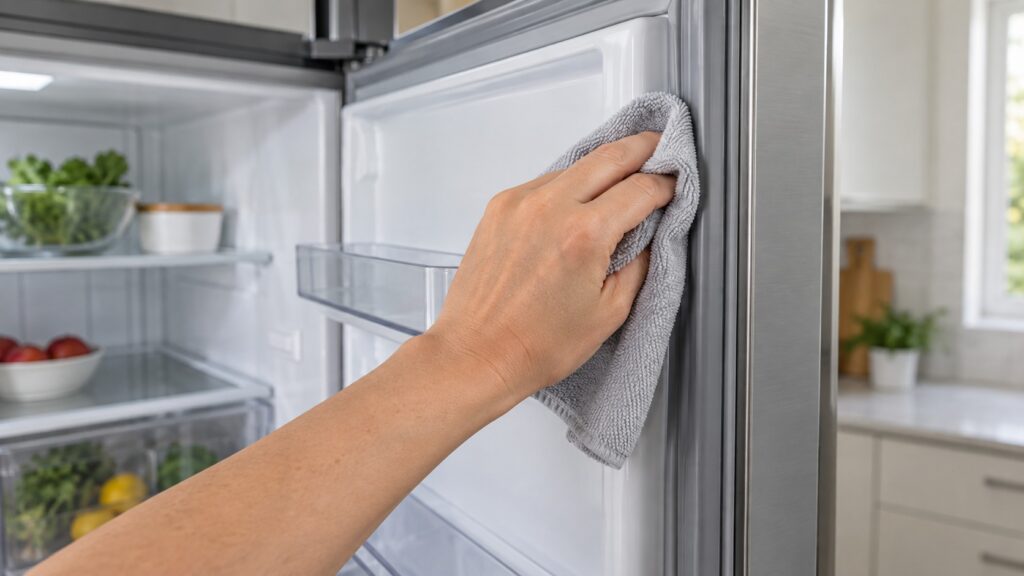
Cleaning is the single most useful bit of care. Dissolve a little mild dish soap in warm water and wipe the gasket with a soft cloth, working into the folds where food residue and mold collect. Use a soft toothbrush or a cotton swab for the corners. Rinse the cloth and wipe again with clean water, then dry the gasket with a towel so that no moisture is left in the folds.
Avoid bleach, solvent cleaners and abrasive pads, which dry and crack rubber over time. Do not use sharp tools to dig out dirt. A sticky gasket that grabs the cabinet can tear when the door opens, so cleaning also prevents damage. Do this every month or two, and any time a spill reaches the door edge. It takes only a few minutes and extends the life of the seal, and it is also a good moment to check the shelves and bins near the door for anything that sticks out and keeps the door from closing fully. Our Thermador refrigerator maintenance guide lists the rest of the routine care.
How do you test whether the seal still works?
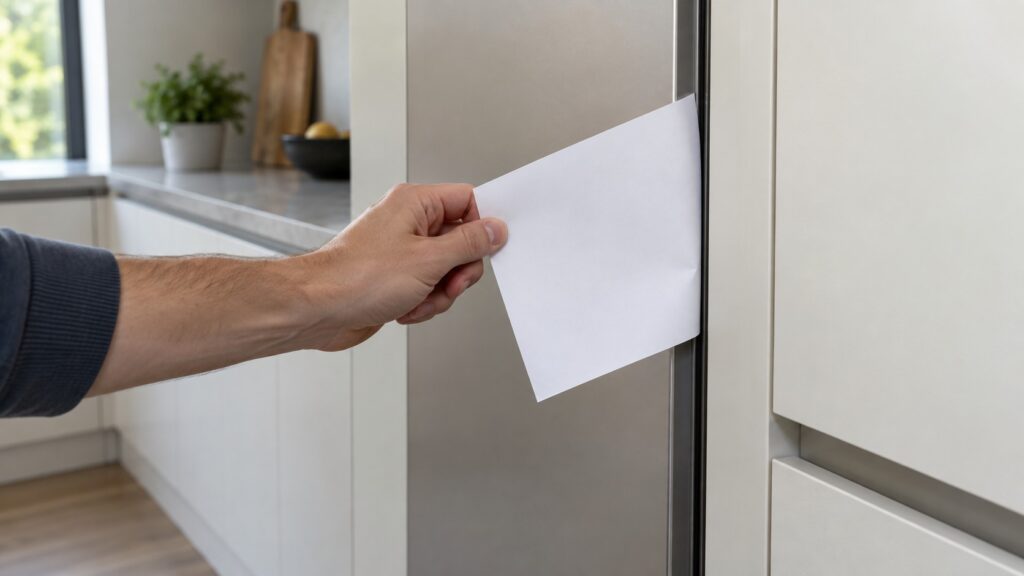
The paper test is quick. Open the door, place a sheet of paper over the gasket and close the door on it. Try to slide the paper out. It should resist with a slight drag. If it slides out freely, the seal is weak at that spot. Repeat the test around the door, at the top, bottom and both sides, since seals often fail only in one section. Note the locations where the paper slides out, because they tell you where the seal is worn or the door is out of alignment.
A second check is visual. Look for a gap between the gasket and the cabinet when the door is closed, or for light visible through the edge with a flashlight inside the cabinet. Feel along the folds for hard or brittle areas. A seal that has lost its shape does not compress evenly, and no amount of cleaning fixes that.
Can you fix a dented or flattened gasket?
Sometimes. A gasket that has been squashed by a door left ajar or by long contact with the cabinet can recover with gentle warmth. Warm the affected area with a cloth soaked in warm water, or use a hair dryer on low heat from a distance, then press and massage the gasket back into shape. Close the door and let it set for a short time. Do not use high heat or a heat gun, as they can melt or distort the rubber.
If the gasket is hard, torn, split at a corner or permanently flattened, replacement is the answer. The replacement strip must match your model, and it must be seated fully along the retaining channel. Misaligned gaskets leak just as badly as worn ones. Because the doors on built-in columns are heavy and tightly fitted, many owners prefer to have a technician replace the seal and check the door alignment in one visit.
What problems does a bad gasket cause?
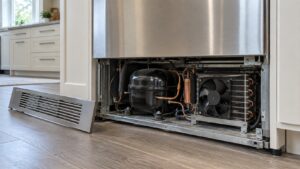
A leaking seal lets in warm, humid air, which condenses on cold surfaces and turns to frost in the freezer. It causes sweating on the door edge or cabinet, a refrigerator that runs for long stretches, uneven temperatures near the door and food that spoils sooner than it should. You may also notice a higher electric bill, since the compressor works more. Our guide to Thermador refrigerator temperature problems helps separate a seal fault from a cooling fault.
If the seal is good but problems persist, see our Thermador refrigerator troubleshooting guide. An energy-conscious owner may also read our Thermador energy efficiency guide, which treats seals as one of the cheapest ways to keep running costs down.