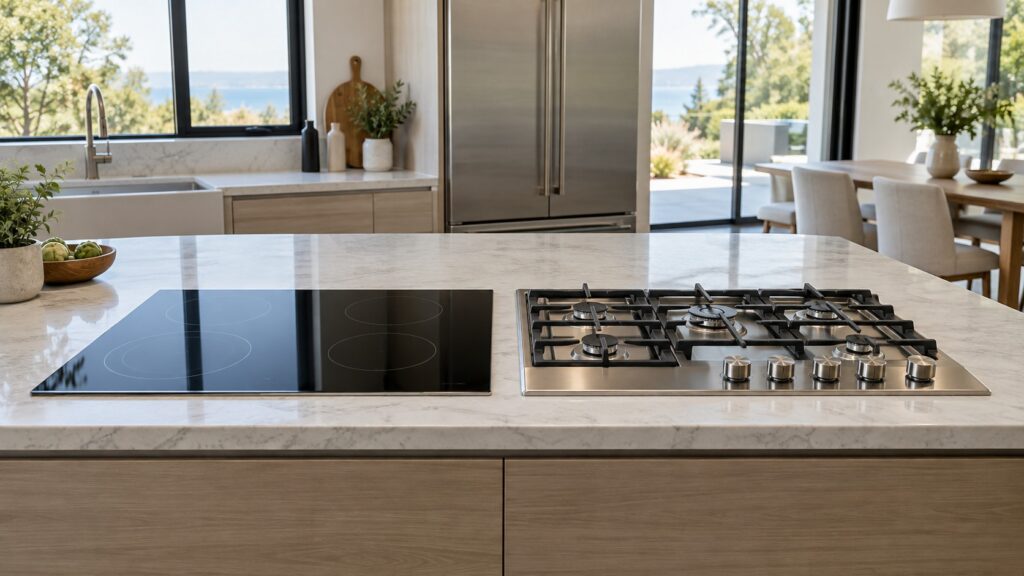
Choosing between a Thermador induction vs gas cooktop is not a question about power — both formats will boil a large pan faster than most people need. It is a question about how heat is delivered, what it does to the kitchen around it, and which compromises you are willing to live with. The honest answer differs between households, and anyone who tells you one is simply better is selling something.
What changes at the pan
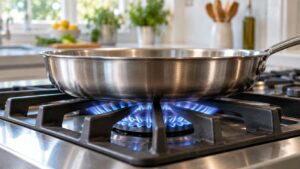
A gas burner heats the air and the pan bottom with a flame that also heats the room. An induction zone induces a current in the pan itself, so the heat appears in the metal rather than traveling to it. That difference explains almost every practical distinction: induction is faster because nothing is heated that does not need to be, and the kitchen stays cooler because the only hot thing is the pan.
It also explains induction’s weakness. If the pan cannot carry a magnetic field, nothing happens at all. Our explainer on how Thermador induction works covers the mechanism, and the Star burner explainer covers the gas side.
The cookware question, answered honestly
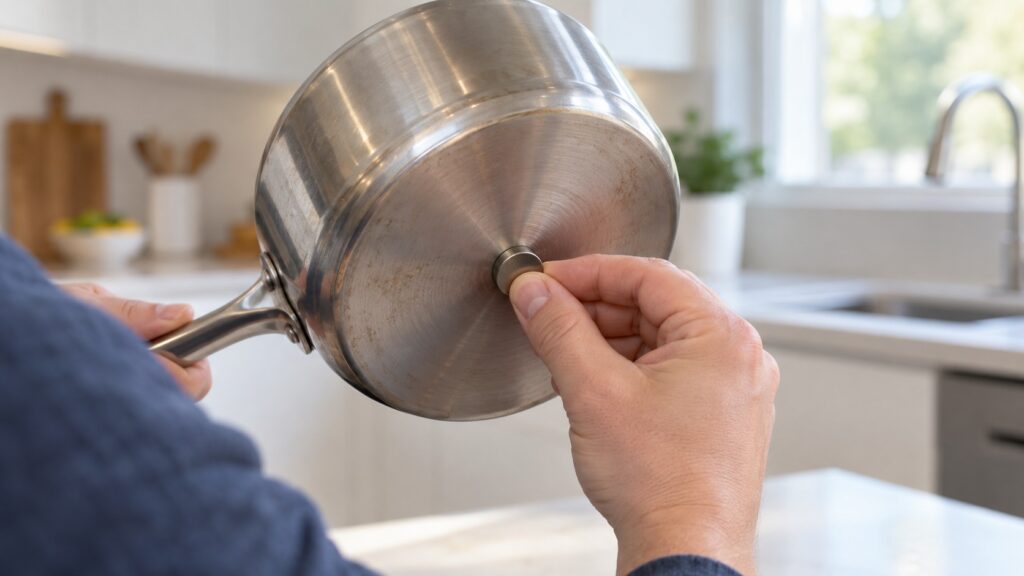
- Test with a magnet at the center and at the rim. If it does not grip firmly across the whole base, that pan will not work or will work badly.
- Aluminum and copper without a steel disc are out, whatever they cost.
- A warped base is a worse problem on induction than on gas, because contact is the coupling.
- Carbon steel woks need a flat base or a dedicated wok zone; a round-bottomed wok is a gas technique.
For most households this is a handful of pans rather than a whole kitchen. For a household with a copper batterie or an heirloom set, it is the whole decision.
Low heat is where induction wins, not high
People compare these formats on boil times and then discover the real difference at the other end. A good gas burner holds a low flame well; an induction zone at a low setting holds a temperature electronically and does not drift as a room’s draughts change. Melting chocolate, holding a hollandaise, keeping a stock just below a simmer — those are where the two formats separate most clearly.
Gas has its own answer in a burner designed for the job, which is what Thermador’s ExtraLow setting is for — see our ExtraLow explainer. The honest comparison is a good gas burner against induction, not a mediocre one.
Ventilation differs more than the brochures suggest
A gas cooktop puts combustion products, heat and a good deal of moisture into the room, and hood capacity is chosen against the total burner output and the duct run. An induction cooktop produces only what the food produces — steam and grease — so the same cooking needs less extraction.
That does not mean induction needs no hood. It means the number is smaller and the noise can be lower for the same result, which matters in an open-plan room. Our vent hood buying guide covers sizing for either.
Installation is a different job for each
Gas needs a licensed connection, a reachable shutoff, and a grounded outlet for the ignition — a gas appliance that still will not light without electricity. Induction needs a dedicated circuit of the right rating, and on a large cooktop that is a substantial one; retrofitting it into an older kitchen is sometimes the deciding cost.
Both need the cut-out right the first time, and both need ventilation under the counter that stays clear. Our guide on cooktop installation covers the opening and the clearances for either format.
Cleaning, and the difference you meet daily
This is the practical distinction people underrate before buying and appreciate every evening afterward. An induction surface stays cool enough that a spill does not bake on: it wipes off with a cloth while the zone is still working. A gas top has caps, crowns, grates and a surface that gets genuinely hot, so a boil-over becomes a cleaning job rather than a wipe.
Against that, gas parts come off and go in the sink, while a scratched induction surface is permanent. Cast iron dragged across glass is the most common cause, and it is a habit rather than a design flaw — lift, never slide. Our guides on cooktop cleaning and cooktop maintenance cover both surfaces.
Noise, and what each format actually sounds like
Neither is silent, and the sounds are different in kind. Gas is a steady, familiar hiss that most people stop hearing. Induction runs a cooling fan under the glass, and at high power some pans buzz or hum audibly — a physical effect of the pan’s construction rather than a fault, and it varies from pan to pan in the same set.
If quiet matters, this is worth hearing in person with a pan like the ones you own. It is the most common thing people report as a surprise in their first month with induction, and it is also the thing a showroom demonstration with a heavy clad pan will not reveal.
The things that decide it for real households
Ask four questions. Does anyone in the house cook with a wok or over an open flame? Gas. Is there a young child in the kitchen, or does anyone struggle with a surface that stays hot? Induction, because the glass cools quickly and the pan is the only hot thing. Does the kitchen lose power regularly? Gas keeps cooking. And is the cookware collection worth more than the cooktop? That answers itself.
What should not decide it is a claim that one format is inherently better. Both are excellent; they are simply good at different things.
Before you replace the cooktop you have
A gas burner that will not light, an induction zone that has stopped detecting a pan, or a cooktop that cuts power under load are usually parts or habits rather than an appliance at its end. Our pages on cooktop troubleshooting and repair or replace cover where the line sits.
We are an independent repair company, not a dealer, so we have nothing to sell you on the buying side. Thermador cooktop repair starts with a diagnostic visit, we confirm the estimate before any work begins, and you can schedule a visit online.