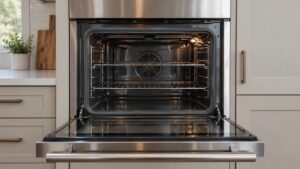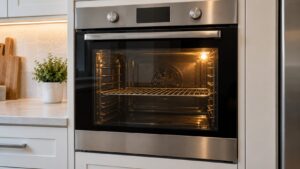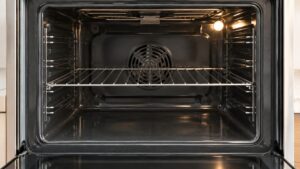
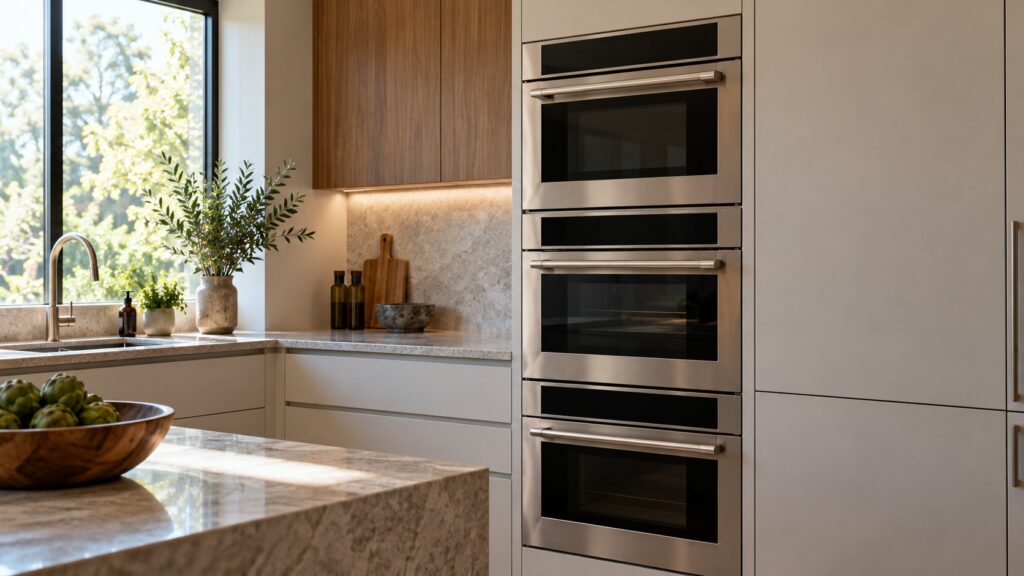
The Thermador POD303W is a Professional collection 30-inch triple wall oven: three independent convection cavities stacked in one built-in unit, with commercial-grade stainless steel construction and Home Connect Wi-Fi. It is the model to look at if you cook for crowds and want three ovens at three temperatures without a separate range. This guide explains what the POD303W page on our site lists, how a triple differs from a single or double wall oven, what to plan before you order and what the cabinet and electrical installation depend on.
What is the Thermador POD303W triple wall oven?
Our model page for the POD303W describes it as an industry-exclusive Thermador Professional 30-inch triple wall oven with three independent convection cavities. The word independent is the point: each cavity has its own temperature and its own cooking mode, so you can roast in one, bake in another and keep food warm in the third. Our wall oven buying guide calls the triple a Thermador exclusive configuration and notes that it is offered in the Professional collection, alongside single, double and combination ovens.
The Professional collection is the commercial-inspired look, with stainless steel handles and Professional branding. Our collections glossary explains how Professional differs from Masterpiece and Freedom, and why the name describes a style and a size range, not a higher grade of appliance. If you are not sure which collection fits your kitchen, read that first.
How is a triple oven different from a single or double?
A single wall oven has one cavity. A double has two, and our buying guide notes that you can cook at different temperatures in each at the same time. A triple adds a third, so there are three separate spaces and three separate controls. Thermador wall ovens use True Convection, which our guide on how True Convection works describes as a dedicated third heating element behind the fan that gives more even heat across the racks. The buying guide says that both collections use the same True Convection system and that the differences are in looks and in the SoftClose door feature.
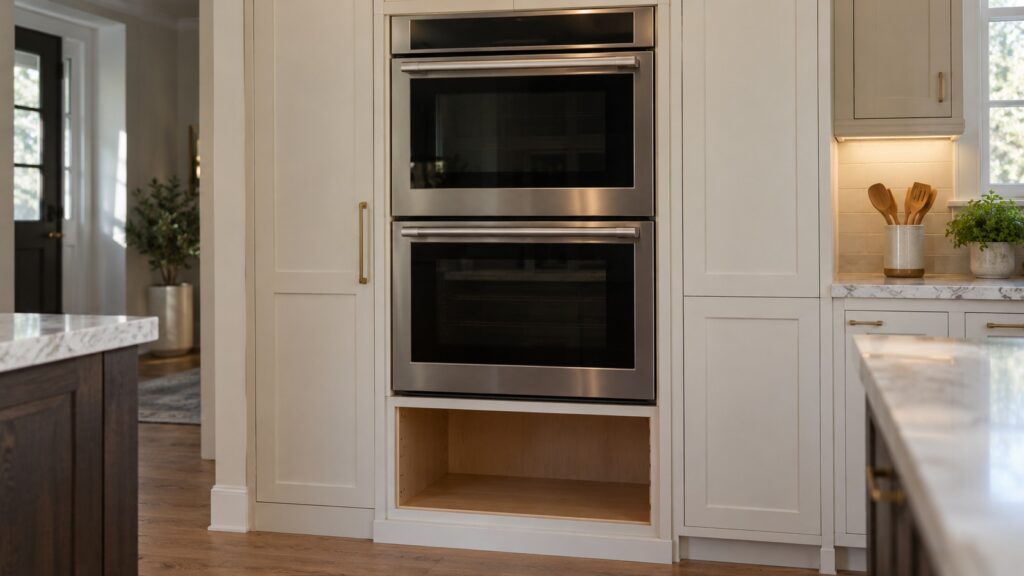
The practical benefit is flexibility. On a holiday, a large roast can sit in one cavity, side dishes in another and bread or dessert in the third, with no need to juggle racks or wait for temperature changes. The practical cost is space and planning: the unit is tall, heavy and needs a custom opening in the cabinets. Which cavity suits which job depends on the model’s layout, so check the owner’s manual before you plan a menu around it.
Who is a triple wall oven right for?
A triple suits people who entertain often, who cook several dishes at different temperatures, or who want a single wall of ovens in place of a range. It is less useful in a kitchen where one oven is enough. A double is simpler and usually adequate for a family, and a single plus a speed or steam oven is a good fit for a compact kitchen, as our oven buying guide explains. Before you commit, think about how often you would use all three cavities at once. If the answer is a few times a year, a double may be the better fit.
Consider the household too. Three doors means three places for fingerprints and a lot of stainless to wipe. The Professional collection uses SoftClose doors per our buying guide, and our SoftClose guide explains that feature in detail. Home Connect is listed for the POD303W, and the Home Connect guide covers what the app connection involves.
What does the cabinet and electrical installation depend on?
This is the part to settle before you order. Our wall oven installation guide says cutout dimensions are specific to each model and configuration, that you should use the installation manual’s template and never the dimensions of a different model, and that the cutout must be square and plumb. It also says wall ovens need a dedicated circuit and a hardwired connection, need their ventilation clearances kept free, and that the cabinet for a triple must support a very heavy load. The exact electrical requirements, the weight and the clearances come from the POD303W installation sheet, and a licensed electrician should confirm them, so get the sheet from the dealer before cabinets are built.
Wiring and mounting are work for a qualified electrician and installer. Do not try to slide a triple oven into place yourself; it is far heavier than a single and needs several people and the right equipment. Keep floor space in mind as well, since three doors need clear room in front when they open.
What should you know about service and error codes?
On multi-cavity ovens, the control reports faults by cavity. Our POD303W page lists the lower oven sensor codes E124 and E126 for double and triple ovens, and our guide on oven sensor codes explains why a double or triple names the cavity. The full list is in the oven error codes guide. A code is a clue, not a verdict, and a technician confirms the cause before any part is replaced.
If an oven does not heat, behaves oddly or shows a code that returns, do not open the control panel or remove the oven from its cabinet. Stop using that cavity and book service. If you smell burning or see sparks, switch the breaker off at the panel while standing on a dry floor. We are an independent repair company, not the manufacturer. Our Thermador oven repair page explains what a visit covers, and you can schedule a visit online.